In this episode of 80 Days: An Exploration Podcast, we’re exploring the story behind the writer of the most well-known secular Christmas song: Jingle Bells, and some of its surprising backstory. We also reflect on whether AI will replace Luke, Mark or Joe first, and take on the now-traditional festive quiz where Luke tests how much trivia from our back-catalogue we can recall. From all of us, have a very merry festive season, and we’ll see you in 2026.
Thanks to all our patrons who support the show. We really appreciate your continued backing of us. If you want to join them, more information is available at www.patreon.com/80dayspodcast
The coversheet of One Horse Open Sleigh, by James Lord Pierpont, the original title of Jingle Bells (photo from Wikimedia Commons – Public Domain)
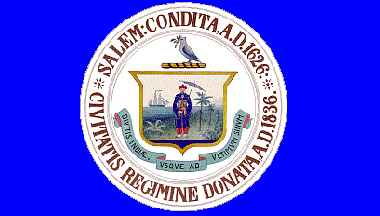
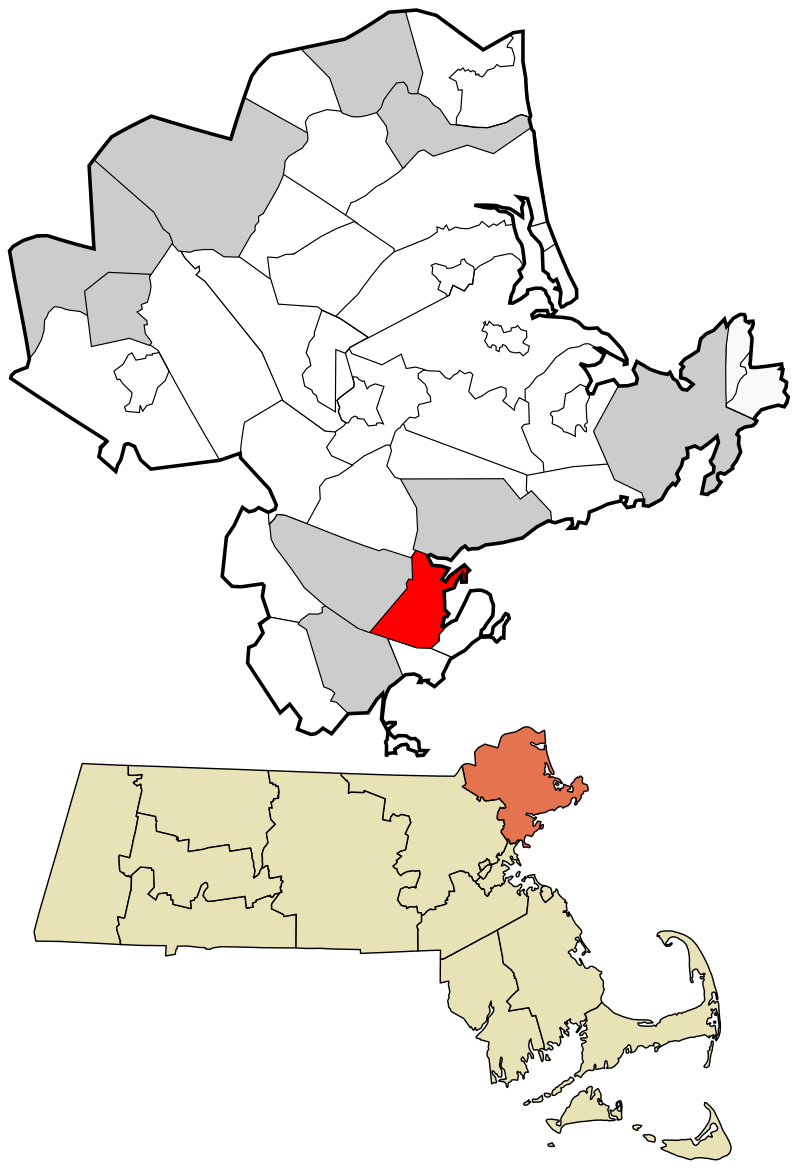
In this episode of 80 Days: An Exploration Podcast, we’ll be talking about Salem, Massachusetts, which has a strong historical connection to the famous witch trials that took place there in the 1690s. Salem lies on Massachusetts Bay between Salem Harbor and Beverly Harbor, lying alongside the Danvers River, which feeds into the harbour. It’s around 20 miles or 35 kilometres north of Boston. The witch trials took place in a small settlement just outside Salem proper then known as Salem Village, but later renamed Danvers, and we’ll likely touch on both throughout. Salem today has a population of around 44,000, while Danvers is home to around 28,000. The area had long been occupied by the indigenous Native American tribe the Massachusett before the arrival of Puritan settlers from England in the 1630s. For obvious reasons, Salem today is one of the most popular destinations in the US to celebrate Halloween, attracting over half a million visitors each year.
This Hallowe’en episode is the debut episode of Season 6. After a longer-than-planned hiatus we are back producing a new season. You’ll notice a few changes in location of your co-hosts during this season.
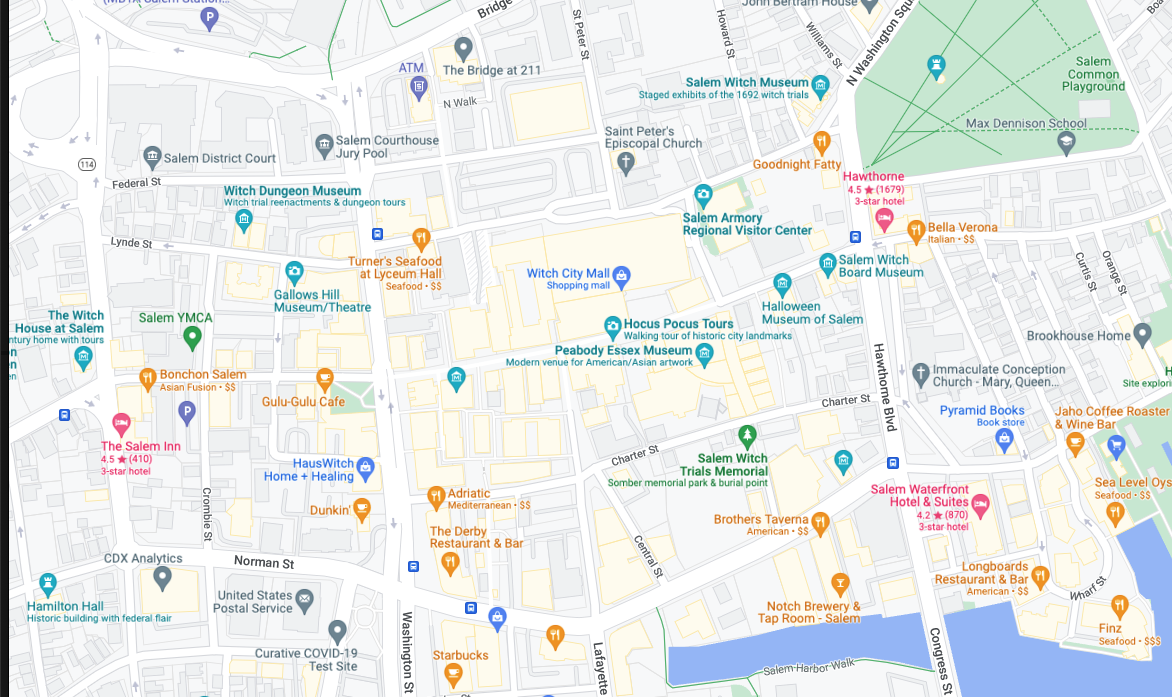
Map of Salem with an over-representation of spookily named businesses
Thanks to all our patrons who support the show. We really appreciate your continued backing of us. If you want to join them, more information is available at www.patreon.com/80dayspodcast
In this episode of 80 Days: An Exploration Podcast, we’ll be talking about Hawaii, and specifically the Big Island of Hawaii. Which is also called Hawaii.
Hawaii is the southeasternmost of the Hawaiian Islands, which make up the US state of Hawaii. The island makes up 63% of the archipelago’s landmass, but only 13% of its total population. The island is the third largest island in Polynesia, behind the two main islands of New Zealand. With a total area of around 10,000 km2 (or 4,000 square miles), Hawaii is similar in size to the islands of Puerto Rico or Cyprus, or our old friend Gambia.
With a rich history and culture, Hawaii and its sister islands flourished as ancient societies, developing unique religions and customs, that is until the arrival of one Captain James Cook. In 1779 the famous explorer made his second and final landing here, and would not make it off the island alive. By the end of the century, the islands came under the protection of the British Crown, and missionaries soon followed, changing island life forever. The 1800s brought modern developments and the consolidation of the Kingdom of Hawaii, but ended in the annexation of the territory by the United States, a controversial episode to this day. In 1959, Hawaii becomes the 50th State, now famous for tourism, spam and pineapples. Hawaii Island, also known simply as The Big Island, is today home to around 185,000 people, and due to ongoing volcanic activity, Hawaii is the only US state that is still growing.
A great website for all things Big Island is Love Big Island, and is particularly useful for tourists wishing to visit, but also helped us with plenty of history.
Rethinking the Native Hawaiian Past By Kanalu G. Terry Young is available on Google Books.
Hawaii: The Aloha State By Robin Doak has a lot more on the process of annexation, which you can find on Google Books.
The Eisenhower Library has more on Hawaii’s journey to statehood, which you can find here.
Smithsonian Magazine has an excellent article on Liliʻuokalani, the Last Queen of Hawaiʻi.
The Stuff You Should Know episode on the annexation is available here. Thanks, Josh and Chuck!
Richard B Frank’s article in TIME, headlined How Hawaii’s Japanese Population Was Spared Internment During World War II was a key source for that section of the show.
For more on the totally not supervillian Starfish Prime, you can check out this article in Discover Magazine.
Hawaii Beef also has lots of info on cattle farming on the islands.
Finally, the season of the Offshore Podcast on race relations in Hawaii can be found here. It’s definitely worth a listen.
Thanks to all our patrons who support the show. We really appreciate your continued backing of us. If you want to join them, more information is available at www.patreon.com/80dayspodcast
In this episode of 80 Days: An Exploration Podcast, we’ll be talking about Utah, the Beehive State. Named for the Ute people, a Native American tribe that has occupied for area for hundreds of years, Utah became the 45th state admitted to the U.S. on January 4, 1896, after the territory was won in the Mexican-American War in 1848.
With a total land area of 82,144 sq mi (212,761 km), Utah is a shade larger than Uganda, and just smaller than Romania. The state is bordered by Colorado to the east, Wyoming to the northeast, Idaho to the north, Arizona to the south, and Nevada to the west. It also touches a corner of New Mexico in the southeast, where the famous ‘four corners’ monument can be found. The state is currently home to around 3.2 million people, 62% of whom are members of the Church of Jesus Christ of Latter Day Saints or LDS, known to most people as Mormons. The LDS church migrated there in 1847, while it was still Mexican territory, to escape persecution, but it soon became part of the United States. Utah has the second highest birth rate of any US state, and it is the only state to have a majority of its population belonging to a single church.
This episode, just like all of our recent ones, is supported by our Patreon backers. If you want to help out the show, you can help out by joining us over on www.patreon.com/80dayspodcast to give us whatever you can in terms of financial support and avail of all the lovely awards and extras that entitles you to. If you’re unable to support us financially, you can always leave us a review on Apple Podcasts or wherever you get your podcasts from.
In this minisode, Mark takes us further than we’ve ever been before, in a story that’s out of this world! From Houston, Texas, in 1968, we tell the story of the USA’s space programme and how Christmas came to be the backdrop to the first voyage by humans around the moon. Often overshadowed by Apollo 11’s Moon Landing a few months later, Apollo 8 laid vital foundations, and took place during the festive season, watched by millions of families around the world.
In addition to our theme music by the talented Thomas O’Boyle, this episode featured a lot of music and sound effects, graciously made available for free by contributors at FreeSound.org, and Free Music Archive for use under a Creative Commons license, by attribution.
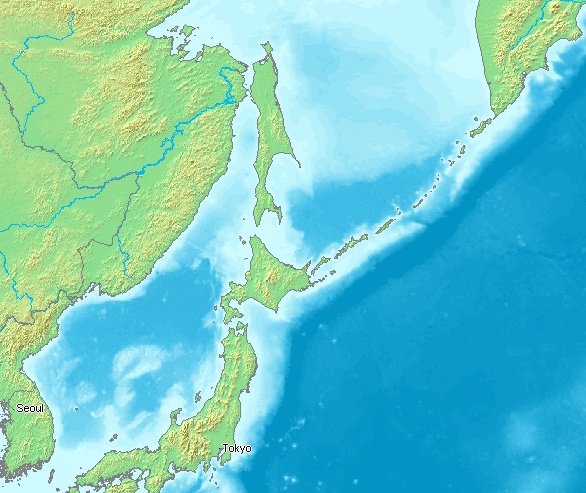
In this episode we’ll be talking about the Kuril Islands. This island chain is located in the Northern Pacific, and stretches between northern Japan and Kamchatka, Russia. The 56 islands extend for more than 750 miles across the ocean, and they total 10,500 square kilometers (4,000 square miles) of territory altogether, making their entire landmass roughly the same size as Lebanon or the island of Puerto Rico. The islands today have a population of roughly 20,000, and are controlled by Russia. However, the islands were previously administered by Japan from the 18th century up until WWII, and have been subject to a land dispute ever since. Japan claims the southernmost islands as their ‘Northern Territories,’ and the conflict over them has led Moscow and Tokyo to avoid signing the peace treaty that would have formally ended the Second World War.
Wikipedia is a great place to start reading about the historical groupings of people who lived in the northern islands of the Japanese archipelago throughout pre-history: Jōmon, epi-Jōmon, Nivkh, Ainu, and Yamamato/Wajin (modern Japanese); as well as the peoples of Kamchatka, such as the Itelmens
Some articles about the history of Ainu people generally:
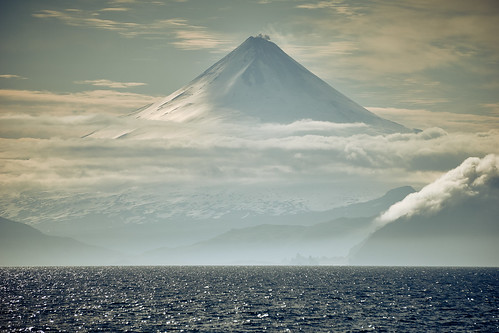
Atlasov is a remarkable looking island in the northern end of the chain, featuring a near-perfect volcanic cone
Joe was recently in Honshu and Hokkaido and took some photos, including from a Jomon-era archaeological site, and the the Museum of Northern Peoples in Hakodate, which listeners might find interesting. Well worth a visit if you’re ever in the neighbourhood
This slideshow requires JavaScript.
Music from these islands and the neighbouring territories, some of which you heard, can be found at the following sources:
You also heard a track from Lee Rosevere, used under a Creative Commons license (by attribution)
A massive thanks to all of our patrons on Patreon who are supporting season 3. If you’d like to join them and see what rewards are available for supporters, and get a peek behind the curtain check out www.patreon.com/80dayspodcast. We really appreciate the support and input!
Finally, here is a picture of some of the postcards sent from Hokkaido to our Neil Armstrong-tier patrons on Patreon – they truly are out of this world!
In this episode of 80 Days: an exploration podcast, we return to Cuba to bring its story from the Castro Revolution, right up to the modern day. As US-Cuba relations have been in the news this week, it’s impossible to keep up with all the twists and turns, but we do our best. If you haven’t already listened to Part 1 of this episode, we recommend listening to that first to see how we got here. Cuba is an island in the Caribbean Ocean, just 90 miles south of the US state of Florida. Cuba is home to over 11 million inhabitants. Cuba gained independence from Spain in 1902, but soon fell under US influence and became a playground for the rich and powerful; this was particularly true following the 1952 coup that brought Fulgencia Batista to power. Following a turbulent revolution which spanned almost the entire 1950s, the Communist Party of Cuba, under the leadership of Fidel Castro, took control of the country in 1965. Although poverty is widespread, modern Cuba has an outstanding health care and education system and relations with the US are currently beginning to thaw after a protracted embargo that has been in place since the 1960s. Since Cuba has an awful lot of history, particularly in the 20th Century, we decided to split this episode into two parts: this is the second part.
[02:20] Who is Fidel Castro?
[06:36] Castro starts his “July 26” Movement
[09:10] Exile in Mexico, meeting Che and the Voyage of the Granma
[12:28] Revolution!
[14:50] The ousting of Batista, victory for Castro
[17:38] Break
[18:12] Divisions within the revolution on the question of communism
[20:15] Courting the US, and the ‘communist closet’
[24:20] Che’s role in the world
[26:11] Refugees and Operation Peter Pan
[27:15] The Bay of Pigs invasion attempt
[35:26] US Trade Embargo begins
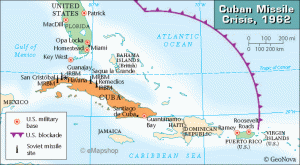
[36:57] The Cuban Missile Crisis – Armageddon averted
[44:00] Che leaves the stage
[46:03] ‘Castro really liked milk’, and other assassination attemps
[49:45] Cuba in the Soviet economic sphere – old cars
[51:42] “Los Frikis” punks
[52:42] Mariel Boat Lift
[54:03] Soviet Union falls, and the ‘special period’
[56:20] Medicine and oil
[58:31] Elian Gonzalez case
[60:21] Spies and political refugees
[61:07] Thawing of US-Cuba relations under Raul Castro
[64:10] What does the Pope have to do with this?
[65:30] Death of Fidel
[68:51] Trump’s evolving policies towards Cuba
[71:16] Sports! Baseball!
[73:00] Afro-Cuban traditions
[75:30] Some Cuban lunch
Here are a few things you may want to read/watch more about:
A massive thanks to Andrew Brogan and Crystal, two of the backers of our recent Kickstarter Campaign – thank you for making Season 2 possible. Thanks too to our sponsor Hairy Baby, who in addition to making the funniest Irish-themed t-shirts, have also produced the official 80 Days shirt for our supporters. Find it by clicking here. You can get 10% off anything on www.hairybaby.com by using our promo code “80DAYS”.
In this episode of 80 Days: an exploration podcast, we’ll be talking about Cuba, an island in the Caribbean Ocean, just 90 miles south of the US state of Florida. Cuba is home to over 11 million inhabitants, and is the second-largest island in the Caribbean after Hispanola. The country has been subject to numerous territorial disputes and conflicts throughout its long and complex history, but finally emerged into independence in 1902. Following a turbulent revolution which spanned almost the entire 1950s, the Communist Party of Cuba, under the leadership of Fidel Castro, took control of the country in 1965. Although poverty is widespread, modern Cuba has an outstanding health care and education system and relations with the US are currently beginning to thaw after a protracted embargo that has been in place since the 1960s. Since Cuba has an awful lot of history, particularly in the 20th Century, we decided to split this episode into two parts: this is the first part.
[03:28] Early History – Taíno and others
[05:50] In 1492, Columbus sailed the ocean blue… and stuff happened
[09:25] Spanish Colony, ‘serfdom’ and Hatuey’s Uprising
[12:25] Slavery, Slave Rebellions and Pirates
[13:55] Trade monopolies and disputes
[19:00] Sugar boom and population imbalance, and Haitian influx
[20:39] Break
[21:10] “What could go wrong?” – just six revolutions
[27:52] Leopoldo O’Donnell and ‘The Year of the Lash’
[29:00 ] The Cuban Wars of Independence
[34:33] Sinking of the USS Maine and US entry into the war
[35:57] Break
[36:22] The Spanish-American War (and Teddy Roosevelt’s ‘Rough Riders’)
[39:49] An independent Cuba, the Banana Wars and US Interventions
[43:45] World War 1 and, inter-war years and President Muchado
[46:42] Batista leads the Uprising of the Sergeants
[47:25] World War 2 ,Ernest Hemingway’s ‘Crook Factory’, and the ‘St Louis Affair’
[50:58] America’s Playground and a handful of boring presidents
[53:52] Return of Batista: who needs democracy?
Here are a few things you may want to read/watch more about:
Article about the “sugar boom” on Cuba History (which gives a clear and concise overview of a number of topics)
The Haitian Revolution is covered in detail by the Revolutions podcast by Mike Duncan (season 4), which is highly recommended for its level of detail! So if you want to learn more about slavery in the Caribbean in the late 18th century, give it a listen
Thanks to our sponsor Hairy Baby, who in addition to making the funniest Irish-themed t-shirts, have also produced the official 80 Days shirt for our supporters. Find it by clicking here. You can get 10% off anything on www.hairybaby.com by using our promo code “80DAYS”.
This week in 80 Days, we looked at Liberia, a small country on the west coast of Africa. Founded by freed American and Caribbean slaves, Liberia is Africa’s oldest republic and takes its name from the the Latin phrase meaning “Land of the Free.” Unfortunately, the country is best known for a long and bloody civil war that look place in the 1990s and 2000s, and more recently for the Ebola epidemic of 2014. The lush, rainforested country is just 700 kilometres or 430 miles north of the equator, and is bordered by Sierra Leone to its west, Guinea to its north and Ivory Coast (Côte d’Ivoire) to its east. Today, the country is home to around 4.5 million inhabitants, although most are native Africans rather than the descendants of freed slaves. It maintains strong ties to America, and even has a flag that strongly resembles the flag of the US, although it has only one star and 11 stripes. Discussing Liberia are Luke Kelly@thelukejkelly, Mark Boyle@markboyle86 and Joe Byrne@anbeirneach in Hong Kong, the UK and Switzerland, respectively. (Theme music by Thomas O’Boyle)
We thought when we researched Nauru previously that it was the most depressing place we would ever encounter. But we were wrong! Liberia is at the bottom end of most tables you want to be near the top in (GDP, communications infrastructure, life expectancy, infant mortality) and has suffered from all the plights you can expect in the region and more, all as a result of inequality, corruption, disease and civil war, but nonetheless, it has a unique story worth telling. Some sources which we found particularly useful in researching the episode were:
“VICE Guide to Liberia” – VICE sent a crew to Liberia in 2012 to look at the devastating effects of the civil war on life, particularly in the capital Monrovia. Features interviews with various former civil war generals, including General Bin Laden and General Butt Naked (who is now a Christian evangelist).
“Ebola in Liberia: An Epidemic of Rumours“: article by Helen Epstein in The New York Review of Books, December 2014. Deals with suspicion of government and conspiracy theories which complicated the reaction to the spread of the disease
This week on 80 Days, we talked about Alaska, the United States of America’s 49th state. The name Alaska comes from the Aluet word Alyeska, meaning great land, and it is a plentiful place in many respects. Rich in natural resources, Alaska has a longer coastline than the other 49 states combined and is the largest state in the US. It contains over 3 million lakes, as well as Denali, North America’s highest peak. about 500 miles separates Alaska from Washington state, its nearest neighbour within the US, and it has a strong connection with Russia, which used to occupy and control the territory. Exploring Alaska for you are Luke Kelly@thelukejkelly, Mark Boyle@markboyle86 and Joe Byrne@anbeirneach in Hong Kong, the UK and Switzerland, respectively. (Theme music by Thomas O’Boyle)
Things you might want to read more about:
Alaska is the point of mainland America where it is generally considered humans first arrived in waves from Asia, including the ancestors of most indigenous South American peoples (25000-15000 years ago), the ancestors of many native Alaskan people and the Navajo and Apache Native American tribes (14000-9000 years ago), the ancestors of Aleut and Eskimo people (9000-6000 years ago). This makes the area valuable for archaeologists trying to understand how people came to the Americas. Alaska’s indigenous people (including Tlingit, Athabaskan, Innupiak, Aleut and others) and much of their culture still persists to the present day, although they were, of course, greatly affected by the intervening centuries of colonisation.
Potlach – a “competitive altruism” practice among some native communities, such as Athabaskans
Music this week is all from aboriginal North American people and can be found here and here
The first Europeans to arrive in Alaska were the Russians, who – in the course of charting the Pacific coast of Russia – crossed the strait which is now named after Vitus Bering, a Danish navigator who led a voyage across to what is now Alaska. There were violent clashes with native Aleuts and Tlingit people and disease had devastating consequences on the indigenous population. Bering himself was marooned on an island on the way back to Russia and died.
Fur-trapping, particularly of sea-otters, became the major economic interest of the Russians in “Russian America” and a monopoly was given to the Shelikhov-Golikov Company (later, the Russian-American Company), which set up headquarters at Sitka. This early settlement was attacked in the Battle of Sitka by the Kiks.ádi Tlingit clan.
Rather than lose their hard-to-defend province to the British in a war, the Tsar decided that the best course of action was to sell Alaska to the USA for $7.2m in 1867
We mentioned the instance of a Pope drawing a line on a map, which gave the Spanish a right to colonise some newly-discovered territories and the Portuguese others – this is dealt with in the Wikipedia article on the Treaty of Tordesillas
The Klondike Gold Rush brought tens of thousands of people north to the parts of Alaska bordering Yukon as gold was discovered in the rivers of this region. Many were ill-prepared and most unsuccessful in staking claims. Con man “Soapy” Smith was an interesting character in this period, depriving treasure seekers of their money through tricks, games and crime, until his eventual death at a famous shootout on Juneau Wharf
During World War 2, there was a lot of action in the Aleutian Islands, while US forces attempted to dislodge a Japanese force which had occupied; American propaganda during WW2 was remarkably racial in nature, describing Alaska as a “Death Trap for the Jap
The wealth generated by Prudhoe Bay and the other fields on the North Slope since 1977 is worth more than all the fish ever caught, all the furs ever trapped, all the trees chopped down; throw in all the copper, whalebone, natural gas, tin, silver, platinum, and anything else ever extracted from Alaska too. The balance sheet of Alaskan history is simple: One Prudhoe Bay is worth more in real dollars than everything that has been dug out, cut down, caught or killed in Alaska since the beginning of time
Here is a link to Sarah Palin’s endorsement of Donald Trump’s Presidential candidacy: see has an unusual use of language








 We thought when we researched Nauru previously that it was the most depressing place we would ever encounter. But we were wrong! Liberia is at the bottom end of most tables you want to be near the top in (GDP, communications infrastructure, life expectancy, infant mortality) and has suffered from all the plights you can expect in the region and more, all as a result of inequality, corruption, disease and civil war, but nonetheless, it has a unique story worth telling. Some sources which we found particularly useful in researching the episode were:



 80 Days
