Ceuta (S6.10)

Audio: Ceuta

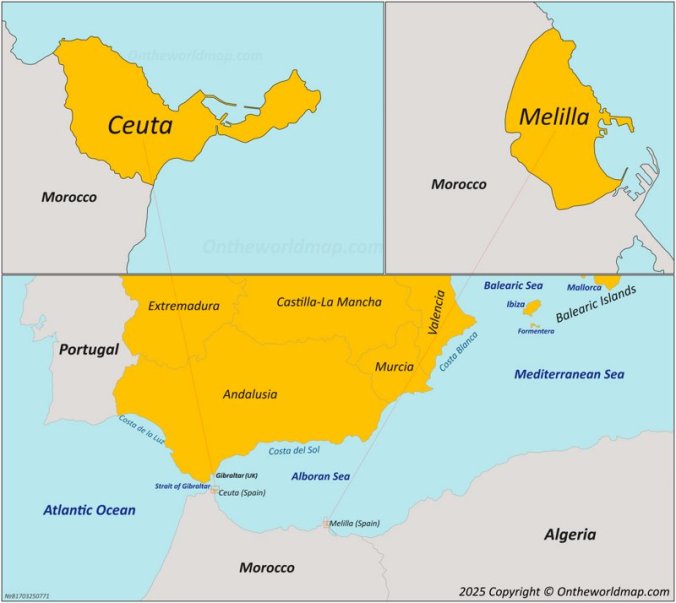
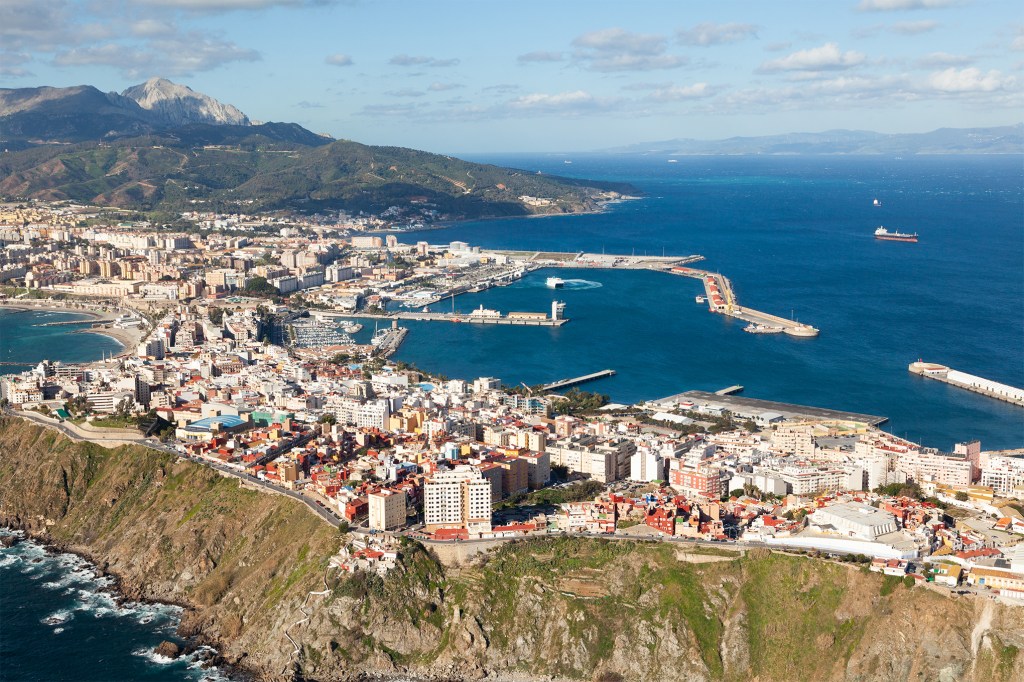
In this episode of 80 Days: An Exploration Podcast we’ll be talking about the autonomous city of Ceuta — Spanish exclave, military post, and free port on the coast of Morocco, at the Mediterranean entrance to the Strait of Gibraltar. Ceuta, Melilla (also an exclave), and other tiny islets along the coast of North Africa constitute the territories of Spanish North Africa. The city is on a narrow isthmus that connects Mount Hacho (also held by Spain) to the mainland. Mount Hacho has been identified as possibly the southern Pillar of Heracles, of the ancient Mediterranean world. Ceuta was controlled by the Muslim Umayyad Dynasty up to 1415, and then changed hands a number of times over the 15th and 16th Centuries. It played an important role in the Spanish Civil War, and gained its modern autonomous status in 1995. Ceuta’s land area is only about 18.5 square kilometres or 7 square miles, making it among the smallest places we’ve ever talked about, and has a population of around 80,000, similar to  Andorra, the Isle of Man or the US Virgin Islands. 

The climate here is warm but moderated by the straits, with mean annual temperatures of 18 °C (65 °F) with average highs of 21 °C (70 °F) and lows of 15 °C (60 °F). The currency is the Euro, and the language is Spanish, with a strong Arabic presence. 

Ceuta and Melilla are the only piece of EU territory on mainland Africa – a political and legal reality that has never been recognised by Morocco, which claims both territories to this day. 

Fun Fact – Western Sahara was a previously-Patreon-backed finale episode. You guys just have a real hankering for contentious North African territories, don’t you?

As we mention in the episode, this (somewhat delayed) finale to season 6 was voted on by our Patreon backers, and thanks as always to all of them for their support. You can sign up to Patreon to get a say in the episodes we cover in the seasons to come.

Your hosts, as always, are Luke Kelly @thelukejkelly in Wexford, Ireland, Mark Boyle @markboyle86 in Toronto, Canada, and Joe Byrne @anbeirneach in Dublin, Ireland. Our theme music and other stings come from Thomas O’Boyle @thatthomasfella.

Ceuta with Mount hacho visible in the background

Some further reading material is provided below:

  • This BBC Explainer on the status of Ceuta and Melilla is a good starting point for beginners. The BBC also has a useful factsheet.
  • This CNN feature headlined “Inside the tiny corner of Spain that lies in the middle of North Africa” is another useful primer.
  • History blog “A Small Part of History” has a lengthy post about the conquest of Ceuta by Portugal.
  • For a more visceral look at the city, this video travel guide of Ceuta from Travel Obscurer is worth checking out.
  • One of the many books we referenced in this episode was Europe or Africa? : a contemporary study of the Spanish North African enclaves of Ceuta and Melila by Peter Gold. It’s available on Archive.org.
  • We also spoke about Count Julian, whose Wikipedia page is well worth perusing.
  • Mark lent on A.R. Disney’s A History of Portugal and the Portuguese Empire – From Beginnings to 1807 for his section. You can find an excerpt here.
  • Another useful read was The Spanish Exclaves in Morocco by Robert Rézette, which is available on Google Books.
  • Anyone for a Wikipedia list of “People with the most children“? If you’ve heard Joe’s section, you’ll know why.
  • For more on Lieutenant John Fraser and his trusty leg bone, see the National Army Museum.
  • WebHispania has a fascinating blog post by Antonio M. Carrasco headlined The Ceuta border: a constant source of misunderstanding and conflict.
  • The UK’s National Maritime Museum has a whole page dedicated to Cueta in the Napoleonic Wars.
  • The UNHCR report on Anti-Muslim Hatred and Discrimination in Ceuta we mentioned is available here.
  • The substantial page on Wikipedia dedicated to the border fence is here. More can be found in World of Walls: The Structure, Roles and Effectiveness of Separation Barriers by Said Saddiki which is available online here.
  • On Franco and the Spanish Civil War, worth a read is The Crescent and the Dagger: Representations of the Moorish Other during the Spanish Civil War by Elisabeth Bolorinos Allard, available here.

Some of the music used in the episode includes:


Thanks to all our patrons who support the show. We really appreciate your continued backing of us. If you want to join them, more information is available at www.patreon.com/80dayspodcast

Shetland (S6.09)

Audio: Shetland

In this episode of 80 Days: An Exploration Podcast we’ll be talking about Shetland, a group of about 100 islands, fewer than 20 of them inhabited, in Scotland, 210 km (130 miles) north of the Scottish mainland, at the northern extremity of the United Kingdom, around 340km or 210 miles from Norway. The islands total around 1,500 km2 (or 560 sq mi), making them similar in size to the nearby Faroe Islands [recommend listening to this past episode], American Samoa or Gran Canaria. 

Among the settlements on Mainland, the largest island, is Scalloway, a fishing port. Lerwick, also on Mainland, is the islands’ largest town and commercial and administrative centre. The early history of the islands is dominated by the influence of the Vikings, who settled here in the 9th Century. From the 14th century, it was incorporated into the Kingdom of Scotland, and later into the United Kingdom. The climate is generally windy, cloudy and often wet, with rain falling on more than 250 days a year, and average low temperatures a little above 1 °C (34 °F) in winter and around 14 °C (57 °F) in summer.

Shetland is as far north as St Petersburg, Russia, or Anchorage, Alaska, which makes the islands an ideal place to watch the northern lights, or as they’re known locally the ‘mirrie dancers’ while in summer there is almost perpetual daylight, a state of affairs known locally as the “simmer dim”.

We had a guest on the podcast this episode, local writer, tour-guide and podcasters Laurie Goodlad, who can be found on shetlandwithlaurie.com. Thanks to Laurie for her great contributions to helping us understand Shetland, only a fraction of which is included in the episode – if you’ve fallen in love with Shetland, much more can be found in her blog and podcast episodes.

Your hosts, as always, are Luke Kelly @thelukejkelly in Wexford, Ireland, Mark Boyle @markboyle86 in Toronto, Canada, and Joe Byrne @anbeirneach in Dublin, Ireland. Our theme music and other stings come from Thomas O’Boyle @thatthomasfella.
Map of Shetland Islands in Scotland by Finlay McWalter on Wikimedia Commons
A Shetland pony photographed by Ronnie Robertson (CC-BY)
The Prince of Wales set off a trend of Fair Isle jumpers, part of a general inter-war Northern Isles boost in knitting and garment industry

Some further reading material is provided below:

Music relevant to Shetland includes:


Thanks to all our patrons who support the show. We really appreciate your continued backing of us. If you want to join them, more information is available at www.patreon.com/80dayspodcast

Montserrat, Spain (S6.05)

Audio: Montserrat

LISTENER SURVEY

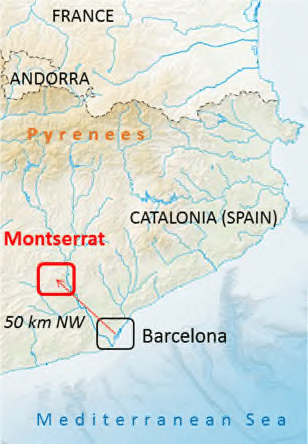
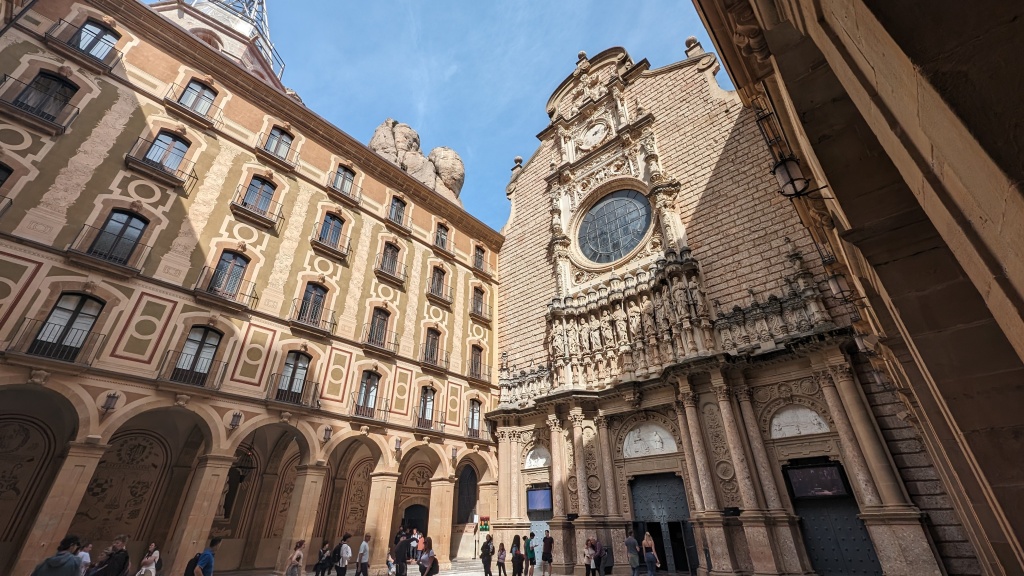
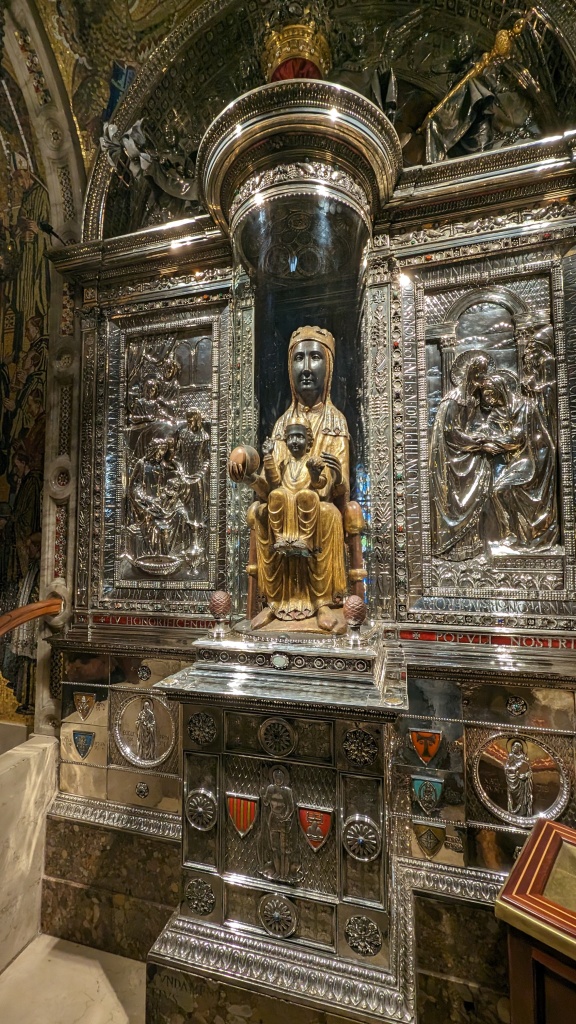
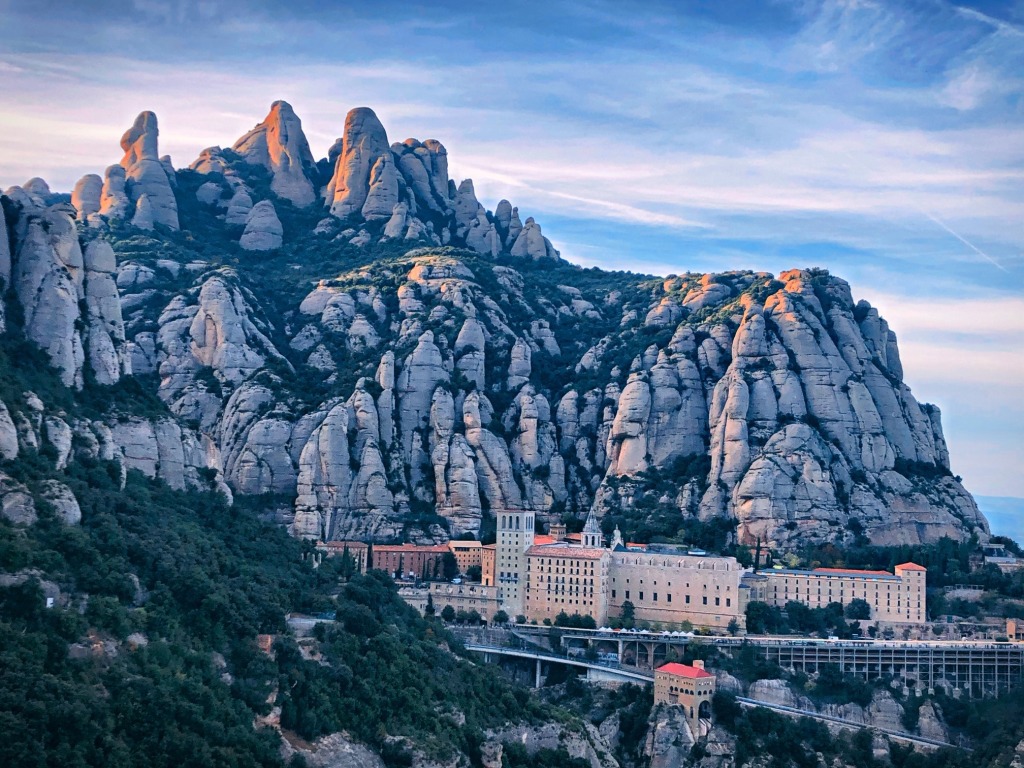
In this episode of 80 Days: An Exploration Podcast we’ll be talking about Montserrat in Catalonia, Spain, a spectacular mountain range not far from Barcelona. Montserrat was “Montserrat” literally means “serrated mountain” in Catalan, and the name accurately describes its bizarre and unique aspect with a multitude of jagged rock formations that are visible from a great distance. This spot is best known today for the Benedictine Monastery Santa Maria de Montserrat, located about 45 km northwest of Barcelona, and the the statue of the Virgin Mary within that lends its name to the monastery, which has its own unique story to tell. Montserrat has been of significance for centuries, bearing witness to Catalan and Spanish history from its lofty mount and even becoming entwined in some of the most decisive conflicts to have swept across the Iberian Peninsula since the Monastery was founded in 1025, including the Napeolonic wars and the brutal fighting pre and post the Spanish Civil War. In terms of poulation, there are less than 100 monks who make their permanent home here, but up to two million tourists flock here each year to scale the mountain and take in the history and legacy of the monastery, including quite recently, two of the co-hosts of this episode. 

Your hosts, as always, are Luke Kelly @thelukejkelly in Dublin, Ireland and Joe Byrne @anbeirneach in Dublin, Ireland, joined in this epiosde by John Killeen in Hastings, UK. Our theme music and other stings come from Thomas O’Boyle @thatthomasfella.
Some further reading material is provided below:

Music includes:

  • Virolai, the Catalan Anthemm performed by Escolania de Montserrat


Thanks to all our patrons who support the show. We really appreciate your continued backing of us. If you want to join them, more information is available at www.patreon.com/80dayspodcast

Kalmykia (S5.10)

Audio: Kalmykia

In this episode of 80 Days: An Exploration Podcast, thanks to our backers on Patreon, we’ll be talking about Kalmykia, a republic and country of Russia located directly north of the North Caucasus in Eastern Europe, between Ukraine and Kazakhstan, only around 200 miles or 350km north of Georgia. The Kalmyks, of Mongol origin, migrated to the Caspian region in the 17th century from Central Asia. They were mainly nomadic cattle breeders. Kalmykiya was established in 1920 as an autonomous oblast (region); in 1936 it became a republic, which was abolished in 1944 when the Kalmyks were exiled for alleged collaboration with the Germans during WW2. 

The territory of Kalmykia is unique in that it has been the home in successive periods to many major world religions and ideologies. Prehistoric paganism and shamanism gave way to Judaism amongst some of the Khazars (who included Muslims and Christians in equal or greater numbers as well). This was succeeded by Islam with the Alans while the Mongol hordes brought Tengriism, and the later Nogais were Muslims, before their replacement by the present-day Buddhist Oirats/Kalmyks. It now stands as the only Buddhist region in Europe. 

The republic covers an area of around 76,000 square kilometres (or almost 30,000 square miles), making it a similar size to Panama, Czechia or the US state of South Carolina. With a population of about 275,000 residents Kalmykia ranks among the smallest of Russia’s federal districts in terms of population. 

The Kalmyks benefit from their relatively high levels of education and strong international connections. Overseas communities are found today in many parts of Europe and in the United States. The head of the religious establishment in Kalmykia itself was born in Philadelphia before being recognized by the Dalai Lama as a reincarnation of a Buddhist saint. 

The capital and largest city of the republic is Elista, which has gained a reputation for, of all things, international chess. And for you Star Wars fans, the Ewok language was based on Kalmyk, because George Lucas thought it sounded so odd.  

_45840472_kalmykia226 (1)
Screenshot 2022-08-10 at 21.38.02
Your hosts, as always, are Luke Kelly @thelukejkelly in Dublin, Ireland, Mark Boyle @markboyle86 in the UK, and Joe Byrne @anbeirneach in Galway, Ireland. Our theme music and other stings come from Thomas O’Boyle @thatthomasfella. 

As we mention in the episode, this finale to season 5 was voted on by our Patreon backers, and thanks as always to all of them for their support. You can sign up to Patreon to get a say in the episodes we cover in the seasons to come.

Some further reading for this episode:

An excellent documentary from DW on Kalmykia

Music used in this episode:

Thanks to all our patrons who support the show. We really appreciate your continued backing of us. If you want to join them, more information is available at www.patreon.com/80dayspodcast

See you in Season 6!

Jersey (S5.08)

Audio: Jersey

In this episode of 80 Days: An Exploration Podcast, we’ll be talking about the Bailiwick of Jersey, the largest of the Channel Islands lying just off the coast of Northern France. Jersey is a Crown Dependency so is not actually a part of the UK, just like the Isle of Man, which we covered in Season 1.  Today, Jersey has a population of just under 100,000, and a total land area of around 120 km2 or 45 sq mi, making it a similar size to the US island of Nantucket, or slightly smaller than our old friend Liechtenstein

While most residents speak English and identify as British, the proximity of Jersey and the other Channel islands to France has heavily influenced their culture and their history, and French is an official second language. Jersey also has its own local language, based on French, called Jèrriais.  The island was documented by the Romans, known to them as Caesarea, and was part of the Duchy of Normany until the early 13th Century, when it was reorganized and became a territory in its own right. By the end of the 15th century, Jersey was granted its own governor. An individual, now called the Lieutenant Governor, is today the personal representative of the Queen on the island. Jersey was the only part of the British Isles to be occupied by the Nazis during WW2, and was one of the last places in Europe to be liberated. 

Jersey has one of the highest numbers of cars per person in the world, and because of the historical popularity of Jersey wool, knitted sweaters came to be called jerseys, after the island, with the term first recorded in 1837. And yes, this island is the namesake of the US state of New Jersey. It’s been calculated that Jersey would fit 189 times into New Jersey – 95 times if the tide is out.

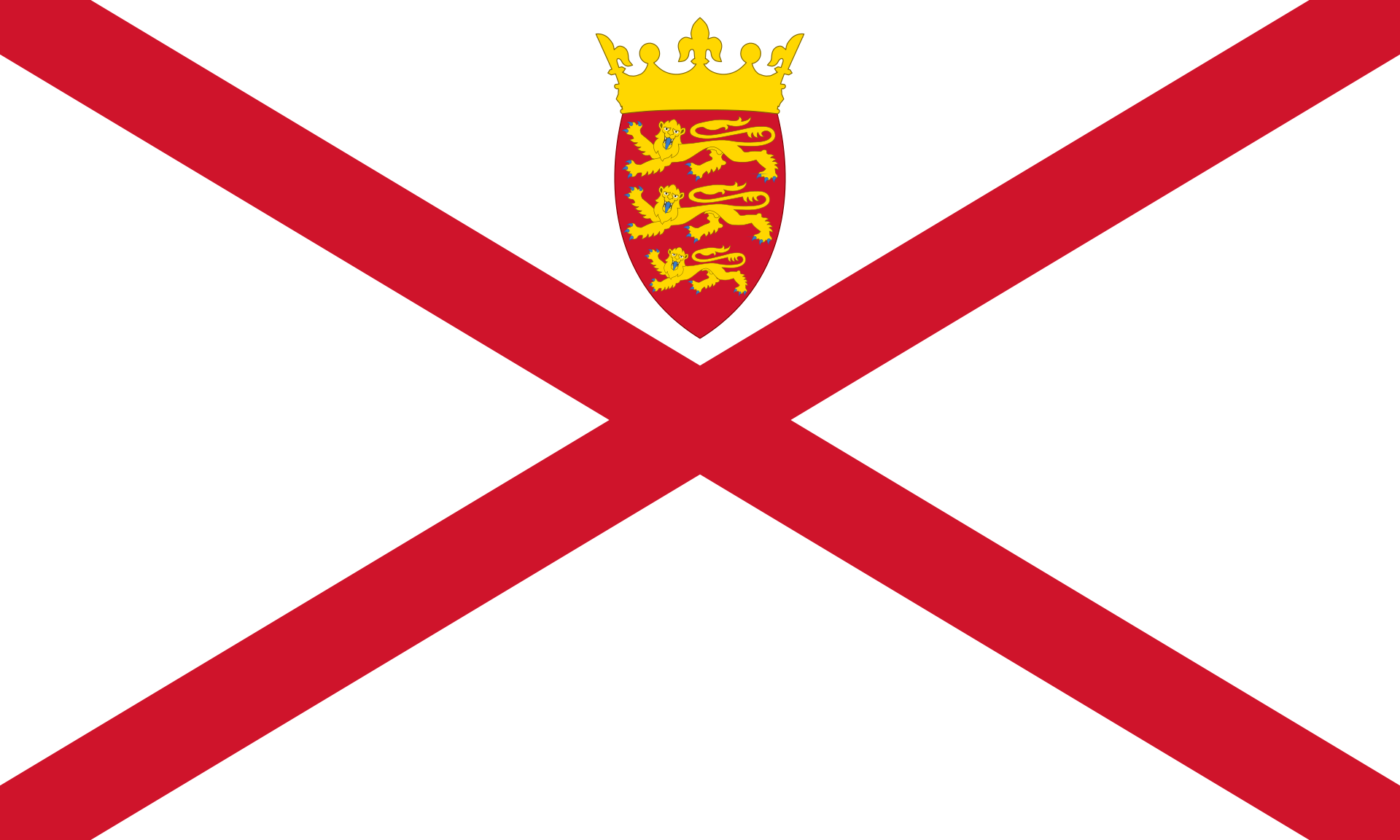
Location of Jersey (green) in Europe (dark grey)Flag of Bailiwick of Jersey

Your hosts, as always, are Luke Kelly @thelukejkelly in Dublin, Ireland, Mark Boyle @markboyle86 in the UK, and Joe Byrne @anbeirneach in Galway, Ireland. Our theme music and other stings come from Thomas O’Boyle @thatthomasfella. Thanks to Luke Davis, a member of the Société Jersiaise, for speaking to us for this episode – you will hear clips from his interview throughout.

Some further reading material is provided below:

The Death of Major Pierson, by John Singleton Copley (Battle of Jersey)
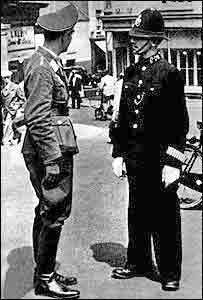
The photo from the German occupation, which Luke Davis mentioned. [source]

Thanks to all our patrons who support the show. We really appreciate your continued backing of us. If you want to join them, more information is available at www.patreon.com/80dayspodcast

Paris Catacombs (S5.04)

Audio: Paris Catacombs

In this episode of 80 Days: An Exploration Podcast, we’ll be talking about Paris, or rather, what lies underneath it — The Paris Catacombs. What began as a network of mines beneath the city which spanned approximately 200 miles or 322 km soon morphed into something much more. A crisis in the 18th Century quite literally shook the foundations of the city, prompting the creation of an ossuary or network of catacombs beneath the city, which would go on to become home to generations of Parisien dead. Throughout the centuries, these catacombs have become a city beneath the city, and have been host to a number of wild and wonderful tales, including revolutions, occupations, secret cinemas and even heists. At this point, I’d normally tell you the population of the place we’re discussing, but we can only approximate for this one, and it’s possibly a record for this podcast — around six million, all of them (as far as we know) dead. 

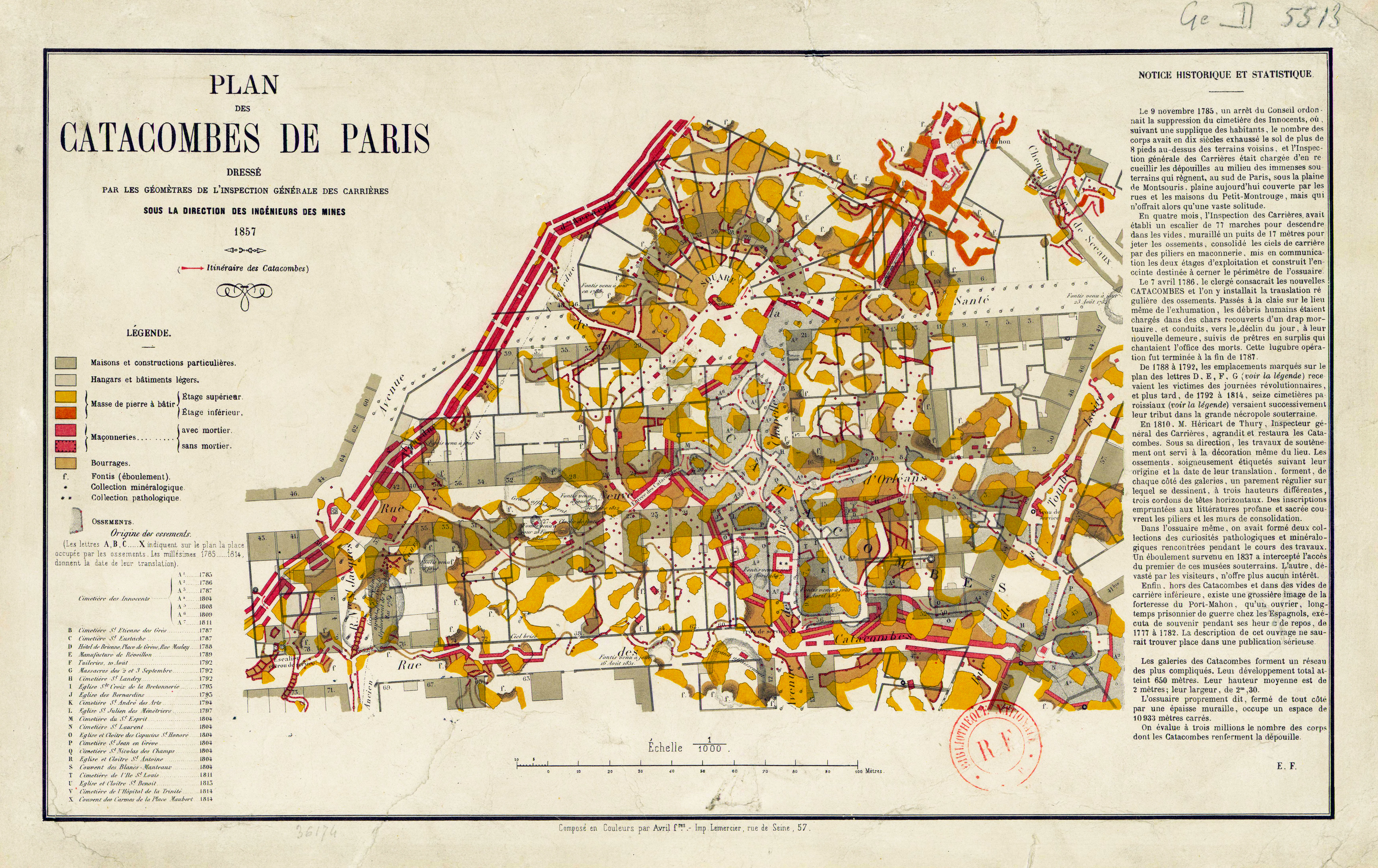
Plan_cata_paris_1857_jms

Your hosts, as always, are Luke Kelly @thelukejkelly in Dublin, Ireland, Mark Boyle @markboyle86 in the UK, and Joe Byrne @anbeirneach in Galway, Ireland. Our theme music and other stings come from Thomas O’Boyle @thatthomasfella. We also feature music in this episode from friend of the show Will Woods. 

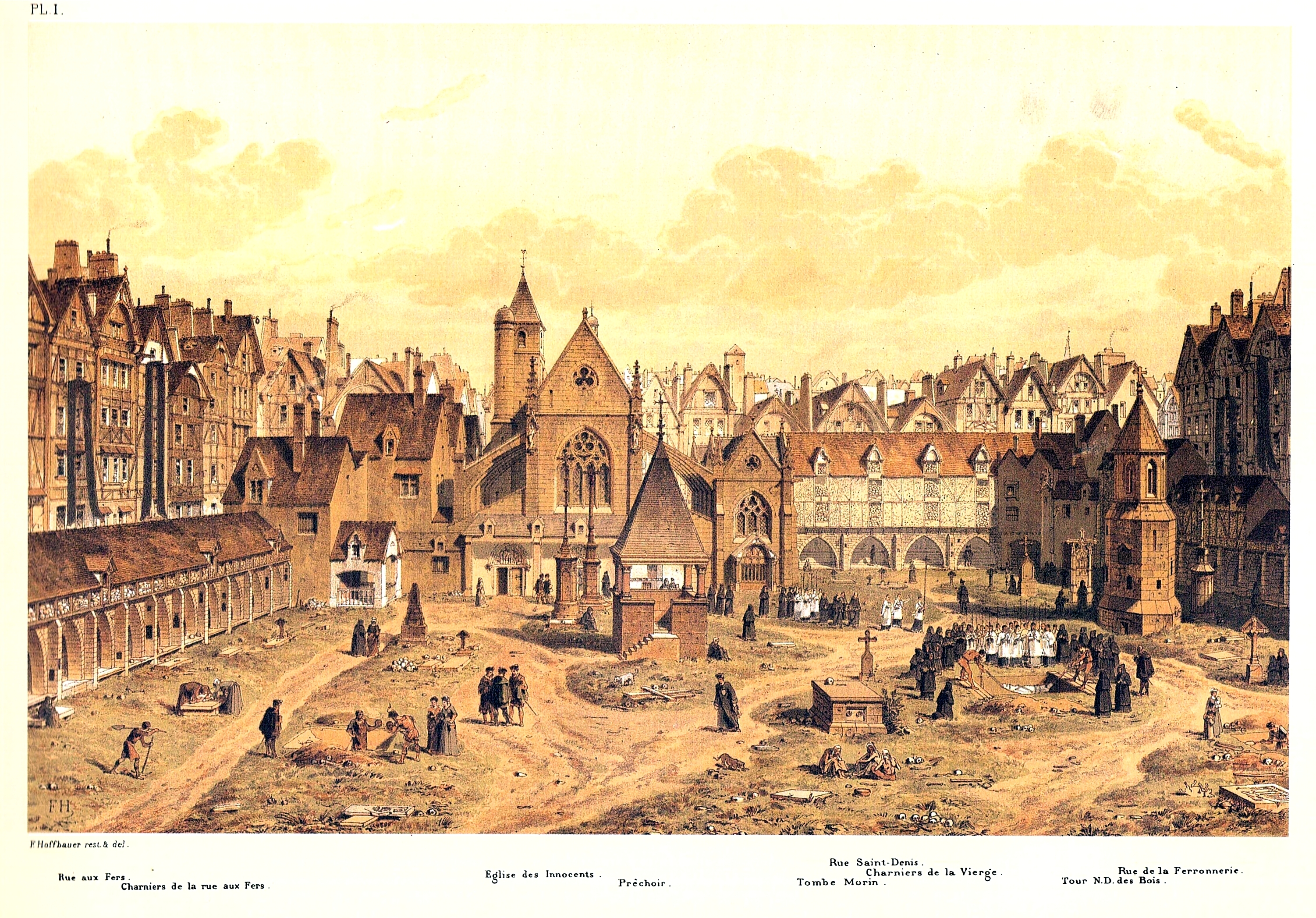
Saints_Innocents_1550_Hoffbauer

Cimetière des Saints-Innocents in around 1550 (via Wikipedia)

  • Plenty of additional media, articles and other info is available on the official website of the Catacombs.
  • Also check out Erin-Marie Legacey’s invaluable book ‘Making Space for the Dead’ here.
  • There’s plenty more that we didn’t discuss on the Cemetary of the Holy Innocents, which can be found here.
  • The Independent has an extensive piece on The Stones of Paris, aka Lutetian Limestone.
  • Wikipedia has an extensive article on the Danse Macabre, used and discussed in this episode.
  • More on Mushrooms? Gastro Obscura has you covered.
  • For more on the use of the Catacombs during the resistance, see Nigel Perrin’s full blog post here.
  • The Guardian has a full article on the 2017 wine theft we discussed.
  • This old tourist brochure from Archive.org has some really great photos and maps.
  • A brilliant article in The New Yorker entitled “The Invisible City Beneath Paris” is available here.
  • William Fetridge’s “The Rise and Fall of the Paris Commune”, quoted in this episode, can be found in full here.
  • The BBC also has a full podcast episode of their own dedicated to the Catacombs.

Thanks to all our patrons who support the show. We really appreciate your continued backing of us. If you want to join them, more information is available at www.patreon.com/80dayspodcast
Kaliningrad-Koenigsberg (S5.01)


Audio: Kaliningrad / Koenigsberg

We’re (finally) kicking off season five! In this episode of 80 Days: An Exploration Podcast, we’ll be talking about Kaliningrad, formerly Koenigsberg, a city on the Pregolya River, at the head of the Vistula Lagoon on the Baltic Sea. This city has a storied history, having been originally established as a Sambian or Old Prussian settlement, before being administered by the State of the Teutonic Order, the Duchy of Prussia, the Kingdom of Prussia, the German Empire, the Weimar Republic, and Nazi Germany. Shortly after the second world war, Königsberg and the lands surrounding it were incorporated into the USSR, being renamed Kaliningrad.

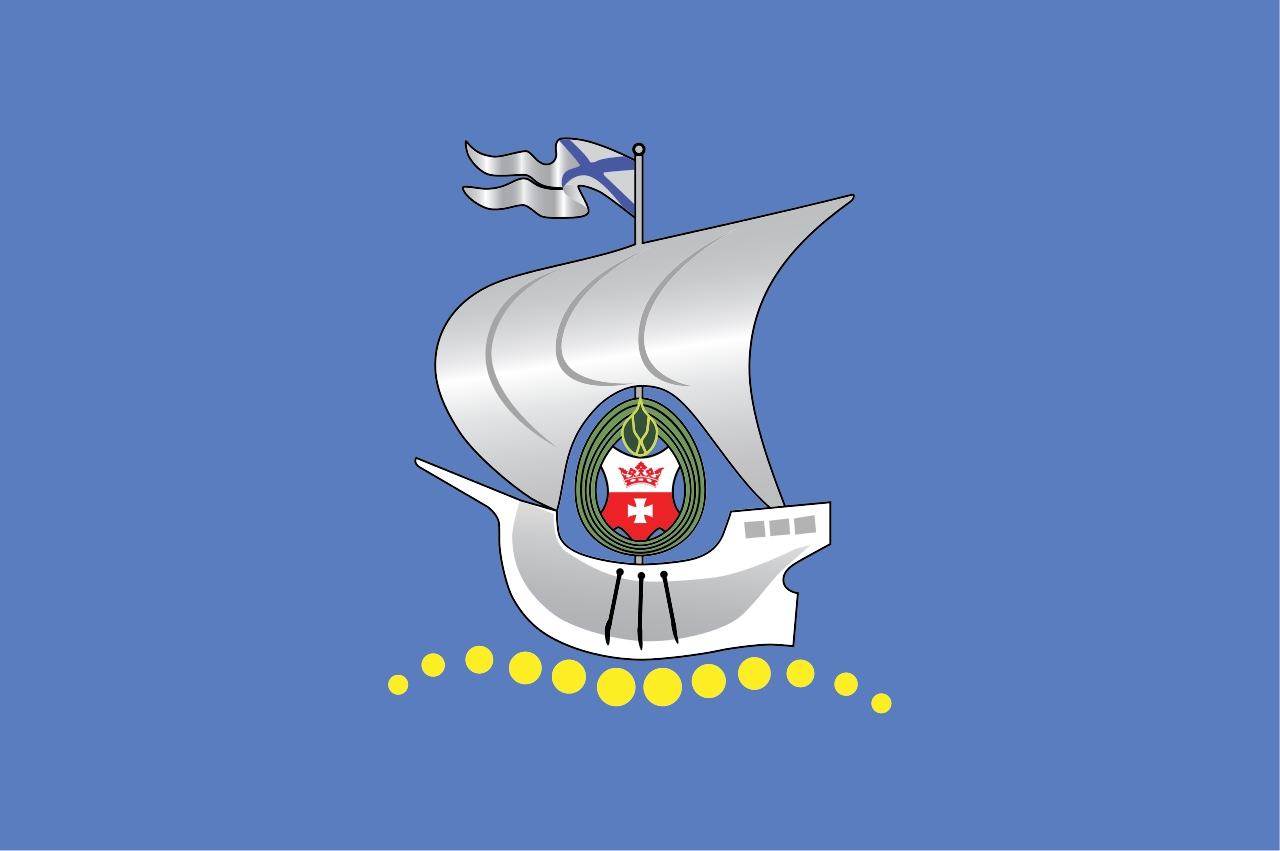
City Flag of Kaliningrad

City Flag of Kaliningrad

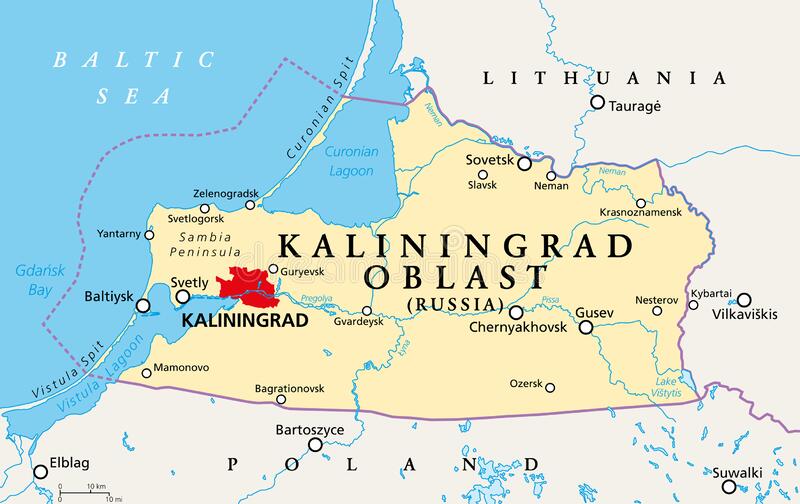
kaliningrad-oblast-federal-subject-russia-political-map-kaliningrad-oblast-political-map-kaliningrad-region-federal-subject-215675465

As a major transport hub, the city is home to the headquarters of the Baltic Fleet of the Russian Navy, and is one of the largest industrial centres in Russia. It is situated within the Kaliningrad Oblast, which is separated by around 400km from the next nearest Russian Oblast, bordered by Poland to the south, Lithuania to the north and east, and the Baltic Sea to the west. It is therefore impossible to travel overland between the Oblast and the rest of Russia without passing through at least two other countries. As of 2010, only a small number of ethnic Germans remain in the city, with most of residents being recent immigrants from other parts of the former Soviet Union. With a population of around 450,000, the city is similar in size to Miami, Florida, or Tallinn, Estonia, and is the 40th largest city in Russia. Kaliningrad and the lands surrounding are home to the world’s largest deposits of amber, with over 90% of the world’s supply.

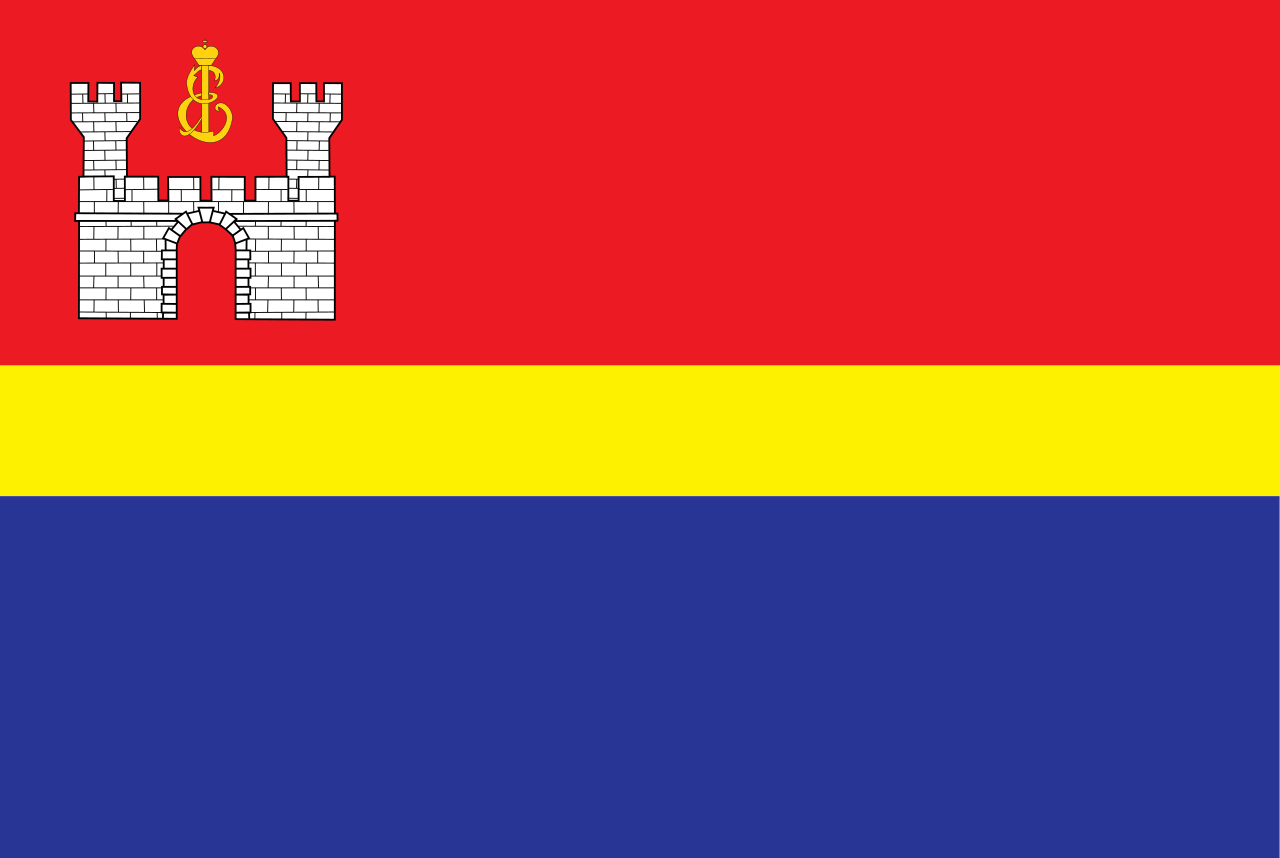
Flag of Kaliningrad Oblast

Flag of Kaliningrad Oblast

Your hosts, as always, are Luke Kelly @thelukejkelly in Dublin, Ireland, Mark Boyle @markboyle86 in the UK, and Joe Byrne @anbeirneach in Galway, Ireland. Our theme music and other stings come from Thomas O’Boyle @thatthomasfella. We also have to give huge thanks to Professor Nicole Eaton of Boston College for her help with this episode, and for giving us a sneak preview of her upcoming book (German Blood, Slavic Soil: How Nazi Germany Became Soviet Kaliningrad (Cornell UP, Fall 2022)). 

Some further reading:

  • One of the few remaining remnants of Old Prussian culture are the so-called “babas” (or “Old Hags”) which are stone figures up to 2m tall of warriors and priests scattered around Poland. Read more about them on Atlas Obscura.
  • Read more on the Sambians and their burial traditions here.
  • The 1963 book Balts by Gimbutas, Marija is available on Archive.org
  • PrussianHistory.org also contains a Short History of Koenigsberg.
  • For more on the Order of the Teutonic Knights, see imperialteutonicorder.com.
  • The architectural history and significance of Koenigsberg Cathedral, as well as some excellent archival photographs see here.
  • For more of the Battle of Grunwald, which Mark mentions in his section, see here.
  • Brandenburg-Prussia, in all it’s glory, can be seen in the map below:
Brandenburg-Prussia within and outside of the Holy Roman Empire (1618)

Some music by composers from in and around this city include:

Minisode: Christmas Stories

photo-1577188947090-95007502b22f

Minisode: Christmas Stories

In this festive episode of 80 Days: An Exploration Podcast, we’re inviting you all to join us for a little festive celebration, after what’s been a very hard year for many of you out there. On the menu we have three Christmas stories, as well as a surprise or two, and a short sneak preview of what’s to come in season 5. We really want to take the time to thank our patrons, many of whom joined us in the past 12 months, so we’ll be sprinkling our thanks to them throughout this episode.

Your hosts, as always, are Luke Kelly @thelukejkelly in Dublin, Ireland, Mark Boyle @markboyle86 in the UK, and Joe Byrne @anbeirneach in Kildare, Ireland. Brand spanking new minisode theme music comes from Thomas O’Boyle @thatthomasfella. Cover image from Алсу Ягудина on Unsplash.

Svalbard (S4.10)

S04E10 Svalbard Audio

In this episode of 80 Days: an exploration podcast, we’ll be talking about Svalbard (also known as Spitsbergen), a small polar archipelago off the northern coast of Norway. Svalbard is by far the most northerly place we’ve covered on the show, lying roughly midway between continental Norway and the North Pole, around 580 miles (930 km) north of Tromsø, Norway. The archipelago consists of nine main islands, the main island being Spitsbergen, which makes up over half of the land area. In total, Svalbard has a land area of around 24,209 square miles (62,700 square km), making it similar in size to Sri Lanka or the US state of West Virginia. There are only 2,500 permanent residents here, most of whom live in the main city of Longyearbyen. First settled as an arctic whaling base in the 17th century, the islands later saw the establishment of coal mining towns, but in recent years Svalbard’s main economic lifeline has been tourism and arctic research, both of which have boomed recently. Due to its extreme northern latitude, in the summer, the sun does not set on Svalbard for 4 months, while in the winter the archipelago goes weeks without any sunlight at all. Svalbard is also notable for being home to the Global Seed Vault, while as of 2012, all residents must carry a gun while travelling outside an established settlement, in case they encounter one of the many polar bears that live nearby.

Your hosts, as always, are Luke Kelly @thelukejkelly in Dublin, Ireland, Mark Boyle @markboyle86 in the UK, and Joe Byrne @anbeirneach in Kildare, Ireland . (Theme music by Thomas O’Boyle @thatthomasfella)


Thanks to Dr Ciaran McDonough (@metamedievalist), Sonja Murto, Aengus Ó Maoláin and Roxana Cremer (@cloudcycling) for talking to us about their first-hand experiences visiting or living in Svalbard. They were invaluable to giving us a full picture of the place.

Some further reading:

  • More on the Pomors, believed to be some of the earliest inhabitants of this region can be found here.
  • The Svalbard Museum has a wonderful section on their website about whaling in the Arctic.
  • An August 1906 article in Nature entitled “The Early History of Spitsbergen” can be found here.
  • For more on Basque whaling, see NABO’s article here.
  • Svalbard-Spitsbergen.com has more reading on the charming-sounding settlement of Smeerenberg, also known as “Blubbertown”.
  • The article concerning Horatio Nelson’s visit to Spitsbergen can be found here.
  • For more on the early scientific expeditions on Svalbard, see this article from Svalbard-Spitsbergen.com
  • The Svalbard Museum has more on hunting and trapping, as well as the discovery of coal.
  • One of the travel guides we referenced on Svalbard can be found for free on Google Books.
  • The “Tragedy at Swedish House” is detailed in an article in Polar Record, which can be found here.
  • You can read more on the history of the Dutch settlement on Barenstburg on visitsvalbard.com.
  • Military Wiki has an extensive article on Operation Gauntlet, which was discussed in this episode.
  • You can read more on the King’s Bay Affair here.
  • An article on Medium details the doomed Vnukovo Airlines Flight 2801, entitled “The crash that changed Svalbard forever.”
  • Thinking of visiting Pyramiden? It’s here on TripAdvisor.
  • Future North: The Changing Arctic Landscape, referenced in this episode, can be found on Google Books here.
  • Take a virtual tour of the Global Seed Vault here, or learn more about it by listening to Endless Thread‘s episode “The Vault
  • This American Life: episode 630 “Things I Mean to Know”, about the Novaya Zemlaya Effect
  • Bowhead [whales] are jazz” article about baleen whalesong and its surprising diversity

Music:

Videos:

Luxembourg (S4.04)

S04E04 Luxembourg Audio

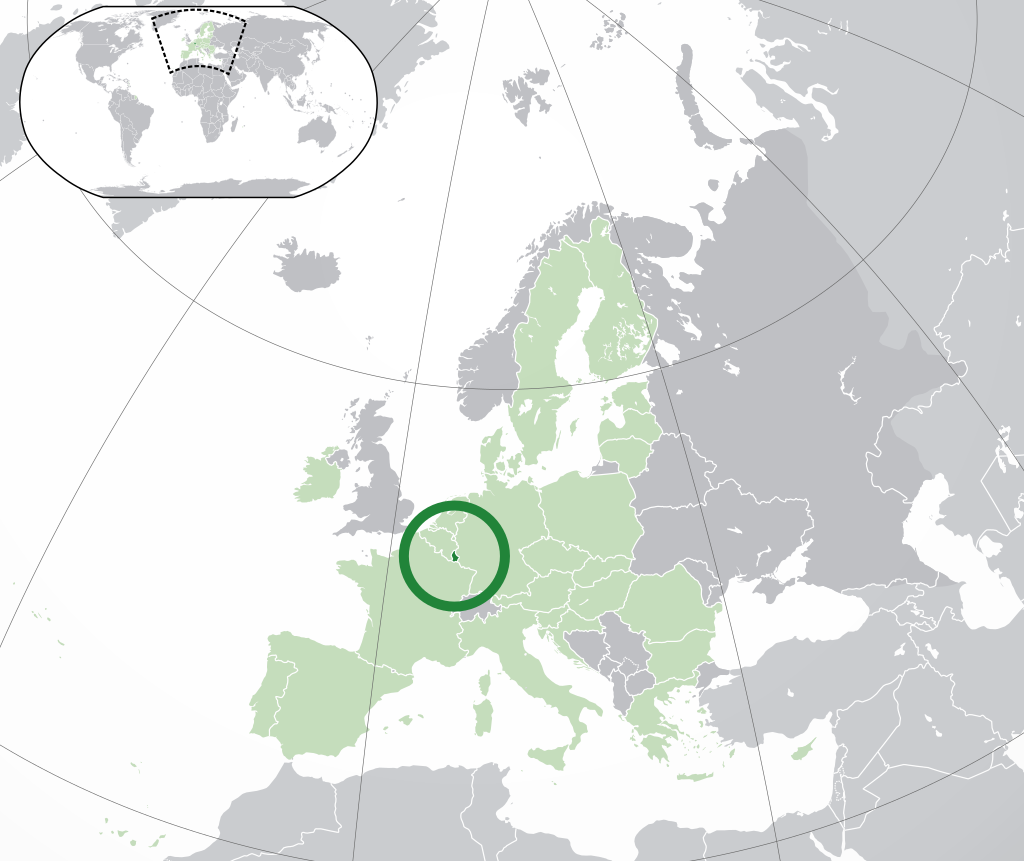
In this episode of 80 Days: An Exploration Podcast, we’ll be talking about Luxembourg, a small, landlocked European country at one of the central crossroads of Europe, bordered by Belgium, France and Germany.  Officially known as the Grand Duchy of Luxembourg, the country has around 600,000 inhabitants and spans a total area of around 2,500 square kilometres or 1,000 square miles, making it roughly the same size as Hong Kong and about two thirds the size of the smallest US state – Rhode Island. The world’s only remaining Grand Duchy, it has been referred to throughout history as the ‘Gibraltar of the North’ for its strong fortifications and although that fortress has been occupied many times throughout its long history, since the 10th century it has always been a separate, if not autonomous, political entity. Today, the capital city of Luxembourg is one of three capitals of the European Union and is much better known for its financial prowess rather than its military fortifications. Most citizens here are at least trilingual, speaking French, German and Luxembourgish, and although it has one of the EU’s smallest populations, Luxembourg also has the fastest-growing population in Europe.

Location of .mw-parser-output .nobold{font-weight:normal}Luxembourg (dark green) – in Europe (green & dark grey) – in the European Union (green)

This episode, just like all of our recent ones, is supported by our Patreon backers. If you want to help out the show, you can help out by joining us over on www.patreon.com/80dayspodcast to give us whatever you can in terms of financial support and avail of all the lovely awards and extras that entitles you to. If you’re unable to support us financially, you can always leave us a review on Apple Podcasts or wherever you get your podcasts from.
Joe visited Luxembourg for us to do some research. Here are some photos from around the city and its fortifications:

This slideshow requires JavaScript.

Your hosts, as always, are Luke Kelly @thelukejkelly in Hong Kong, Mark Boyle @markboyle86 in the UK, and Joe Byrne @anbeirneach in Ireland . (Theme music by Thomas O’Boyle @thatthomasfella)


Some further reading:

This slideshow requires JavaScript.