Ceuta (S6.10)

Audio: Ceuta

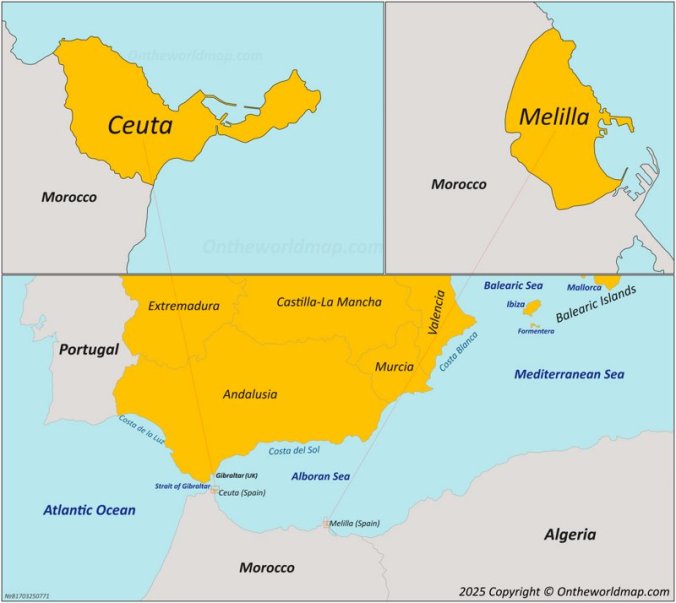
In this episode of 80 Days: An Exploration Podcast we’ll be talking about the autonomous city of Ceuta — Spanish exclave, military post, and free port on the coast of Morocco, at the Mediterranean entrance to the Strait of Gibraltar. Ceuta, Melilla (also an exclave), and other tiny islets along the coast of North Africa constitute the territories of Spanish North Africa. The city is on a narrow isthmus that connects Mount Hacho (also held by Spain) to the mainland. Mount Hacho has been identified as possibly the southern Pillar of Heracles, of the ancient Mediterranean world. Ceuta was controlled by the Muslim Umayyad Dynasty up to 1415, and then changed hands a number of times over the 15th and 16th Centuries. It played an important role in the Spanish Civil War, and gained its modern autonomous status in 1995. Ceuta’s land area is only about 18.5 square kilometres or 7 square miles, making it among the smallest places we’ve ever talked about, and has a population of around 80,000, similar to  Andorra, the Isle of Man or the US Virgin Islands. 

The climate here is warm but moderated by the straits, with mean annual temperatures of 18 °C (65 °F) with average highs of 21 °C (70 °F) and lows of 15 °C (60 °F). The currency is the Euro, and the language is Spanish, with a strong Arabic presence. 

Ceuta and Melilla are the only piece of EU territory on mainland Africa – a political and legal reality that has never been recognised by Morocco, which claims both territories to this day. 

Fun Fact – Western Sahara was a previously-Patreon-backed finale episode. You guys just have a real hankering for contentious North African territories, don’t you?

As we mention in the episode, this (somewhat delayed) finale to season 6 was voted on by our Patreon backers, and thanks as always to all of them for their support. You can sign up to Patreon to get a say in the episodes we cover in the seasons to come.

Your hosts, as always, are Luke Kelly @thelukejkelly in Wexford, Ireland, Mark Boyle @markboyle86 in Toronto, Canada, and Joe Byrne @anbeirneach in Dublin, Ireland. Our theme music and other stings come from Thomas O’Boyle @thatthomasfella.

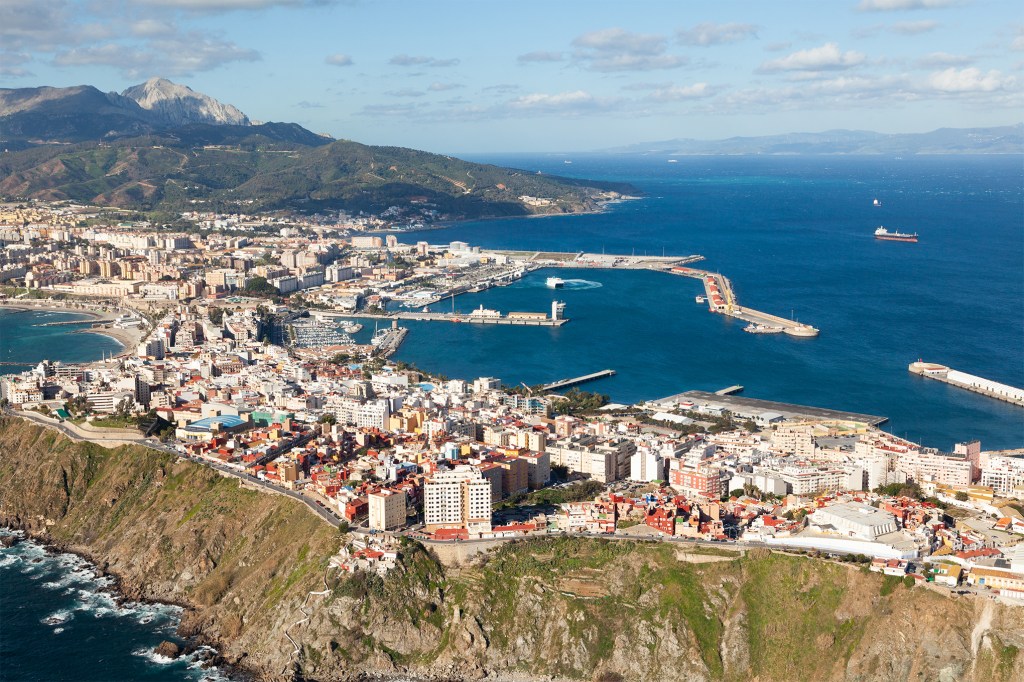
Ceuta with Mount hacho visible in the background

Some further reading material is provided below:

  • This BBC Explainer on the status of Ceuta and Melilla is a good starting point for beginners. The BBC also has a useful factsheet.
  • This CNN feature headlined “Inside the tiny corner of Spain that lies in the middle of North Africa” is another useful primer.
  • History blog “A Small Part of History” has a lengthy post about the conquest of Ceuta by Portugal.
  • For a more visceral look at the city, this video travel guide of Ceuta from Travel Obscurer is worth checking out.
  • One of the many books we referenced in this episode was Europe or Africa? : a contemporary study of the Spanish North African enclaves of Ceuta and Melila by Peter Gold. It’s available on Archive.org.
  • We also spoke about Count Julian, whose Wikipedia page is well worth perusing.
  • Mark lent on A.R. Disney’s A History of Portugal and the Portuguese Empire – From Beginnings to 1807 for his section. You can find an excerpt here.
  • Another useful read was The Spanish Exclaves in Morocco by Robert Rézette, which is available on Google Books.
  • Anyone for a Wikipedia list of “People with the most children“? If you’ve heard Joe’s section, you’ll know why.
  • For more on Lieutenant John Fraser and his trusty leg bone, see the National Army Museum.
  • WebHispania has a fascinating blog post by Antonio M. Carrasco headlined The Ceuta border: a constant source of misunderstanding and conflict.
  • The UK’s National Maritime Museum has a whole page dedicated to Cueta in the Napoleonic Wars.
  • The UNHCR report on Anti-Muslim Hatred and Discrimination in Ceuta we mentioned is available here.
  • The substantial page on Wikipedia dedicated to the border fence is here. More can be found in World of Walls: The Structure, Roles and Effectiveness of Separation Barriers by Said Saddiki which is available online here.
  • On Franco and the Spanish Civil War, worth a read is The Crescent and the Dagger: Representations of the Moorish Other during the Spanish Civil War by Elisabeth Bolorinos Allard, available here.

Some of the music used in the episode includes:


Thanks to all our patrons who support the show. We really appreciate your continued backing of us. If you want to join them, more information is available at www.patreon.com/80dayspodcast

Aaland (S6.04)

Audio: Åland

In this episode of 80 Days: An Exploration Podcast we’ll be talking about Åland, an autonomous and demilitarized archipelago of Finland, which lies between Finland and Sweden, although it is closer to the latter by around 20km. Åland (which can also be spelled Aaland) is the smallest region of Finland by both area (1,580 km2 or 610 sq mi) and population (30,000), constituting around half a percent of Finland’s land area and half a percent of its population. Despite being Finnish, the only official language is Swedish and the capital city is Mariehamn. Aaland is made up of around 6,700 islands, making it one of the world’s largest archipelagos. 

Since the end of WWI, Åland has been politically neutral and entirely demilitarised, and residents are exempt from conscription to the Finnish Defence Forces.

Fasta Åland or Main Åland is the largest island in the group and accounts for more than 70 percent of the total land area and is home to about 90 percent of the archipelago’s population, as well as the capital Mariehamn. In terms of land area, Aaland is comparable to the Faroe Islands, American Samoa, Guam, Oahu (Hawaii). Out of approximately 6,500 islands, 65 are inhabited with several connected through causeways and bridges. The rest are linked by ferries and private boats. 

Åland’s original name was in the Proto-Norse language Ahvaland. Proto-Germanic ahwō is related to the Latin word for water, aqua. In Swedish, this first developed into Áland and eventually into Åland, literally ‘river land’—even though rivers are not a prominent feature of Åland’s geography. For reasons I’m sure we’ll get to, almost all the houses, and pretty much all the roads, are red. There are also roughly as many deers here as there are people.

Your hosts, as always, are Luke Kelly @thelukejkelly in Dublin, Ireland, Mark Boyle @markboyle86 in Toronto, Canada, and Joe Byrne @anbeirneach in Dublin, Ireland. Our theme music and other stings come from Thomas O’Boyle @thatthomasfella.
Flag_of_Åland
Aland-Islands-map

Some further reading material is provided below:

Music includes:

  • The recording on Svea Jannson’s “Who Can Sail Without Wind” is here on Wikipedia.
  • You can find Oolanin Sota (the Finnish Crimean war song) on YouTube.


Thanks to all our patrons who support the show. We really appreciate your continued backing of us. If you want to join them, more information is available at www.patreon.com/80dayspodcast

Kalmykia (S5.10)

Audio: Kalmykia

In this episode of 80 Days: An Exploration Podcast, thanks to our backers on Patreon, we’ll be talking about Kalmykia, a republic and country of Russia located directly north of the North Caucasus in Eastern Europe, between Ukraine and Kazakhstan, only around 200 miles or 350km north of Georgia. The Kalmyks, of Mongol origin, migrated to the Caspian region in the 17th century from Central Asia. They were mainly nomadic cattle breeders. Kalmykiya was established in 1920 as an autonomous oblast (region); in 1936 it became a republic, which was abolished in 1944 when the Kalmyks were exiled for alleged collaboration with the Germans during WW2. 

The territory of Kalmykia is unique in that it has been the home in successive periods to many major world religions and ideologies. Prehistoric paganism and shamanism gave way to Judaism amongst some of the Khazars (who included Muslims and Christians in equal or greater numbers as well). This was succeeded by Islam with the Alans while the Mongol hordes brought Tengriism, and the later Nogais were Muslims, before their replacement by the present-day Buddhist Oirats/Kalmyks. It now stands as the only Buddhist region in Europe. 

The republic covers an area of around 76,000 square kilometres (or almost 30,000 square miles), making it a similar size to Panama, Czechia or the US state of South Carolina. With a population of about 275,000 residents Kalmykia ranks among the smallest of Russia’s federal districts in terms of population. 

The Kalmyks benefit from their relatively high levels of education and strong international connections. Overseas communities are found today in many parts of Europe and in the United States. The head of the religious establishment in Kalmykia itself was born in Philadelphia before being recognized by the Dalai Lama as a reincarnation of a Buddhist saint. 

The capital and largest city of the republic is Elista, which has gained a reputation for, of all things, international chess. And for you Star Wars fans, the Ewok language was based on Kalmyk, because George Lucas thought it sounded so odd.  

_45840472_kalmykia226 (1)
Screenshot 2022-08-10 at 21.38.02
Your hosts, as always, are Luke Kelly @thelukejkelly in Dublin, Ireland, Mark Boyle @markboyle86 in the UK, and Joe Byrne @anbeirneach in Galway, Ireland. Our theme music and other stings come from Thomas O’Boyle @thatthomasfella. 
As we mention in the episode, this finale to season 5 was voted on by our Patreon backers, and thanks as always to all of them for their support. You can sign up to Patreon to get a say in the episodes we cover in the seasons to come.

Some further reading for this episode:

An excellent documentary from DW on Kalmykia

Music used in this episode:

Thanks to all our patrons who support the show. We really appreciate your continued backing of us. If you want to join them, more information is available at www.patreon.com/80dayspodcast

See you in Season 6!

Kaliningrad-Koenigsberg (S5.01)


Audio: Kaliningrad / Koenigsberg

We’re (finally) kicking off season five! In this episode of 80 Days: An Exploration Podcast, we’ll be talking about Kaliningrad, formerly Koenigsberg, a city on the Pregolya River, at the head of the Vistula Lagoon on the Baltic Sea. This city has a storied history, having been originally established as a Sambian or Old Prussian settlement, before being administered by the State of the Teutonic Order, the Duchy of Prussia, the Kingdom of Prussia, the German Empire, the Weimar Republic, and Nazi Germany. Shortly after the second world war, Königsberg and the lands surrounding it were incorporated into the USSR, being renamed Kaliningrad.

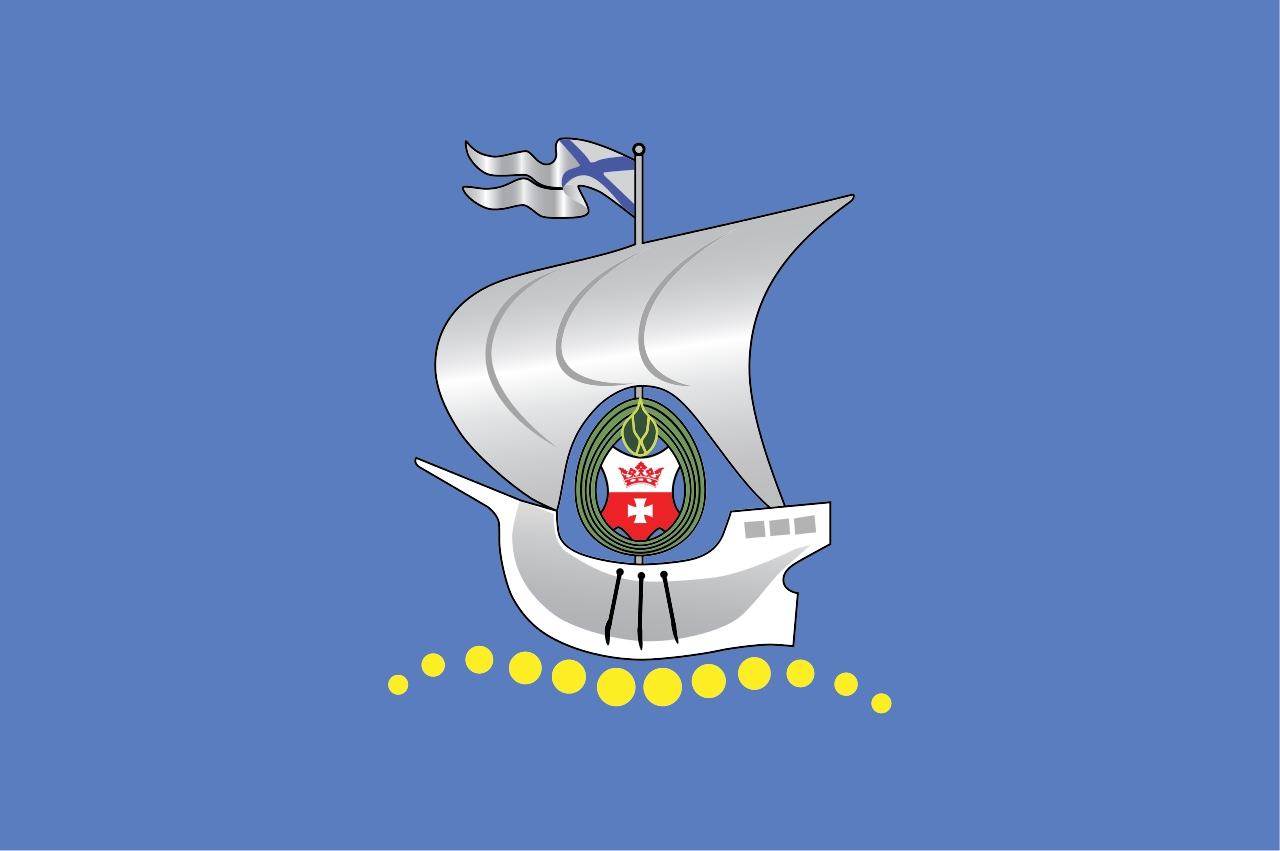
City Flag of Kaliningrad

City Flag of Kaliningrad

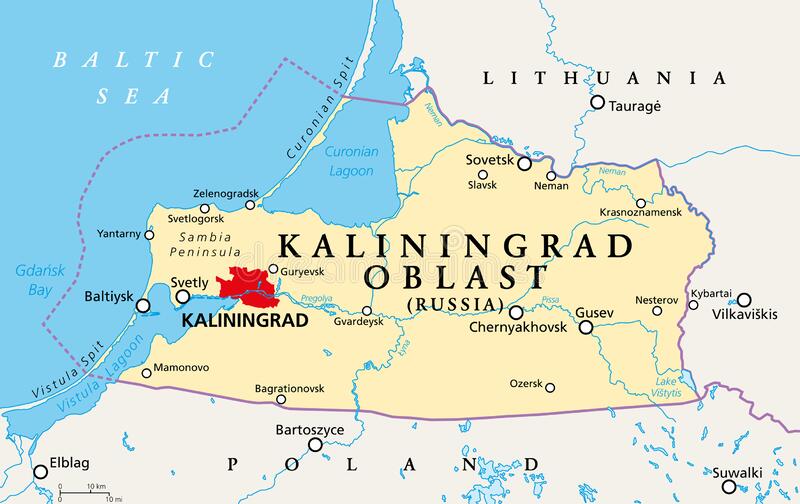
kaliningrad-oblast-federal-subject-russia-political-map-kaliningrad-oblast-political-map-kaliningrad-region-federal-subject-215675465

As a major transport hub, the city is home to the headquarters of the Baltic Fleet of the Russian Navy, and is one of the largest industrial centres in Russia. It is situated within the Kaliningrad Oblast, which is separated by around 400km from the next nearest Russian Oblast, bordered by Poland to the south, Lithuania to the north and east, and the Baltic Sea to the west. It is therefore impossible to travel overland between the Oblast and the rest of Russia without passing through at least two other countries. As of 2010, only a small number of ethnic Germans remain in the city, with most of residents being recent immigrants from other parts of the former Soviet Union. With a population of around 450,000, the city is similar in size to Miami, Florida, or Tallinn, Estonia, and is the 40th largest city in Russia. Kaliningrad and the lands surrounding are home to the world’s largest deposits of amber, with over 90% of the world’s supply.

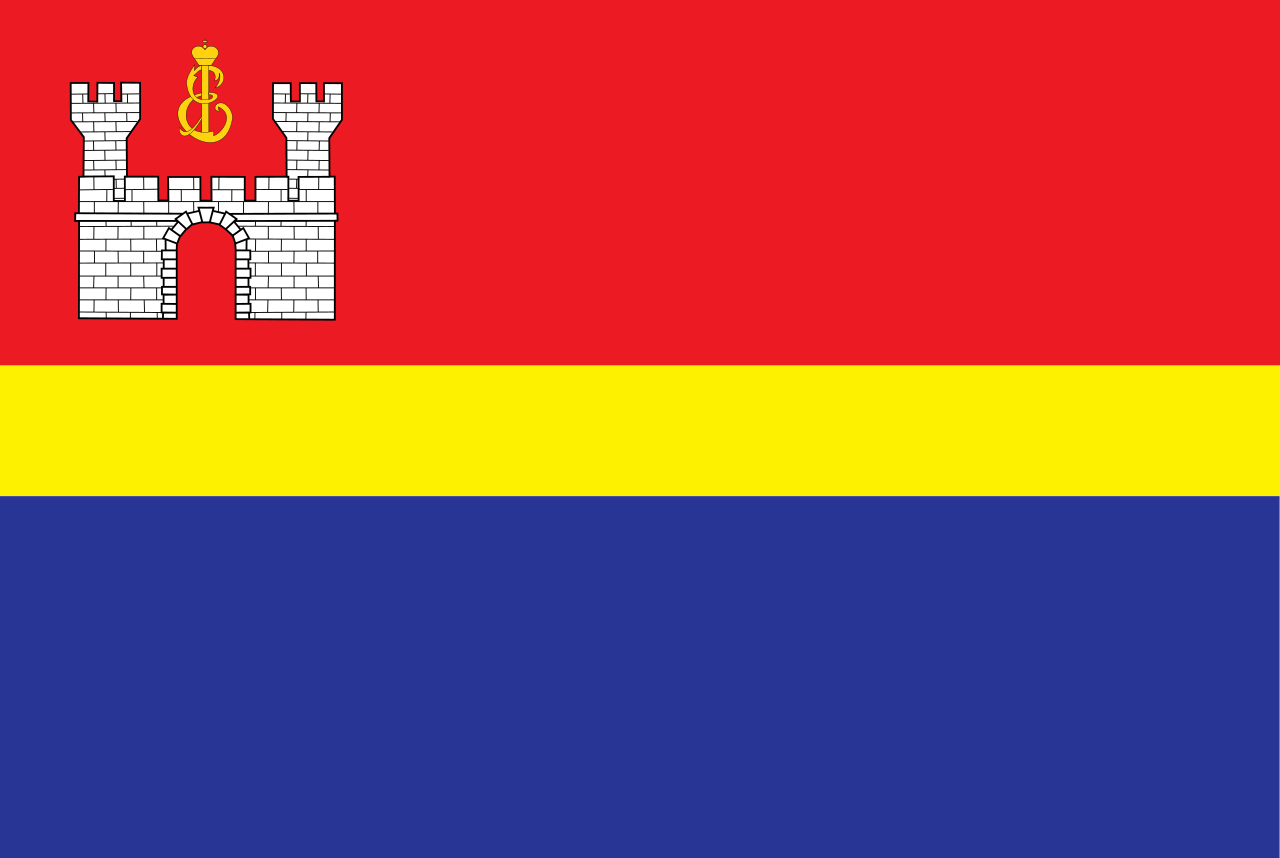
Flag of Kaliningrad Oblast

Flag of Kaliningrad Oblast

Your hosts, as always, are Luke Kelly @thelukejkelly in Dublin, Ireland, Mark Boyle @markboyle86 in the UK, and Joe Byrne @anbeirneach in Galway, Ireland. Our theme music and other stings come from Thomas O’Boyle @thatthomasfella. We also have to give huge thanks to Professor Nicole Eaton of Boston College for her help with this episode, and for giving us a sneak preview of her upcoming book (German Blood, Slavic Soil: How Nazi Germany Became Soviet Kaliningrad (Cornell UP, Fall 2022)). 

Some further reading:

  • One of the few remaining remnants of Old Prussian culture are the so-called “babas” (or “Old Hags”) which are stone figures up to 2m tall of warriors and priests scattered around Poland. Read more about them on Atlas Obscura.
  • Read more on the Sambians and their burial traditions here.
  • The 1963 book Balts by Gimbutas, Marija is available on Archive.org
  • PrussianHistory.org also contains a Short History of Koenigsberg.
  • For more on the Order of the Teutonic Knights, see imperialteutonicorder.com.
  • The architectural history and significance of Koenigsberg Cathedral, as well as some excellent archival photographs see here.
  • For more of the Battle of Grunwald, which Mark mentions in his section, see here.
  • Brandenburg-Prussia, in all it’s glory, can be seen in the map below:
Brandenburg-Prussia within and outside of the Holy Roman Empire (1618)

Some music by composers from in and around this city include:

Luxembourg (S4.04)

S04E04 Luxembourg Audio

In this episode of 80 Days: An Exploration Podcast, we’ll be talking about Luxembourg, a small, landlocked European country at one of the central crossroads of Europe, bordered by Belgium, France and Germany.  Officially known as the Grand Duchy of Luxembourg, the country has around 600,000 inhabitants and spans a total area of around 2,500 square kilometres or 1,000 square miles, making it roughly the same size as Hong Kong and about two thirds the size of the smallest US state – Rhode Island. The world’s only remaining Grand Duchy, it has been referred to throughout history as the ‘Gibraltar of the North’ for its strong fortifications and although that fortress has been occupied many times throughout its long history, since the 10th century it has always been a separate, if not autonomous, political entity. Today, the capital city of Luxembourg is one of three capitals of the European Union and is much better known for its financial prowess rather than its military fortifications. Most citizens here are at least trilingual, speaking French, German and Luxembourgish, and although it has one of the EU’s smallest populations, Luxembourg also has the fastest-growing population in Europe.

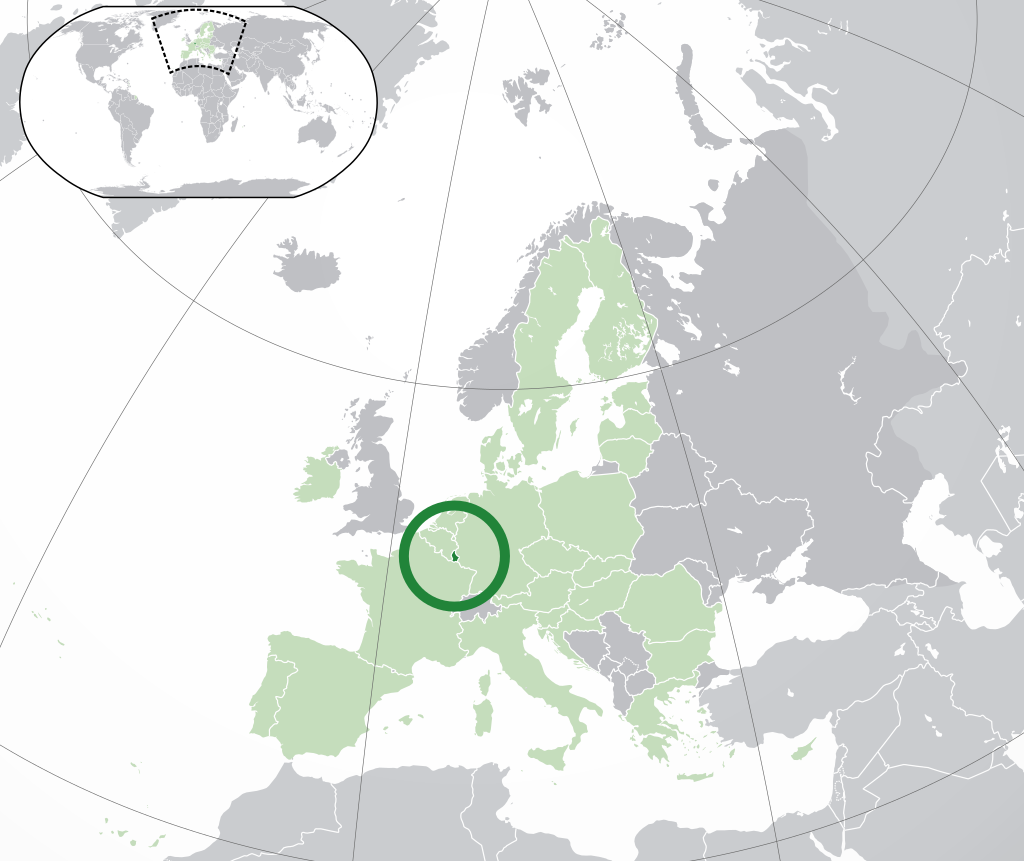
Location of .mw-parser-output .nobold{font-weight:normal}Luxembourg (dark green) – in Europe (green & dark grey) – in the European Union (green)

This episode, just like all of our recent ones, is supported by our Patreon backers. If you want to help out the show, you can help out by joining us over on www.patreon.com/80dayspodcast to give us whatever you can in terms of financial support and avail of all the lovely awards and extras that entitles you to. If you’re unable to support us financially, you can always leave us a review on Apple Podcasts or wherever you get your podcasts from.
Joe visited Luxembourg for us to do some research. Here are some photos from around the city and its fortifications:

This slideshow requires JavaScript.

Your hosts, as always, are Luke Kelly @thelukejkelly in Hong Kong, Mark Boyle @markboyle86 in the UK, and Joe Byrne @anbeirneach in Ireland . (Theme music by Thomas O’Boyle @thatthomasfella)


Some further reading:

This slideshow requires JavaScript.


San Marino (S3.02)

S03E02 San Marino Audio

In this episode we’ll be talking about the Most Serene Republic of San Marino, the world’s oldest constitutional republic, and a country that is, in itself, a historical oddity. Similarly to other European microstates, such as Monaco, Liechtenstein and Andorra  it’s a relic of a time when borders were formed based on the area that a cannon could reach from a city’s walls. Founded on the slopes of Mount Titano in 301 AD, this tiny republic has seen the rest of Europe consolidate around it, surviving attacks by other self-governing Italian city-states, the Napoleonic Wars, the unification of Italy, and two world wars. Today, it’s borders are entirely enclosed by Italy, making it one of only three countries in the world to be enclosed by another nation.

It is the smallest independent state in Europe after Vatican City and Monaco and, until the independence of Nauru (1968), was the smallest republic in the world, at just 61 square kilometre (23.6 square miles). Tourism dominates the economy of modern day San Marino.  which plays host to more than three million visitors every year, while the republic is home to just over 30,000 people.

Your hosts, as always, are Luke Kelly @thelukejkelly in Hong Kong, Mark Boyle @markboyle86 in the UK, and Joe Byrne @anbeirneach in Switzerland . (Theme music by Thomas O’Boyle @thatthomasfella)

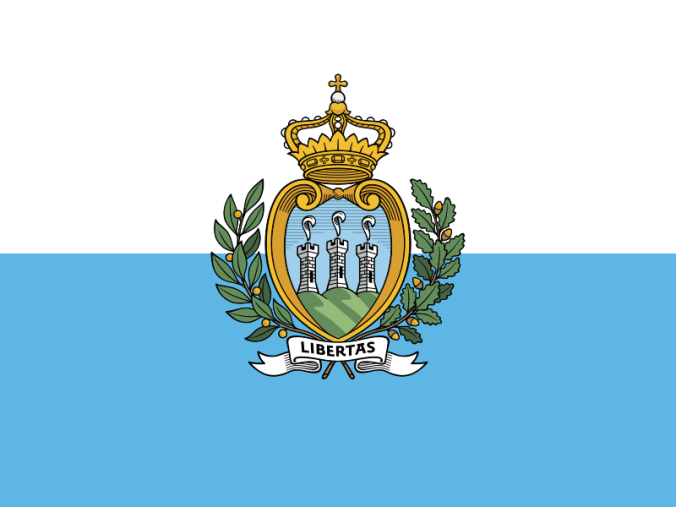
Flag of San Marino   

Here are a few things you may want to read/watch more about:

Music you heard was from the following sources:

A massive thanks to all of our patrons on Patreon who are supporting season 3. If you’d like to join them and see what rewards are available for supporters, and get a peek behind the curtain check out www.patreon.com/80dayspodcast. We really appreciate every penny!

Birobidzhan, the Jewish Autonomous Oblast (S2.10)

Birobidzhan Audio Link

In this episode of 80 Days: An Exploration Podcast, we’ll be discussing the Jewish Autonomous Oblast (JAO), a somewhat independent region in the Russian Far East wedged between Siberia and Northern China. Its capital is the city of Birobidzhan, and with 75,000 inhabitants it is by far the most populated part of the region. For that reason, the name Birobidzhan is often used to refer to the whole area.

Officially founded in 1934 as an attempt to create a Jewish state within Russian borders, the territory was the world’s first attempt at a Jewish national homeland in modern times, and today is Russia’s only autonomous oblast. Aside from Israel, it is the world’s only officially Jewish territory. As of the 2010 Census, JAO’s population was 176,558 people, or 0.1% of the total population of Russia. Judaism is practiced by only 0.2% of the population of the JAO.

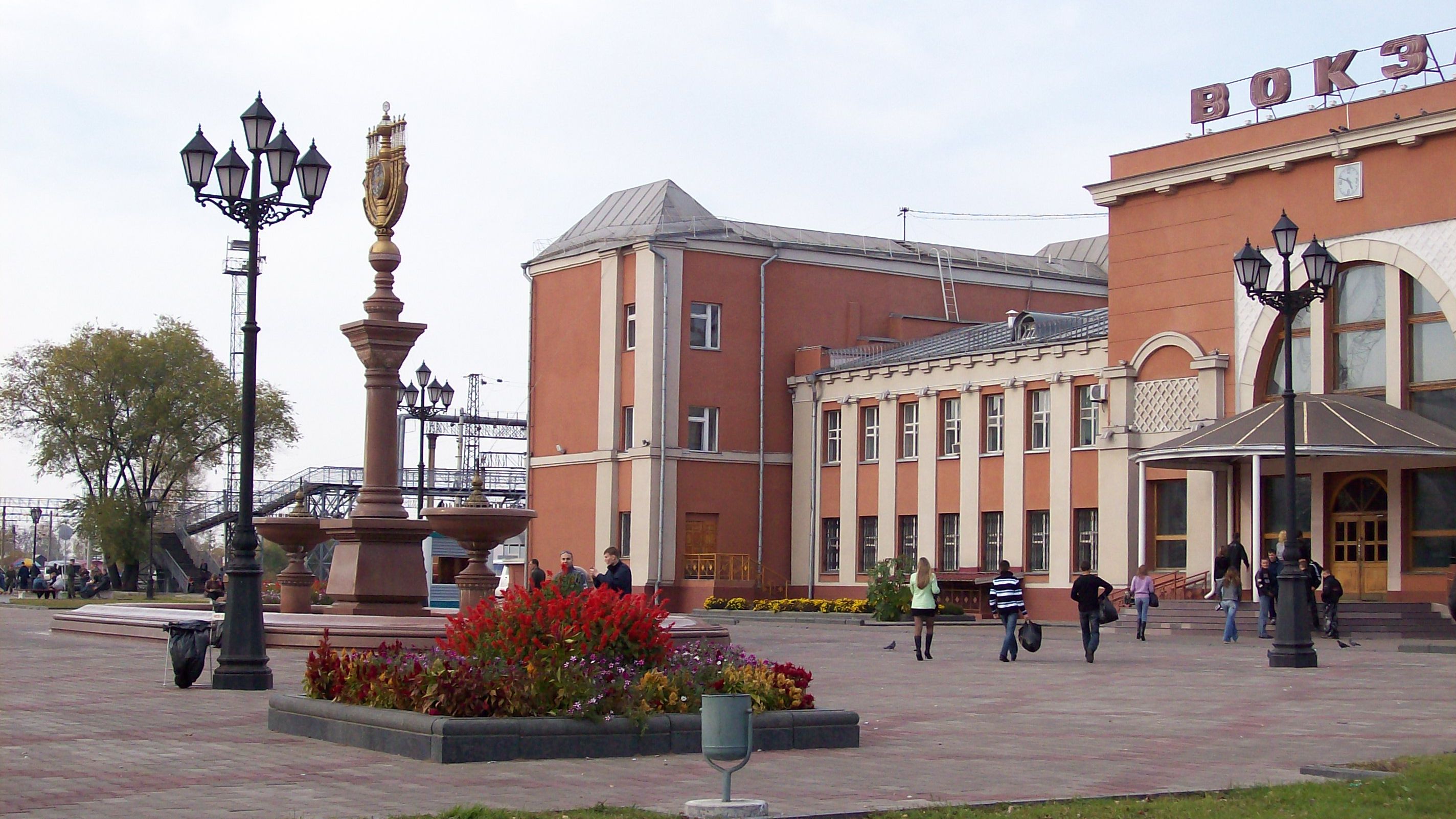
Биробиджан,_вокзальная_площадь

This special episode was commissioned by one our very generous Kickstarter backers, Ian Prince from New York (who does terrible things with food on Instagram). Your hosts are Luke Kelly @thelukejkelly in Hong Kong, Mark Boyle @markboyle86 in the UK, and Joe Byrne @anbeirneach in Switzerland. (Theme music by Thomas O’Boyle)

jewish-autonomous-oblast-flag

The somewhat familiar-looking flag of Birobidzhan

karte02-Birobidschan-u-transsibirische-eisenbahn

Some sources and further reading for this episode;

  • Masha Gessen’s Where The Jews Aren’t was the basis for this commissioned episode, you can find it on Amazon here, or listen to the author talk about it on NPR’s Fresh Air here
  • We also relied heavily on this excellent multimedia gallery from Swarthmore College, entitled Stalin’s Forgotten Zion.
  • An interview from People’s World with Masha Gessen provides some solid background on the region.
  • We mentioned the RT profile of Birobidzhan in this episode, you can find that here on YouTube.
  • The New York Times profiled Birobidzhan back in 2012. It’s worth a read.
  • The book Jews and Jewish Life in Russia and the Soviet Union by Yaacov Ro’i has some interesting info on the JAO and wider context surrounding Jewish communities in Russia.
  • If you’re interesting in learning more about Stalin in particular, you can check out our episode from earlier this season on Georgia, birthplace of “Joe Steel”.
  • Michigan State University has a good article on the history of the region, as well as some visual essays here.

Thanks to Louise Ireson, John Killeen, Simon Greene for your support on Kickstarter. Thanks too to Rabbi Eliyahu Riss in Birobidzhan for interviewing with us.

We also need to thank our sponsor for the season Hairy Baby, who in addition to making the funniest Irish-themed t-shirts, have also produced the official 80 Days shirt for our supporters. Find it by clicking here. You can get 10% off anything on www.hairybaby.com by using our promo code “80DAYS”.

This will be the final episode for this season, but never fear, we’ll be back with more obscure goodness soon. We’re extremely grateful to everyone who’s supported us over the past year and a bit of podcasting, and if you want to hear more stay subscribed to the feed and keep an eye on Facebook, Twitter and Instagram.

We’ll see you soon!

Georgia or “Sakartvelo” (S2.07)

S02E07 Georgia Audio

In this episode of 80 Days: an exploration podcast we’ll be talking about Georgia. Not the US state, but the country in the south caucasus, known to its inhabitants as “Sakartvelo”. This former Soviet Republic is nestled between the Black Sea and the Caspian Sea, and is home to around 3.7 Million people with a history dating back thousands of years. Throughout its history, Georgia has been subject to numerous larger powers, including the Mongols, the Ottoman Empire, and dynasties of Persia (Iran) and the Soviet Union. As the Iron Curtain fell, Georgia declared its independence and has operated as a modern Republic ever since. It’s neighbour to the North, Russia, however, has ensured that Georgia’s hold over independence has never been as secure as most Georgians would like. Ethnic conflicts and economic turmoil beset the country throughout the 1990s, culminating in the brief Russo-Georgian war of 2008, from which tensions still remain to this day.  

Your hosts are Luke Kelly @thelukejkelly in Hong Kong, Mark Boyle @markboyle86 in the UK, and Joe Byrne @anbeirneach in Switzerland . (Theme music by Thomas O’Boyle)

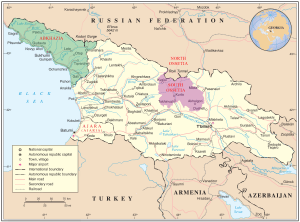
Map of Georgia, indicating disputed areas

Here are a few things you may want to read/watch more about:

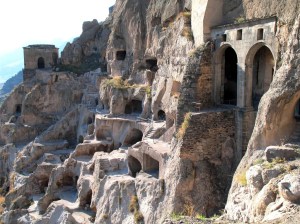
The stunning mountain fortress of Vardzia today (Wikimedia Commons)

Most of the music in this episode were examples of Georgian polyphonic singing, a very important style of music, being the oldest polyphonic music in the world (singled out by UNESCO as a vital aspect of cultural heritage).Some examples are:

  • “Chakrulo”, which was one of 27 musical compositions included on the Voyager Golden Records that were sent into space on Voyager 2 on 20 August 1977.
  • Here’s another example in the “Georgia and the Great Caucasus” documentary

Georgian folk dancing is also a wonderful tradition, here are a few videos of that:

Finally, we promised to include the video of the insane baptism rituals available in the Georgian Orthodox Church, so from EuroNews, here it is:

A massive thanks to the inimitable Gary O’Daly and Jeffrey Dokar, two of the backers of our recent Kickstarter Campaign – thank you for making Season 2 possible. Big thanks also to Mariam Kalandarshvili for talking to us and helping us understand (and pronounce) some elements of Georgian history; we now know that the capital is T’bee-lee-see! Thanks too to our sponsor Hairy Baby, who in addition to making the funniest Irish-themed t-shirts, have also produced the official 80 Days shirt for our supporters. Find it by clicking here. You can get 10% off anything on www.hairybaby.com by using our promo code “80DAYS”.

Gibraltar (S1.08)

Audio: S1E08 Gibraltar

In this week’s episode of 80 Days, we are talking about Gibraltar the “key to the Mediterranean”. Famous for the imposing Rock of Gibraltar, this 6.7 square kilometre British Overseas Territory is an historic anomaly at the tip of the Iberian peninsula with a unique status and culture. It forms the northern side of the Pillars of Heracles which mark the beginning of the Atlantic Ocean. The tiny territory is also famous for its Barbary macaques, the only  wild monkey population in Europe. Your hosts are Luke Kelly @thelukejkelly, Mark Boyle @markboyle86 and Joe Byrne @anbeirneach, in Hong Kong, the UK and Ireland, respectively. (Theme music by Thomas O’Boyle)


There are some things we talked about you might want to know more about:

  • Archaeological finds at Gorham’s Cave and other sites have given evidence that Neanderthals lived her until about 32,000 years ago – much more recently than had previously been expected. It is thought that this area was a lush Savannah climate at the time and very rich in food and resources. The BBC have a report from when the caves were granted UNESCO World Heritage status earlier this year.
  • The name Gibraltar comes from the Arabic Jabal Tariq (جبل طارق) named for Tariq ibn Ziyad who led the Moorish/Umayyad conquest of what is now Spain in the 710s; he had gathered his invading troops at the Rock of Gibraltar before pressing inland.
  • In 1706, when the English took the Rock during the War of Spanish Succession, nearly all of the inhabitants decamped to the City of Gibraltar in the Fields of San Roque, expecting a temporary stay. The Spanish city of San Roque is still there to this day and still features symbols of Gibraltar in its crest
  • Gibraltar’s status as an British territory was regularised, by Article X of the Treaty of Utrecht (1713)

The Catholic King does hereby, for himself, his heirs and successors, yield to the Crown of Great Britain the full and entire propriety of the town and castle of Gibraltar, together with the port, fortifications, and forts thereunto belonging; and he gives up the said propriety to be held and enjoyed absolutely with all manner of right for ever, without any exception or impediment whatsoever.

Crew of the HMS Wasp who demolished O’Hara’s Tower (O’Hara’s Folly)

  • New Statesman has an article describing the history behind the legends that tie the presence of the famous Barbary macaques to British control of the Rock

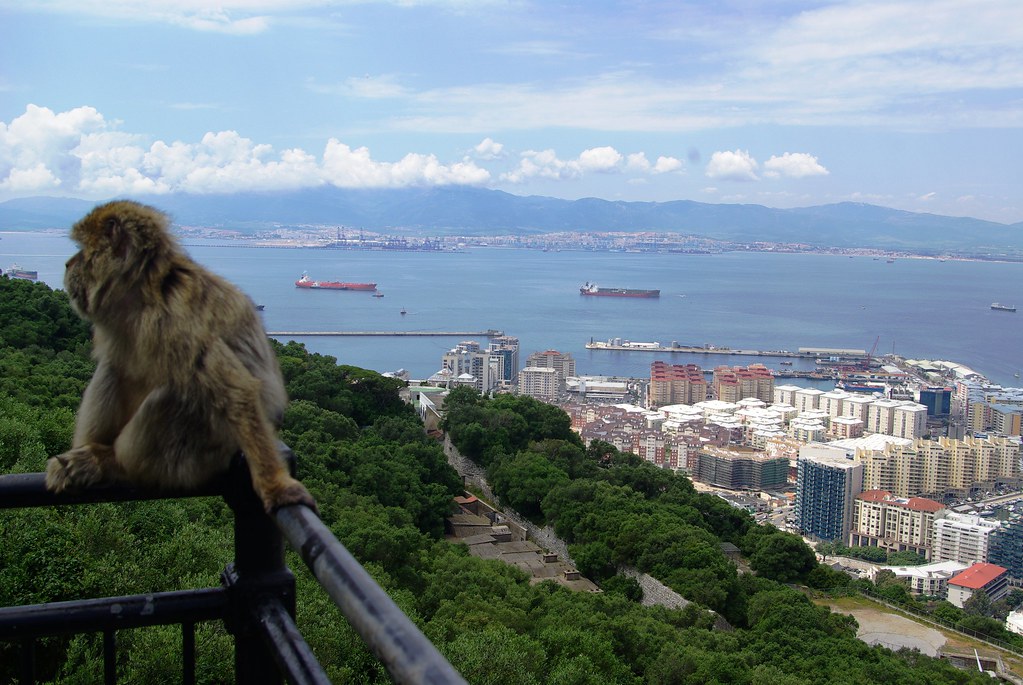
View of Gibraltar with barbary ape

Photo of a “Barbary Ape” over Gibraltar by user kanu101 on Flickr

  • We spoke about the unusual airport that spans Gibraltar’s entire border with Spain and crosses the main street; there is a video on YouTube which shows the airport from above and a plane taking off from its short runway

Isle of Man (S1.07)

Audio: S1E07 Isle of Man

In this week’s episode of 80 Days, we are talking about the Isle of Mana small island in the Irish sea that lies right between Britain and Ireland. From its highest point Snaefell (620 m, 2034 ft), it is said you can see 6 kingdoms: England, Ireland, Wales, Scotland, Man and Heaven. It’s known for its rugged landscape, motorsport and a very curious flag. Today, the island is a British crown dependency although it has never been a part of the United Kingdom. It’s 85,000 inhabitants, 28,000 of whom live in the capital, Douglas, on the east coast are spread over the island’s 572 square kilometers. The Isle of Man’s fascinating history has made for a unique pocket of culture within the British isles, a place that has never been truly overcome by the powers surrounding it, and has always stood apart. Your hosts are Luke Kelly @thelukejkelly, Mark Boyle @markboyle86 and Joe Byrne @anbeirneach, in Hong Kong, the UK and Ireland, respectively. (Theme music by Thomas O’Boyle)

We are all Irish, but the Isle of Man, despite its proximity is really that neighbour we don’t know very well. Needless to say, we learned a lot this week about the smallest Celtic nation.

There are some things we talked about you might want to know more about:

Mull Hill Neolithic site

Mull Hill Neolithic site