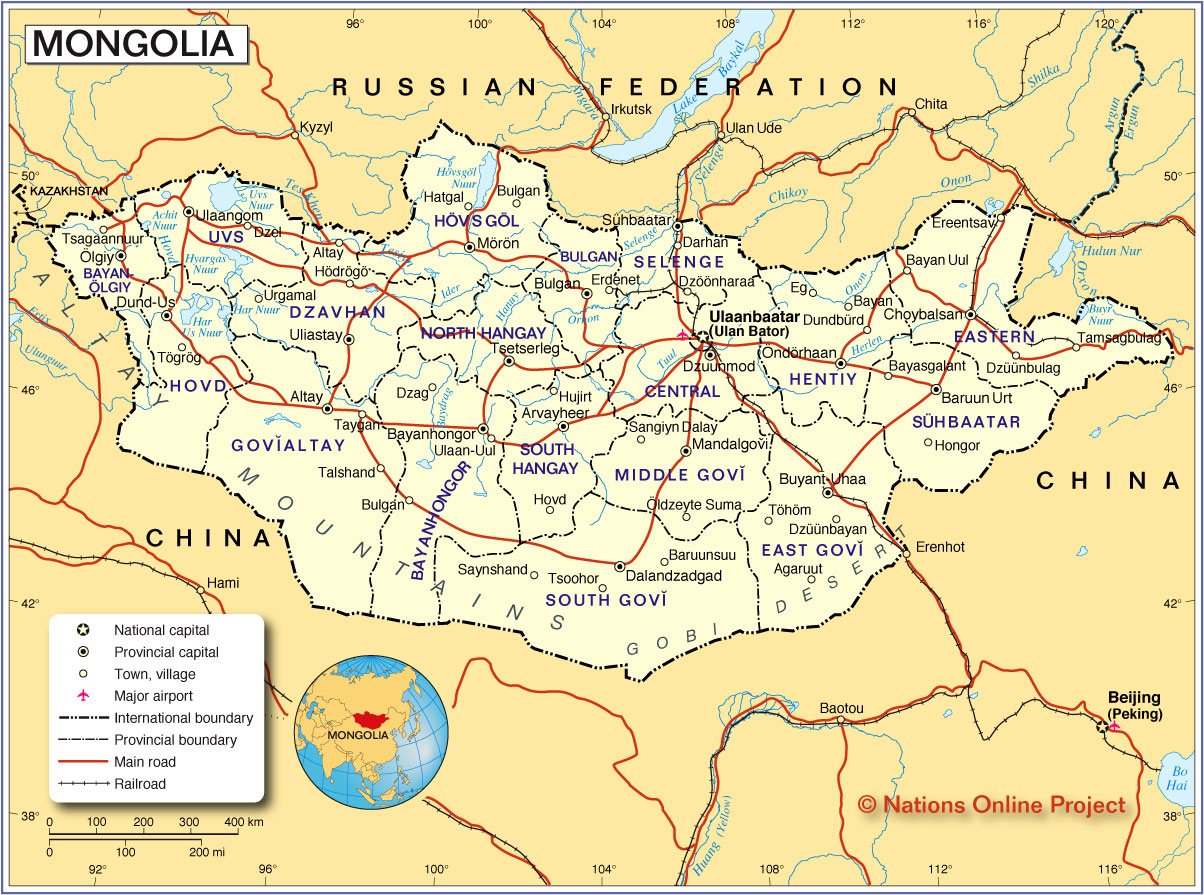
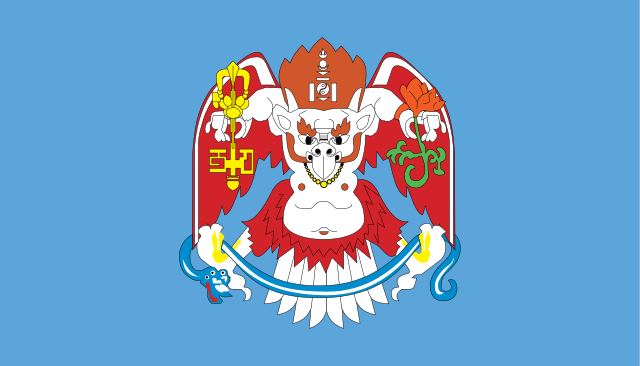
In this episode of 80 Days: An Exploration Podcast, we’ll be talking about Ulaanbaatar, the capital city of Mongolia. Its modern name means ‘Red Hero’ and it is a city that has had many names including Urga, Örgöö, and Ikh Khuree. Ulaanbaatar was originally founded in 1639 as a nomadic Bhuddist monastery, essentially a moveable city, and was not permanently settled at its current location in 1778, where it became a crucial trading hub between Russia and China. The city is located in present-day north central Mongolia, around 1000km or 700 miles northwest of Beijing and about 500km or 300 miles south of Irkutsk, Russia. Its current population is around 1.5 million, meaning it contains around 50% of Mongolia’s residents, and is comparable in population to San Diego or Munich.
At the end of the 17th century, present-day Mongolia became part of the area ruled by the Manchu-led Qing dynasty. During the 20th century, Mongolia struggled against strong influences from the Soviet Union and China, until the Mongolian Revolution of 1990 led to the establishment of a multi-party democratic system. In terms of climate, it can be extremely chilly here. The city experiences an annual average temperature of −1.3°C (around −30 Fahrenheit) and temperatures in January are as low as −36 to −40 °C, making it the world’s coldest capital city.
Your hosts, as always, are Luke Kelly @thelukejkelly in Dublin, Ireland, Mark Boyle @markboyle86 in the UK, and Joe Byrne @anbeirneach in Galway, Ireland. Our theme music and other stings come from Thomas O’Boyle @thatthomasfella.
We’ve also just launched a merch store in associated with TeePublic. You can find our store by clicking here, with exclusive discounts at the time of publishing.
Some useful resources for further reading include:
- Timeline – A Brief History of Mongolia
- A. M. Pozdneyev – Presenting the Results of a Trip Taken in 1892 and 1893 Urga or Da Khuree
- For ancient history and archaeology, check out: “Archaeology of a sacred mountain: mounds, water, mobility, and cosmologies of the Ikh Bogd Uul, Eastern Altai Mountains, Mongolia” by Cecilia dal Zovo; History of Siberian Archaeology; and more on the Noin Ula Burial Site which Mark mentions here.
- On geology, see here
- Wikipedia has a whole article on the beautiful Mongolian script we discussed
- If you couldn’t quite catch the name of the significant religious leader of the Mongols, more information on his various names on Wikipedia: Jebtsundamba Khutuktu
- The New Books Network podcast had a very interesting interview with Uranchimeg Tsultemin the author of “A Monastery on the Move”, which talks about Zanabazaar and his artistic legacy
- Another key source for Mark’s second section was The Bloody White Baron by James Parker.
- Travels Through Mongolia to China (Vol. 1) by Egor Fedorovich Timkowski is on archive.org (1827)
- Also on archive.org is Mongolia, the Tangut country, and the solitudes of northern Tibet, being a narrative of three years’ travel in eastern high Asia by Nikolai Mikhailovich Przhevalskii (1876)
- More on brick tea in The Russian Road to China by Lindon Wallace Bates, on archive.org here. (1910)
- InfoMongolia.com
- For a more modern perspective, we referenced The Changing World Of Mongolia’s Nomads by Melvyn C. Goldstein
- More on the assassination of Mr Sanjaasuregiin Zorig, which Joe discussed, can be found here.
- The Guardian also has a great piece on “Mongolia’s New Wealth.”
- See here for a news article about the 9th Bogd Khan receiving Mongolian citizenship
- Check out the Bogd Khan’s Winter Palace, and the Gandan Monastery
- More about the Nadaam festival, and local cuisine
- Music from this episode can be found on YouTube, with traditional Mongolian music, as well as some amazing Mongolian throat singing towards the end.
Thanks to all our patrons who support the show. We really appreciate your continued backing of us. If you want to join them, more information is available at www.patreon.com/80dayspodcast

 80 Days