Welcome to our third episode in season 2 of 80 Days: an exploration podcast. Today we will be looking at the little island paradise of the Seychelles, a country made up of an archipelago of 115 islands in the Indian Ocean. This former British colony has a population of just over 90,000, the smallest of any independent African state, and lies 1,500 kilometres (or 932 miles) off East Africa.
Like neighbouring Madagascar, the islands are best known for their unique geology and diverse wildlife populations. White sand beaches and clear blue oceans abound here, in what was once a haven for pirates marauding throughout the Indian Ocean. A tropical rainforest climate ensures that the islands are hot and humid year-round. Victoria, the capital city of Seychelles, is the smallest capital in the entire world, with a population of around 27,000 and the country today is one of the most prosperous in all of Africa.
Table of Contents: [01:10] Intro – sounds pretty nice tbh [02:07] Early history – coco de mer the rudest fruit [06:28] Discovery – Seychelles can’t get no respect
[14:00] Pierre Poivre & other French colonial hijinks [19:54] As usual the British turn up and Seychelles surrenders many times [26:13] Welcome to the Empire Seychelles [29:24] Seychelles – exotic prison colony with balls, baths and Birch
[36:30] Smut(s) and WW2’s loyal aliens
[40:30] Independence – Brits start to feel bad
[45:44] Commie Coup
[53:20] Mad Mike Hoare and his bad couping
[1:00:37] Democracy, climate change and geology
[1:04:22] Food – sharks and tiny persons [1:07:13] Economy – tourism & N. Korean… friendship [1:37:07] Modern day
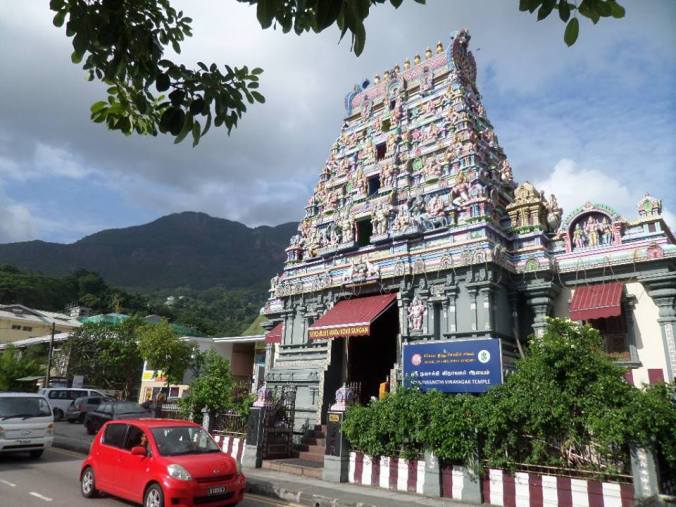
Hindu temple (credit: Murat Dagdeler)Key Facts
Smallest population of any independent African state (92k) mostly on Mahé
1500 km east of African mainland
115 islands in archipelago spread over 1m sq km
Unique Geology
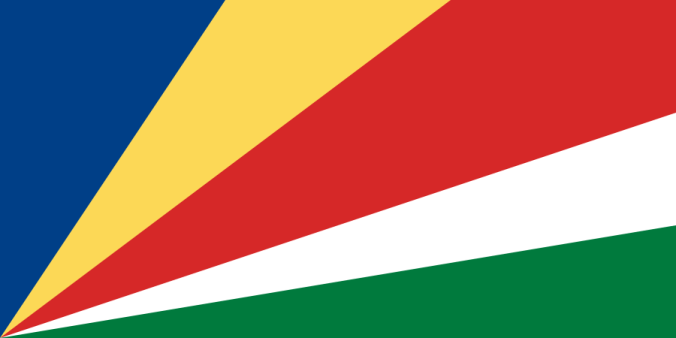
Interesting flag, looks like a combination of Hungary and Romania (/r/vexillology) – third flag since independence, adopted after end of single-party state
Low temp of 24 degrees, highs in the 30s…
Mix of granite islands (only examples and oldest islands in the World) and coral islands (very new)
And here’s the coco de mer that got us all so… excited. Think you can see why.
Lodoicea maldivica MHNT.BOT.2007.26.21
Thanks to Rob Curran & Krista Phillips for their generous Kickstarter support. You guys are heroes.
And a massive thank you, as always to our sponsor Hairy Baby, makers of the funniest Irish-themed clothing. Remember to get a 10% discount off anything you buy on their website (www.hairybaby.com) by using our special promo code, read out during the episode. We recommend the 80 Days official tee.
Welcome to our second episode in season 2 of 80 Days: an exploration podcast. Today we will be exploring the fascinating history and culture of Easter Island.
Named by Dutch explorer Jacob Roggeveen, on Easter Sunday in 1722, the island is best known for the 887 extant monumental statues, called moai, which were built by the early Rapa Nui people. The island is one of the most isolated in the world, lying more than 1,289 miles from its nearest inhabited neighbour, and almost 2,200 miles from the closest continental point, in Chile. The tiny volcanic island consists of just 163.6 km2 or 63.2 sq mi, making it roughly twice the size of Manhattan. The native population, the Rapa Nui, have endured famines, disease, population collapse, civil war, slave raids and colonial power struggles, and the island was most recently annexed by Chile in 1888. Today, Easter Island is home to around 6,000 people, the majority of whom are descended from the original Rapa Nui settlers.
Table of Contents: [01:20] Intro – a seriously isolated island [05:17] Dr Mara Mulrooney – on polynesian explorers [14:42] The mystery – where did all the people go?
[18:08] Moai – giant stone heads [27:50] The other explanations for the mystery [36:53] “Discovery” – Roggeveen, Dutch idiot [42:32] Was there a Civil War…?
[46:30] Birdman Cult
[53:38] Catholics, slavery, smallpox and Joseph Byrne
[1:07:44] Dutrou Bornier – A bad man
[1:13:55] Salmond and his sheep and Chile takes over
[1:21:11] Mana and the Routledge archaeological expedition
[1:29:23] Thor Heyerdahl expedition [1:32:15] Pinochet’s law is like Pinochet’s love [1:37:07] Modern day
If an almost 2 hour podcast doesn’t sufficiently wet your knowledge whistle as it were, feel free to get into some of the bits and pieces from around the internet that we used for background research.
But before that please feast your eyes on the ill-advised result of Mark’s Moai instagram photoshoot.
And now you can check out some of the main reference links for the podcast!
Thanks this week to backers Nick Ison and Alec Richman. And a massive thank you, as always to our sponsor Hairy Baby, makers of the funniest Irish-themed clothing. Remember to get a 10% discount off anything you buy on their website (www.hairybaby.com) by using our special promo code, read out during the episode. We recommend the 80 Days official tee.
Welcome to Season 2 of 80 Days: an exploration podcast. Today we will be exploring the fascinating history and culture of Singapore , the lion city. This tiny island city-state is home to 5.5 million people and is located just off the southern tip of the Malay peninsula, one degree north of the equator. It’s a country without seasons, remaining hot and humid year-round, and gained full independence just 51 years ago, although it wasn’t a cause for celebration at the time, as we’ll see. Since then, Singapore has developed rapidly as an Asian Tiger economy, despite its lack of any natural resources and today is one of the most well-developed and successful cities in the world.
Table of Contents: [05:02] Early History and founding of the “Lion City” [14:05] Dutch and British East India Companies in the area [17:41] Sir Thomas Stamford Raffles founds a British colony
[26:20] Singapore growing, with little government [31:00] Music break (traditional) [31:25] World War 1 aftermath and fortification of Singapore [35:38] World War 2, Battle of Malaya [44:43] Japanese Occupation [48:35] Post-war unrest, self-determination, the rise of Lee Kuan Yew [52:00] A Malaysia including Singapore [56:15] Involuntary Independence [58:22] Music Break (modern patriotic song) [59:00] Modern Singapore [1:05:55] Economy [1:09:15] Population planning [1:13:49] Crime and punishment [1:19:32] Languages: melting pot of speech [1:24:54] Military song in Singlish
Generally if you want to keep learning about Singapore in more depth, the following would be useful:
“History of Singpore” documentary on the Discovery Channel directed by Tim Lambert (Lion Television) 2005
The Hisory of Singapore podcast by PJ Thum (who teaches Southeast Asian history at Universoty of Oxford) – this gives very in-depth history of the city state. It is quite political and at times critical of the mainstream opinion of Singaporean history
Talk the Talk episode on Singlish, the unique ‘colloquial English’ dialect common in Singapore and its relationship to the many other languages spoken in this melting-pot country
Some things you might like to know more about:
Singapore’s early history showed the island appearing on the radar of the Greek geographer Ptolemy (as “Sabana”, c. 100 AD), in Chinese imperial records (as “Pú Luó Zhong/蒲罗中“, a transliteration of Malay name for “Island at the end”), and in Old Javanese epics (as “Temasek“, perhaps meaning “sea town”, a literal name for the fishing port that pre-existed the city inhabited by Orung Laut/”sea gypsies”). It is also widely described in the Malay Annals.
In the 14th century, legend tells of the Kingdom of Singapura being founded by Sang Nila Ultama , Srivijaya Prince from Palembang
He is the legendary source of the name “Singapore”, literally “Lion City” (in Sanskrit). It is told that upon landing on the island, he went hunting and saw a lion, which was considered an auspicious symbol. There is no historical evidence lions ever lived on the island. Accounts of the legend can be found on Remembering Singapore, from this school resource, or in the cartoon The Story of Singapore. Remembering Singapore is a very useful resource with lots of photographs of the island and further information.
Five generations later, Parameswara (alias Iskandar Shah) was an important figure, who lost Singapore to a Majapahit invasion, fled to Malacca and founded the sultanate there which became the core of the Malay world for centuries to come. The historical evidence of most details of his life are hazy, as is summarised here.
We mentioned the legend of Badang the strongman who placed the “Singapore Stone” in the harbour. There is an account of his tale in The Gentleman’s Magazine(1822).
In the early 19th Century, Sir Thomas Stamford Raffles played a key role in founding modern Singapore as a stronghold of the British East India Company. Many of his contributions to the country are listed in this article.
He was succeeded by William Farquhuar, who had a different vision for the settlement than Raffles and the two came into conflict over issues such as slavery and gambling, which Farquhar allowed, arguing that they were essential to the survival of the place.
The laissez-faire governmental style, as the settlement had a large influx of Chinese laborours meant that various secret societies or gangs became very powerful in Singapore as the place for the Chinese population to look for protection and support (see “The Social Life of Chinese Labor” by Adam McKeown)
The Government knows little or nothing of the Chinese, who are industrial backbone of these [Straits] Settlements; and the immense majority of them know nothing of the Government. We know that a certain number of Chinese arrive each year, and that a certain number go away; but how long they stay, how many come back a second time, what they think about and desire – as to all this we know nothing… We believe that the case majority of the Chinamen who come to work in these Settlements return to their country not knowing clearly whether there is a Government in them or not
“But they also showed a meanness and viciousness towards their enemies equal to the Huns’. Genghis Khan and his hordes could not have been more merciless. I have no doubts about whether the two atom bombs dropped on Hiroshima and Nagasaki were necessary. Without them, hundreds of thousands of civilians in Malaya and Singapore, and millions in Japan itself, would have perished” — Lee Kuan Yew’s memoirs
Post-war Singapore saw great changes, including social agitation and race riots as the British began to disengage from direct rule.
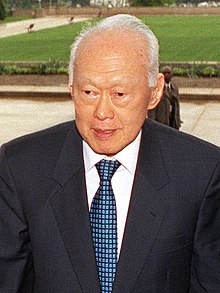
The most significant figure in the second half of the 20th Century was long-serving prime minister Lee Kuan Yew . Leader of the People’s Action Party, he became the unquestioned leader of the independent Singapore for 30 years, shaping the new country to his own vision through strict but largely fair rule.
In 1963, Lee fulfilled his ambition of seeing Singapore join into a political union with British Malaya, Borneo and Sarawak; the modern state of Malaysia – this project, however was doomed to failure because of racial and religious tensions between largely ethnic Malay/Muslim Malaya and the significant ethnic Chinese component of Singapore’s population.
Prime Minister Lee was very emotional when he announced to his people that Singapore was leaving the union and embarking on an unwished-for independence
Watch one of many Singaporean military songs in the distinctive Singlish language:
A few songs may interest you, also, some of which you will have heard:
“Dayung Sampan” – to quote it’s description on YouTube: “This video “Dayung Sampan” features Noraniza Idris, and He Yun (from China Hebei) playing the Erhu, a Chinese traditional instrument. “Dayung Sampan” is the Malay version of the famous Chinese tune “Tian Mi Mi” (甜蜜蜜). This is a fresh collaboration between the Malay and Chinese culture”
Ironic song by Dick Lee, making linguistic jokes and satirising modern politics
“Shine for Singapore” was commission for the 2008 National Day Parade and “One Singapore” was another later commission. Both are examples of patriotic pop songs.
Finally, make sure to check out our sponsor Hairy Baby on www.hairybaby.com! You can get 10% off any purchase using the promo code “80days” and pick up an official 80 Days t-shirt at this link.
Special thanks, also, this week to Paula Cantwell and Rowland Seymour for their backing of the show this season – very much appreciated!
For the festive season, 80 Days brings you a Christmas special on the most appropriate place we could think of, complete with reindeer and Santa Claus: Lapland, or – as the native Sami people prefer to call it – Sápmi. This is a large region of Fennoscandanavia, north of the Arctic Circle, with its territory spanning parts of Finland, Norway, Sweden and Russia (see map). This episode will touch on all areas of Lapland, but will focus primarily on the Finnish and Norwegian sides. The area is named for the indigenous people (and their specific language grouping), who have sparsely inhabited the region for several thousand years.
In Lapland, winter lasts from early October to early May, with temperatures well below freezing throughout the region and up to 60 cm or 23 inches of snow during midwinter. However, in summer the sun does not set on the region for several weeks at a time. Population has declined quite significantly since 1990, and the region is now home to approximately 180,000 people. Residents are spread across a total area of just over 100,000 square kilometers, or 38,000 square miles, and there are as many reindeer here as there are people. Your hosts are Luke Kelly@thelukejkelly, Mark Boyle@markboyle86 and Joe Byrne@anbeirneach, in Hong Kong, the UK and Switzerland, respectively. (Theme music by Thomas O’Boyle)
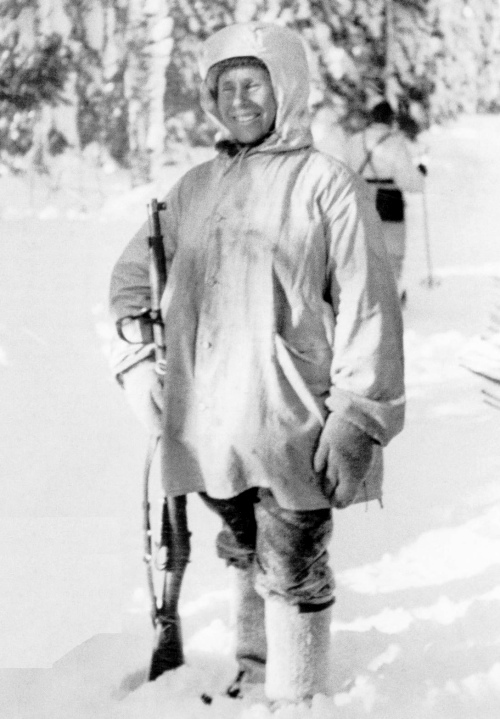
World War II in Scandanavia was a very complicated affair, with various alliances, invasions and small wars. Finland alone had the Winter War, the Continuation War and the Lapland War, all of which had some effects on Sami people, not least the final one, which resulted in the destruction of Rovaniemi, the capital of Finnish Lapland. A helpful summary of what happened in the region over the course of WW2 can be found here, while an article about how the war effected the Sami in particular (by Jessica Johnson) may be found here. These conflicts were devastating to the continuity of Sami culture, with many people killed or displaced and settling elsewhere. Notable fighter around this region was sniper Simo Häyhä, who the Russians nicknamed the “White Death” (pictured)
A lot has been written about Lapland’s most famous resident and how he came to be here. Most of it is mysterious and people make some wild guesses (often not true), but here, in no particular order, are a few resources that might be useful about Santa Claus and his village near Rovaniemi, Finnish Lapland. Who is St. Nicholas (about his early years in Myra); Andrea McDonald’s account of visiting; History of Santa Claus (on the-north-pole.com), Santa Claus and His Works (New York Times piece describing the contributions of artist Thomas Nast to the image of Santa’s snowy abode); Head to Finnish Lapland…(a 2009 article in the Independent, including descriptions of Santa’s village); Checking Out Santa’s Workshop in Lapland (a 1988 article in the LA Times describing visiting Santa in Rovaniemi). For the more cynical, a stuffy article on postmodernism and Finnish tourism policy can be found here (for all the Scrooges out there!).
You can often watch people visiting Santa live (or look back at earlier recordings) at this website, which is wonderfully magic
We hope you have a happy Christmas and a wonderful new year and that you are looking forward to joining us for Season 2 in the coming months. As always, please get in touch if you are enjoying what you are hearing or have anything to share with us!
For the Season Finale of the first season of 80 Days, we’re going to do something a little different and look at a place that no longer exists: Kowloon Walled City. Once the most densely populated place in the planet, this unique, untamable settlement existed in Hong Kong, growing up from a military settlement which was originally built to demarcate the border between the British and Chinese controlled areas in the territory. It grew in size and scope to become a tightly-packed labyrinth of illegal activity and squalor, unregulated by either the Chinese or British governments. At its peak, over 30,000 people lived in the Walled City, resulting in a population density of approximately 1,255,000 inhabitants per square kilometre (3,250,000/sq mi). It was demolished in 1994, shortly before China retook control of Hong Kong, but has since become a cultural touchstone, a fascinating example of what humanity can become when allowed to run unchecked. Your hosts are Luke Kelly@thelukejkelly, Mark Boyle@markboyle86 and Joe Byrne@anbeirneach, in Hong Kong, the UK and Switzerland, respectively. (Theme music byThomas O’Boyle)
Some things you might like to know more about:
The name Kowloon, given to the peninsula north of Hong Kong Island, comes from the Cantonese pronunciation of 九龍, Chinese for “Nine Dragons” (gau lung, or in Madarin Jiǔlóng); the name was given to it by the last Song Emporer, the 8-year-old Bing (趙昺), who saw the 8 mountains surrounding the place as “dragons”. A clever courtier pointed out that the Emperor was also a “dragon”, and hence there were 9. The story is told here in HK Magazine
We drew a few quotes and a lot of insight from Elizabeth Sinn’s article “Kowloon Walled City: Its Origins and Early History” (Journal of the Hong Kong Branch of the Royal Asiatic Society, 1987, vol 27, p 30); for a more detailed account of this era, this article is recommended reading
When the Fortified City was built in 1846, giant stone name plaques decorated the main gate to the city (reading 九龍寨城, translated as Kowloon Walled City); they were excavated and can still be seen on the site today
Mark came across a cannon from the ship Nemesis(the British East India Company’s first iron-clad warship) in the gardens of Windsor Castle; it is pictured below. More on the Nemesis from Victorian Web.
The music featured in this episode was a clip from Cantonese traditional song Agony in Autumn (妆台秋思) and a recording made by Joe at the nearby Chi Lin Nunnery in 2015
Recently, Luke visited the Kowloon Walled City Park, which now stands on the site where the City was before demolition; he took some photos while he was there
This slideshow requires JavaScript.
Finally, here is some handheld camera footage by Rob Frost from the early 1990s inside the City:
We hope you enjoyed listening to Season 1. We’ll be taking a break for a couple of months to get production of Season 2 under way, but you may hear from us occasionally during the break. If you’ve been entertained by what you heard, then let us know – leave a review on iTunes (or wherever you listen), or get in touch on Facebook or Twitter. We also really welcome feedback about places we’ve explored and recommendations for where we should go next season.
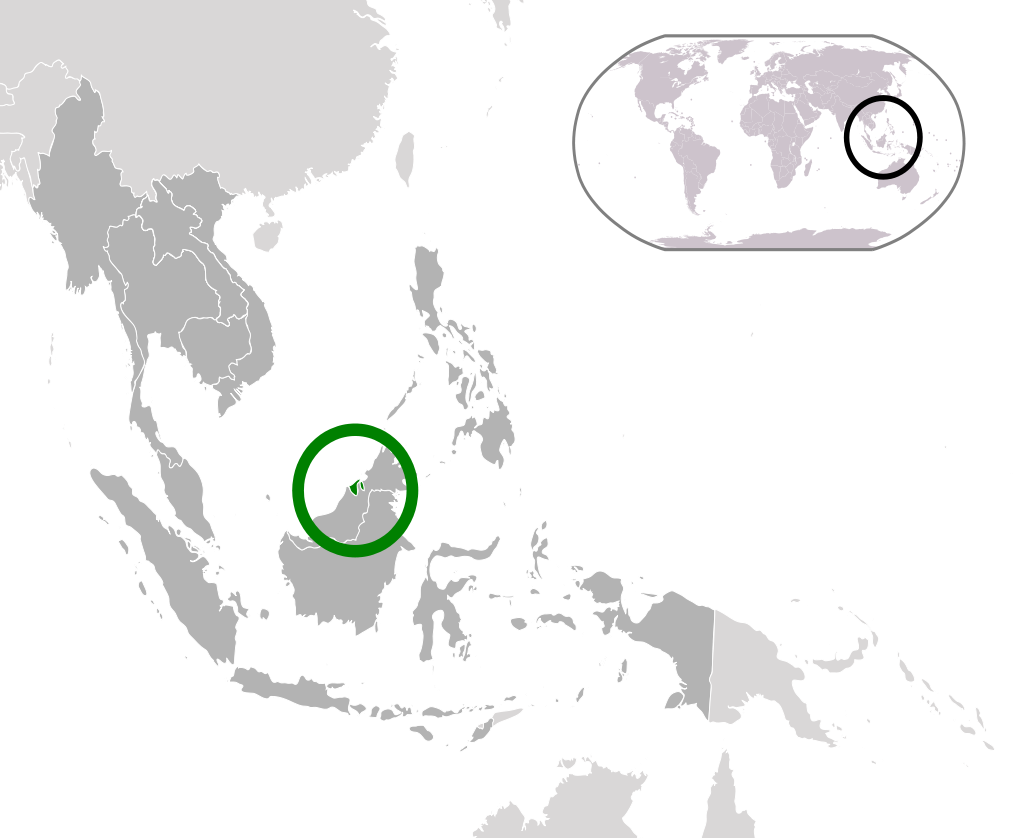
In this week’s episode of 80 Days, we are talking about Brunei, a tiny independent state of just 2,200 square miles, located on the north coast of the island of Borneo in Southeast Asia. Borneo is a tropical, equatorial island, one of the largest in the world, divided between Indonesia, Malaysia and Brunei. Brunei borders exclusively on the Malaysian section of Borneo. Its small section of coastline is inhabited by just over 400,000 people, and is among the richest nations in the world in terms of natural resources. Traditionally ruled by a Sultan, it became a British protectorate in 1888 and gained independence from the United Kingdom on January 1st 1984. Modern Brunei is ruled by a ‘Malay Islamic Monarchy’, where a Sultan acts as Supreme Head of State, ruling effectively as prime minister, finance minister, and commander of the armed forces. Brunei is the first and only country in East Asia to be ruled by Sharia law, introduced by the current Sultan in 2013. Your hosts are Luke Kelly@thelukejkelly, Mark Boyle@markboyle86 and Joe Byrne@anbeirneach, in Hong Kong, the UK and Ireland, respectively. (Theme music by Thomas O’Boyle)
There are some things we talked about you might want to know more about:
It is difficult to say much for certain about the important Chinese diplomat, trader or prince Ong Sum Ping (the local Hokkien pronunciation of 黃森屏, Huang Senping in Mandarin), but he was clearly an important figure in Brunei’s earliest history, arriving in the area around 1375, marrying into the family of 1st Sultan Muhammad Shah, and subsequently helping to repel an invasion from the Sulu islands. His exact role is often occluded in modern history perhaps because he was either not Muslim or not Malay. Some of the conflicting information and opinions can be found on Wikipedia, the Brunei Times, from blogs I’m Just Saying, and Nomadic Republic, and from Malaysian politician Lim Kit Siang
In 1521, Brunei was visited by the first voyage to circumnavigate the globe, the Magellan-Elcano Expedition and an account was kept by Antonio Pigafetta (an Italian and the historian on the ship) of their meeting with the Sultan: “The king to whom we presented ourselves is a Moor, and is named Raja Siripada: he is about forty years of age, and is rather corpulent. No one serves him except ladies who are the daughters of the chiefs. No one speaks to him except by means of the blow-pipe“
The Castillian War between the Spanish in Manilla and Brunei was a defining moment in 1578 when conflict over trade, religion and land led to military enagement between the Europeans and the Sultanate. In the end, disease played a large role in weakening the Spanish forces, hastening the Bruneian victory. Read about it on Brunei Resources (more from the same author in the Brunei Times), including the following quote:
Why did the Spaniards leave? According to Brunei legends, the Spaniards kept facing attacks organised by Pengiran Bendahara Sakam. The latter is seen as one of Brunei’s past folk heroes. He attacked the Spaniards with 1,000 men and defeated them. However, Western historians do not accept this version and deny that Bendahara Sakam even existed, preferring the version that the Spaniards left because of dysentery. According to the Spanish records, only 17 died of dysentery in Brunei and another six on the return to Manila, although a number of Filipinos also died. – Brunei Resources
A surprising character in the history of Brunei was Sir James Brooke (1803-1868), who after his exploits with the British East India Company’s Bengal Army and subsequent exploring ended up helping the Sultan crush a rebellion. He, and his heirs were given the province of Sarawak (later also taking Labuan) and became know as the “White Rajahs“; the podcast Stuff You Missed in History Class have an episode on the White Rajahs, which is worth a listen
The Brunei Revolt (1962) was an uprising by factions opposed the monarchy and to the prospect of union with Malaysia (including Brunei People’s Party) which was put down by British troops led by Lt Col Digby Willoughby (also a renowned bobsleigher); below is an image of the Queen’s Own Highlanders patrolling for rebels in jungle waterways near Brunei’s oil fields
A recent Borneo Bulletin article describes the first National Day after Brunei’s independence from the UK in 1984
In this week’s episode of 80 Days, we are talking about Gibraltar, the “key to the Mediterranean”. Famous for the imposing Rock of Gibraltar, this 6.7 square kilometre British Overseas Territory is an historic anomaly at the tip of the Iberian peninsula with a unique status and culture. It forms the northern side of the Pillars of Heracles which mark the beginning of the Atlantic Ocean. The tiny territory is also famous for its Barbary macaques, the only wild monkey population in Europe. Your hosts are Luke Kelly@thelukejkelly, Mark Boyle@markboyle86 and Joe Byrne@anbeirneach, in Hong Kong, the UK and Ireland, respectively. (Theme music by Thomas O’Boyle)
There are some things we talked about you might want to know more about:
Archaeological finds at Gorham’s Cave and other sites have given evidence that Neanderthals lived her until about 32,000 years ago – much more recently than had previously been expected. It is thought that this area was a lush Savannah climate at the time and very rich in food and resources. The BBC have a report from when the caves were granted UNESCO World Heritage status earlier this year.
The name Gibraltar comes from the Arabic Jabal Tariq (جبل طارق) named for Tariq ibn Ziyad who led the Moorish/Umayyad conquest of what is now Spain in the 710s; he had gathered his invading troops at the Rock of Gibraltar before pressing inland.
In 1706, when the English took the Rock during the War of Spanish Succession, nearly all of the inhabitants decamped to the City of Gibraltar in the Fields of San Roque, expecting a temporary stay. The Spanish city of San Roque is still there to this day and still features symbols of Gibraltar in its crest
Gibraltar’s status as an British territory was regularised, by Article X of the Treaty of Utrecht (1713)
The Catholic King does hereby, for himself, his heirs and successors, yield to the Crown of Great Britain the full and entire propriety of the town and castle of Gibraltar, together with the port, fortifications, and forts thereunto belonging; and he gives up the said propriety to be held and enjoyed absolutely with all manner of right for ever, without any exception or impediment whatsoever.
Crew of the HMS Wasp who demolished O’Hara’s Tower (O’Hara’s Folly)
New Statesman has an article describing the history behind the legends that tie the presence of the famous Barbary macaques to British control of the Rock
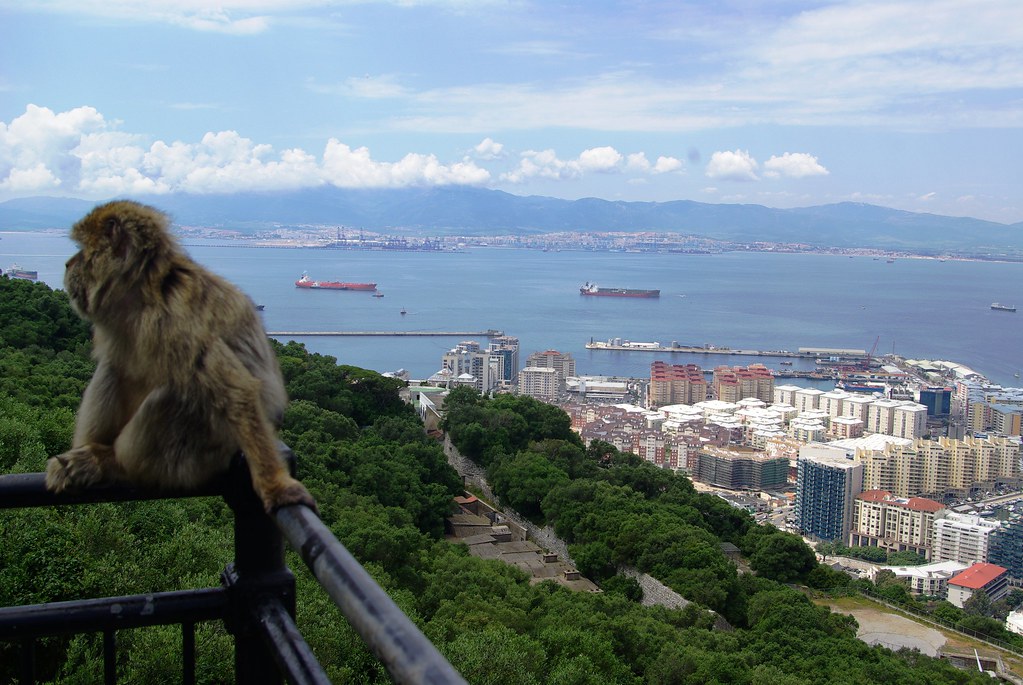
Photo of a “Barbary Ape” over Gibraltar by user kanu101 on Flickr
We spoke about the unusual airport that spans Gibraltar’s entire border with Spain and crosses the main street; there is a video on YouTube which shows the airport from above and a plane taking off from its short runway
If you are interested in hearing Llanito, the English-Spanish creole spoken by some in Gibraltar, you can hear it spoken and discussed in this video of two men at a café.
A BBC report on the outcome of the 2002 Sovereignty Referendum gives some insight into the origins of the dispute and the implications of the results. 98% of Gibraltarians opposed the idea of “shared sovereignty” between Britain and Spain
If you liked hearing about the music of Gibraltar, check out Breed 77‘s song El Rio. Some songs that reference the Rock of Gibraltar are by Frankie Laine and Ella Fitzgerald.
During this period, there were also plans drawn up to use the extensive cave network to hide soldiers in, in the case of a German occupation of Gibraltar to observe and sabotage the Axis powers’ operations; this documentary discusses “Operation Tracer“
In this week’s episode of 80 Days, we are talking about the Isle of Man, a small island in the Irish sea that lies right between Britain and Ireland. From its highest point Snaefell (620 m, 2034 ft), it is said you can see 6 kingdoms: England, Ireland, Wales, Scotland, Man and Heaven. It’s known for its rugged landscape, motorsport and a very curious flag. Today, the island is a British crown dependency although it has never been a part of the United Kingdom. It’s 85,000 inhabitants, 28,000 of whom live in the capital, Douglas, on the east coastare spread over the island’s 572 square kilometers. The Isle of Man’s fascinating history has made for a unique pocket of culture within the British isles, a place that has never been truly overcome by the powers surrounding it, and has always stood apart. Your hosts are Luke Kelly@thelukejkelly, Mark Boyle@markboyle86 and Joe Byrne@anbeirneach, in Hong Kong, the UK and Ireland, respectively. (Theme music by Thomas O’Boyle)
We are all Irish, but the Isle of Man, despite its proximity is really that neighbour we don’t know very well. Needless to say, we learned a lot this week about the smallest Celtic nation.
There are some things we talked about you might want to know more about:
Early history is best understood through archaeology from the stone age. We mentioned Mull Hill/Cronk Meayal (pictured below), where ancient shards of pottery and standing stones were found; we also mentioned Cashtal yn Ard; you can watch Standing with Stones discussing the ancient monuments of the Isle of Man on YouTube
Tynwald claims to be the oldest continuous parliamentary assembly in the world and largely consists of the directly elected House of Keys. At Tynwald Day (annually on 5th of July) laws are promulgated from a hill in St Johns. The Sword of State (which leads the procession on Tynwald Day each year) allegedly dates back to Olaf the Black
The Chronicle of Man and the Sudreys (early history of the Kingdom of the Isles in Latin with English translation) can be read here, while a version of Njal’s Saga which deals with the Battle of Clontarf in Dublin and the Manx brothers who fought on opposite sides can be found here
We also mentioned that the Isle of Man was once part of the Archdiocese of Dublin; the homepage of Francis Street Parish describes the “manx emblem” decorating the church, reflecting this history
The Camp – a newsletter from the World War 2 Hutchinson Internment Camp – can be read on archive.org
A book of Manx Ballads and Musicedited by Arthur William Moore (1896) includes a wonderful introduction, maligning the music itself with passages like the following: “It will be observed that their authors, the majority of whom are clearly illiterate men, are occasionally quite indifferent to the exigencies of either metre or rhyme.” Some of the songs are charming. The Arrane Oie Vie/Good Night Song can be found on manxmusic.com
And finally, the TT (Tourist Trophy motorcycle race) is probably the thing the Isle of Man is most famous for. It’s fast, dangerous and unique and its madness is probably best demonstrated by a video, like this one of Guy Martin and Michael Dunlop racing at speeds of up to 200 mph on public roads
This week in 80 Days, we looked at Liberia, a small country on the west coast of Africa. Founded by freed American and Caribbean slaves, Liberia is Africa’s oldest republic and takes its name from the the Latin phrase meaning “Land of the Free.” Unfortunately, the country is best known for a long and bloody civil war that look place in the 1990s and 2000s, and more recently for the Ebola epidemic of 2014. The lush, rainforested country is just 700 kilometres or 430 miles north of the equator, and is bordered by Sierra Leone to its west, Guinea to its north and Ivory Coast (Côte d’Ivoire) to its east. Today, the country is home to around 4.5 million inhabitants, although most are native Africans rather than the descendants of freed slaves. It maintains strong ties to America, and even has a flag that strongly resembles the flag of the US, although it has only one star and 11 stripes. Discussing Liberia are Luke Kelly@thelukejkelly, Mark Boyle@markboyle86 and Joe Byrne@anbeirneach in Hong Kong, the UK and Switzerland, respectively. (Theme music by Thomas O’Boyle)
We thought when we researched Nauru previously that it was the most depressing place we would ever encounter. But we were wrong! Liberia is at the bottom end of most tables you want to be near the top in (GDP, communications infrastructure, life expectancy, infant mortality) and has suffered from all the plights you can expect in the region and more, all as a result of inequality, corruption, disease and civil war, but nonetheless, it has a unique story worth telling. Some sources which we found particularly useful in researching the episode were:
“VICE Guide to Liberia” – VICE sent a crew to Liberia in 2012 to look at the devastating effects of the civil war on life, particularly in the capital Monrovia. Features interviews with various former civil war generals, including General Bin Laden and General Butt Naked (who is now a Christian evangelist).
“Ebola in Liberia: An Epidemic of Rumours“: article by Helen Epstein in The New York Review of Books, December 2014. Deals with suspicion of government and conspiracy theories which complicated the reaction to the spread of the disease
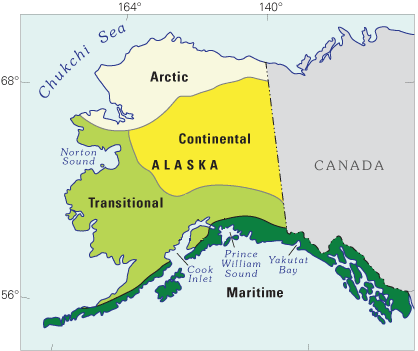
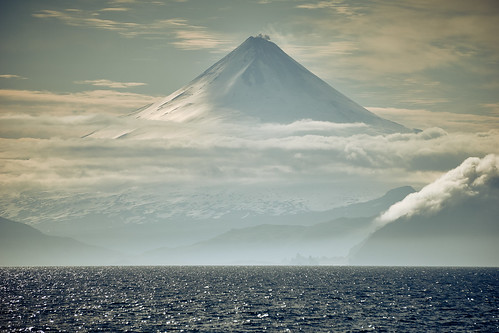
This week on 80 Days, we talked about Alaska, the United States of America’s 49th state. The name Alaska comes from the Aluet word Alyeska, meaning great land, and it is a plentiful place in many respects. Rich in natural resources, Alaska has a longer coastline than the other 49 states combined and is the largest state in the US. It contains over 3 million lakes, as well as Denali, North America’s highest peak. about 500 miles separates Alaska from Washington state, its nearest neighbour within the US, and it has a strong connection with Russia, which used to occupy and control the territory. Exploring Alaska for you are Luke Kelly@thelukejkelly, Mark Boyle@markboyle86 and Joe Byrne@anbeirneach in Hong Kong, the UK and Switzerland, respectively. (Theme music by Thomas O’Boyle)
Things you might want to read more about:
Alaska is the point of mainland America where it is generally considered humans first arrived in waves from Asia, including the ancestors of most indigenous South American peoples (25000-15000 years ago), the ancestors of many native Alaskan people and the Navajo and Apache Native American tribes (14000-9000 years ago), the ancestors of Aleut and Eskimo people (9000-6000 years ago). This makes the area valuable for archaeologists trying to understand how people came to the Americas. Alaska’s indigenous people (including Tlingit, Athabaskan, Innupiak, Aleut and others) and much of their culture still persists to the present day, although they were, of course, greatly affected by the intervening centuries of colonisation.
Potlach – a “competitive altruism” practice among some native communities, such as Athabaskans
Music this week is all from aboriginal North American people and can be found here and here
The first Europeans to arrive in Alaska were the Russians, who – in the course of charting the Pacific coast of Russia – crossed the strait which is now named after Vitus Bering, a Danish navigator who led a voyage across to what is now Alaska. There were violent clashes with native Aleuts and Tlingit people and disease had devastating consequences on the indigenous population. Bering himself was marooned on an island on the way back to Russia and died.
Fur-trapping, particularly of sea-otters, became the major economic interest of the Russians in “Russian America” and a monopoly was given to the Shelikhov-Golikov Company (later, the Russian-American Company), which set up headquarters at Sitka. This early settlement was attacked in the Battle of Sitka by the Kiks.ádi Tlingit clan.
Rather than lose their hard-to-defend province to the British in a war, the Tsar decided that the best course of action was to sell Alaska to the USA for $7.2m in 1867
We mentioned the instance of a Pope drawing a line on a map, which gave the Spanish a right to colonise some newly-discovered territories and the Portuguese others – this is dealt with in the Wikipedia article on the Treaty of Tordesillas
The Klondike Gold Rush brought tens of thousands of people north to the parts of Alaska bordering Yukon as gold was discovered in the rivers of this region. Many were ill-prepared and most unsuccessful in staking claims. Con man “Soapy” Smith was an interesting character in this period, depriving treasure seekers of their money through tricks, games and crime, until his eventual death at a famous shootout on Juneau Wharf
During World War 2, there was a lot of action in the Aleutian Islands, while US forces attempted to dislodge a Japanese force which had occupied; American propaganda during WW2 was remarkably racial in nature, describing Alaska as a “Death Trap for the Jap
The wealth generated by Prudhoe Bay and the other fields on the North Slope since 1977 is worth more than all the fish ever caught, all the furs ever trapped, all the trees chopped down; throw in all the copper, whalebone, natural gas, tin, silver, platinum, and anything else ever extracted from Alaska too. The balance sheet of Alaskan history is simple: One Prudhoe Bay is worth more in real dollars than everything that has been dug out, cut down, caught or killed in Alaska since the beginning of time
Here is a link to Sarah Palin’s endorsement of Donald Trump’s Presidential candidacy: see has an unusual use of language



 ry was long-serving prime minister










 We thought when we researched Nauru previously that it was the most depressing place we would ever encounter. But we were wrong! Liberia is at the bottom end of most tables you want to be near the top in (GDP, communications infrastructure, life expectancy, infant mortality) and has suffered from all the plights you can expect in the region and more, all as a result of inequality, corruption, disease and civil war, but nonetheless, it has a unique story worth telling. Some sources which we found particularly useful in researching the episode were:



 80 Days