Shetland (S6.09)

Audio: Shetland

In this episode of 80 Days: An Exploration Podcast we’ll be talking about Shetland, a group of about 100 islands, fewer than 20 of them inhabited, in Scotland, 210 km (130 miles) north of the Scottish mainland, at the northern extremity of the United Kingdom, around 340km or 210 miles from Norway. The islands total around 1,500 km2 (or 560 sq mi), making them similar in size to the nearby Faroe Islands [recommend listening to this past episode], American Samoa or Gran Canaria. 

Among the settlements on Mainland, the largest island, is Scalloway, a fishing port. Lerwick, also on Mainland, is the islands’ largest town and commercial and administrative centre. The early history of the islands is dominated by the influence of the Vikings, who settled here in the 9th Century. From the 14th century, it was incorporated into the Kingdom of Scotland, and later into the United Kingdom. The climate is generally windy, cloudy and often wet, with rain falling on more than 250 days a year, and average low temperatures a little above 1 °C (34 °F) in winter and around 14 °C (57 °F) in summer.

Shetland is as far north as St Petersburg, Russia, or Anchorage, Alaska, which makes the islands an ideal place to watch the northern lights, or as they’re known locally the ‘mirrie dancers’ while in summer there is almost perpetual daylight, a state of affairs known locally as the “simmer dim”.

We had a guest on the podcast this episode, local writer, tour-guide and podcasters Laurie Goodlad, who can be found on shetlandwithlaurie.com. Thanks to Laurie for her great contributions to helping us understand Shetland, only a fraction of which is included in the episode – if you’ve fallen in love with Shetland, much more can be found in her blog and podcast episodes.

Your hosts, as always, are Luke Kelly @thelukejkelly in Wexford, Ireland, Mark Boyle @markboyle86 in Toronto, Canada, and Joe Byrne @anbeirneach in Dublin, Ireland. Our theme music and other stings come from Thomas O’Boyle @thatthomasfella.

Map of Shetland Islands in Scotland by Finlay McWalter on Wikimedia Commons
A Shetland pony photographed by Ronnie Robertson (CC-BY)
The Prince of Wales set off a trend of Fair Isle jumpers, part of a general inter-war Northern Isles boost in knitting and garment industry

Some further reading material is provided below:

Music relevant to Shetland includes:


Thanks to all our patrons who support the show. We really appreciate your continued backing of us. If you want to join them, more information is available at www.patreon.com/80dayspodcast

Svalbard (S4.10)

S04E10 Svalbard Audio

In this episode of 80 Days: an exploration podcast, we’ll be talking about Svalbard (also known as Spitsbergen), a small polar archipelago off the northern coast of Norway. Svalbard is by far the most northerly place we’ve covered on the show, lying roughly midway between continental Norway and the North Pole, around 580 miles (930 km) north of Tromsø, Norway. The archipelago consists of nine main islands, the main island being Spitsbergen, which makes up over half of the land area. In total, Svalbard has a land area of around 24,209 square miles (62,700 square km), making it similar in size to Sri Lanka or the US state of West Virginia. There are only 2,500 permanent residents here, most of whom live in the main city of Longyearbyen. First settled as an arctic whaling base in the 17th century, the islands later saw the establishment of coal mining towns, but in recent years Svalbard’s main economic lifeline has been tourism and arctic research, both of which have boomed recently. Due to its extreme northern latitude, in the summer, the sun does not set on Svalbard for 4 months, while in the winter the archipelago goes weeks without any sunlight at all. Svalbard is also notable for being home to the Global Seed Vault, while as of 2012, all residents must carry a gun while travelling outside an established settlement, in case they encounter one of the many polar bears that live nearby.

Your hosts, as always, are Luke Kelly @thelukejkelly in Dublin, Ireland, Mark Boyle @markboyle86 in the UK, and Joe Byrne @anbeirneach in Kildare, Ireland . (Theme music by Thomas O’Boyle @thatthomasfella)


Thanks to Dr Ciaran McDonough (@metamedievalist), Sonja Murto, Aengus Ó Maoláin and Roxana Cremer (@cloudcycling) for talking to us about their first-hand experiences visiting or living in Svalbard. They were invaluable to giving us a full picture of the place.

Some further reading:

  • More on the Pomors, believed to be some of the earliest inhabitants of this region can be found here.
  • The Svalbard Museum has a wonderful section on their website about whaling in the Arctic.
  • An August 1906 article in Nature entitled “The Early History of Spitsbergen” can be found here.
  • For more on Basque whaling, see NABO’s article here.
  • Svalbard-Spitsbergen.com has more reading on the charming-sounding settlement of Smeerenberg, also known as “Blubbertown”.
  • The article concerning Horatio Nelson’s visit to Spitsbergen can be found here.
  • For more on the early scientific expeditions on Svalbard, see this article from Svalbard-Spitsbergen.com
  • The Svalbard Museum has more on hunting and trapping, as well as the discovery of coal.
  • One of the travel guides we referenced on Svalbard can be found for free on Google Books.
  • The “Tragedy at Swedish House” is detailed in an article in Polar Record, which can be found here.
  • You can read more on the history of the Dutch settlement on Barenstburg on visitsvalbard.com.
  • Military Wiki has an extensive article on Operation Gauntlet, which was discussed in this episode.
  • You can read more on the King’s Bay Affair here.
  • An article on Medium details the doomed Vnukovo Airlines Flight 2801, entitled “The crash that changed Svalbard forever.”
  • Thinking of visiting Pyramiden? It’s here on TripAdvisor.
  • Future North: The Changing Arctic Landscape, referenced in this episode, can be found on Google Books here.
  • Take a virtual tour of the Global Seed Vault here, or learn more about it by listening to Endless Thread‘s episode “The Vault
  • This American Life: episode 630 “Things I Mean to Know”, about the Novaya Zemlaya Effect
  • Bowhead [whales] are jazz” article about baleen whalesong and its surprising diversity

Music:

Videos:

Faroe Islands (S4.01)

S04E01 Faroe Islands Audio

In this episode of 80 Days: an exploration podcast, we’ll be talking about Faroe Islands, an autonomous group of islands in the North East Atlantic. Home to almost 50,000 people and with historical links to Denmark, Faroe Islands is a country within the Kingdom of Denmark, but has a distinct culture all of its own, in part due to their isolation and remoteness from the Danish mainland (and pretty much everywhere else also.)

The Faroe Islands have probably been inhabited since approximately 300 AD onwards according to archaeological evidence, but the first full settlement was established by legendary figure Grimur Kamban. The Faroe Althing, may be the oldest parliament in the world if, as thought, it was established in approximately 900AD. Faroe Islands were occupied by the British during World War 2 in order to prevent invasion by Nazi Germany. Fishing has always been a mainstay of the economy and advances in technology versus depleted fishing stocks have had opposing impacts on the fragile fortunes of the archipelago.

We also had the pleasure of speaking to Arni Zachariassen, a local Faroese who was able to give us plenty of interesting insights into the local culture and mindset. Big thanks to him for his time! (Listen to Arni on The Faroe Islands Podcast many years ago here)

This episode, is the first of Season 4, and while many things in life change, (Joe has just taken to wearing jaunty hats for example) our need for your support has not. If you like the show, and want to support, you can do us a major service by joining us over on www.patreon.com/80dayspodcast to give us whatever you can in terms of financial support and avail of all the lovely awards and extras that entitles you to.

If you do not have a ha’penny of course, firstly God bless you, but also you can help us for free by giving us an ole five star review on Apple Podcasts.

Waterfall at Gásadalur. Photo by Ævar Guðmundsson on Flickr | Creative Commons 2.0 By Attribution License

Your hosts, as always, are Luke Kelly @thelukejkelly in Hong Kong, Mark Boyle @markboyle86 in the UK, and Joe Byrne @anbeirneach in Ireland . (Theme music by Thomas O’Boyle @thatthomasfella)


Some further reading:

Music:

  • Tróndur’s curse on the Christians was the subject of a poem by Janus Djurhuus (1881-1948)  set to music by successful folk metal group Týr (1998-now)! https://youtu.be/E9AwVjRbhto?t=144
  • Flanders and Swann’s satirical song “Rockall
  • An extract of “Lívsmynd” by Xperiment
  • The text of the poem “The Death of St Brendan” by JRR Tolkien, which you heard, can be found here
  • Watch: Sigmuds kvaedi – ring dance


Lapland or “Sápmi” (Christmas Special)

Christmas Special: Lapland audio

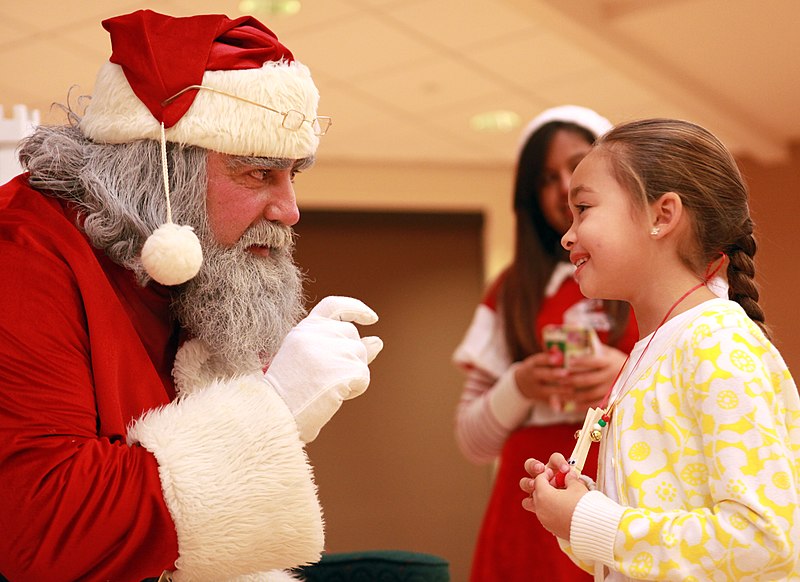
For the festive season, 80 Days brings you a Christmas special on the most appropriate place we could think of, complete with reindeer and Santa Claus: Lapland, or – as the native Sami people prefer to call it – Sápmi. This is a large region of Fennoscandanavia, north of the Arctic Circle, with its territory spanning parts of Finland, Norway, Sweden and Russia (see map). This episode will touch on all areas of Lapland, but will focus primarily on the Finnish and Norwegian sides. The area is named for the indigenous people (and their specific language grouping), who have sparsely inhabited the region for several thousand years. 

In Lapland, winter lasts from early October to early May, with temperatures well below freezing throughout the region and up to 60 cm or 23 inches of snow during midwinter. However, in summer the sun does not set on the region for several weeks at a time.  Population has declined quite significantly since 1990, and the region is now home to approximately 180,000 people. Residents are spread across a total area of just over 100,000 square kilometers, or 38,000 square miles, and there are as many reindeer here as there are people. Your hosts are Luke Kelly @thelukejkelly, Mark Boyle @markboyle86 and Joe Byrne @anbeirneach, in Hong Kong, the UK and Switzerland, respectively. (Theme music by Thomas O’Boyle)

File:Corrected Sapmi in Europe.PNGFile:Sami flag.svg

Some things you might like to know more about:

Toppkandidater Vesthavet valgkrets.jpg

File:Hram Sv Simeona Mirotočivog (Novi Beograd) 040.jpgFile:USMC-101208-M-8527P-077.jpg

  • A lot has been written about Lapland’s most famous resident and how he came to be here. Most of it is mysterious and people make some wild guesses (often not true), but here, in no particular order, are a few resources that might be useful about Santa Claus and his village near Rovaniemi, Finnish Lapland. Who is St. Nicholas (about his early years in Myra); Andrea McDonald’s account of visitingHistory of Santa Claus (on the-north-pole.com), Santa Claus and His Works (New York Times piece describing the contributions of artist Thomas Nast to the image of Santa’s snowy abode); Head to Finnish Lapland… (a 2009 article in the Independent, including descriptions of Santa’s village); Checking Out Santa’s Workshop in Lapland (a 1988 article in the LA Times describing visiting Santa in Rovaniemi). For the more cynical, a stuffy article on postmodernism and Finnish tourism policy can be found here (for all the Scrooges out there!).
  • You can often watch people visiting Santa live (or look back at earlier recordings) at this website, which is wonderfully magic

We hope you have a happy Christmas and a wonderful new year and that you are looking forward to joining us for Season 2 in the coming months. As always, please get in touch if you are enjoying what you are hearing or have anything to share with us!


Find out about our Christmas Kickstarter campaign by clicking here. With your help we can make Season 2 even better than Season 1!
(https://www.kickstarter.com/projects/80dayspodcast/80-days-podcast-season-2)