Ceuta (S6.10)

Audio: Ceuta

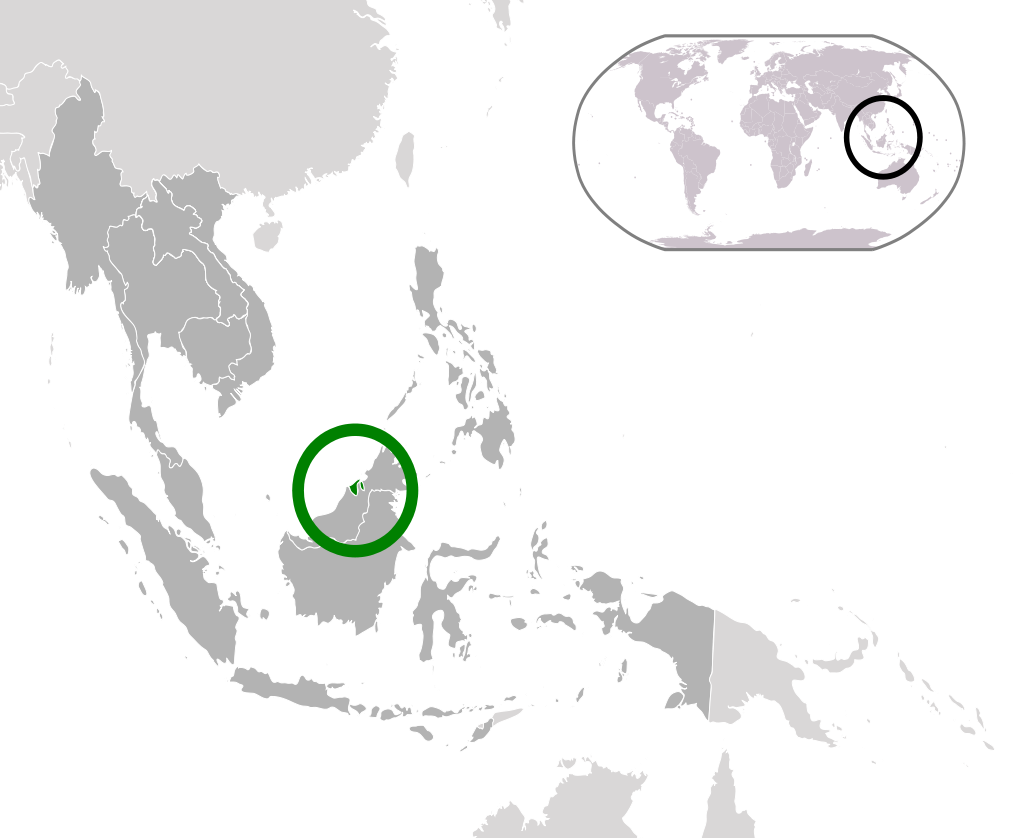
In this episode of 80 Days: An Exploration Podcast we’ll be talking about the autonomous city of Ceuta — Spanish exclave, military post, and free port on the coast of Morocco, at the Mediterranean entrance to the Strait of Gibraltar. Ceuta, Melilla (also an exclave), and other tiny islets along the coast of North Africa constitute the territories of Spanish North Africa. The city is on a narrow isthmus that connects Mount Hacho (also held by Spain) to the mainland. Mount Hacho has been identified as possibly the southern Pillar of Heracles, of the ancient Mediterranean world. Ceuta was controlled by the Muslim Umayyad Dynasty up to 1415, and then changed hands a number of times over the 15th and 16th Centuries. It played an important role in the Spanish Civil War, and gained its modern autonomous status in 1995. Ceuta’s land area is only about 18.5 square kilometres or 7 square miles, making it among the smallest places we’ve ever talked about, and has a population of around 80,000, similar to  Andorra, the Isle of Man or the US Virgin Islands. 

The climate here is warm but moderated by the straits, with mean annual temperatures of 18 °C (65 °F) with average highs of 21 °C (70 °F) and lows of 15 °C (60 °F). The currency is the Euro, and the language is Spanish, with a strong Arabic presence. 

Ceuta and Melilla are the only piece of EU territory on mainland Africa – a political and legal reality that has never been recognised by Morocco, which claims both territories to this day. 

Fun Fact – Western Sahara was a previously-Patreon-backed finale episode. You guys just have a real hankering for contentious North African territories, don’t you?

As we mention in the episode, this (somewhat delayed) finale to season 6 was voted on by our Patreon backers, and thanks as always to all of them for their support. You can sign up to Patreon to get a say in the episodes we cover in the seasons to come.

Your hosts, as always, are Luke Kelly @thelukejkelly in Wexford, Ireland, Mark Boyle @markboyle86 in Toronto, Canada, and Joe Byrne @anbeirneach in Dublin, Ireland. Our theme music and other stings come from Thomas O’Boyle @thatthomasfella.

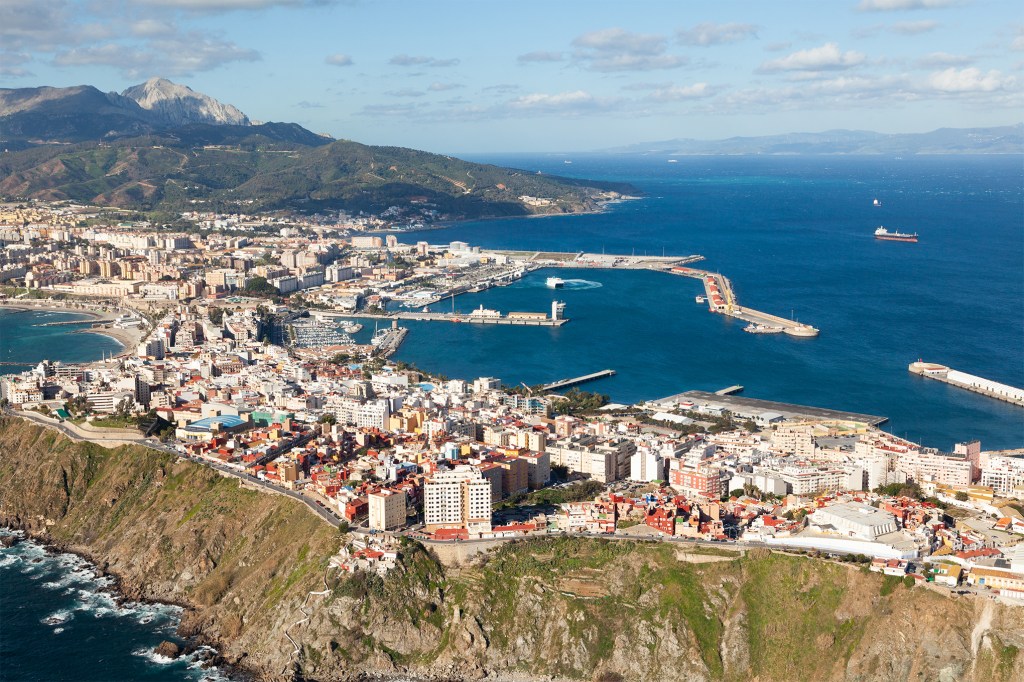
Ceuta with Mount hacho visible in the background

Some further reading material is provided below:

  • This BBC Explainer on the status of Ceuta and Melilla is a good starting point for beginners. The BBC also has a useful factsheet.
  • This CNN feature headlined “Inside the tiny corner of Spain that lies in the middle of North Africa” is another useful primer.
  • History blog “A Small Part of History” has a lengthy post about the conquest of Ceuta by Portugal.
  • For a more visceral look at the city, this video travel guide of Ceuta from Travel Obscurer is worth checking out.
  • One of the many books we referenced in this episode was Europe or Africa? : a contemporary study of the Spanish North African enclaves of Ceuta and Melila by Peter Gold. It’s available on Archive.org.
  • We also spoke about Count Julian, whose Wikipedia page is well worth perusing.
  • Mark lent on A.R. Disney’s A History of Portugal and the Portuguese Empire – From Beginnings to 1807 for his section. You can find an excerpt here.
  • Another useful read was The Spanish Exclaves in Morocco by Robert Rézette, which is available on Google Books.
  • Anyone for a Wikipedia list of “People with the most children“? If you’ve heard Joe’s section, you’ll know why.
  • For more on Lieutenant John Fraser and his trusty leg bone, see the National Army Museum.
  • WebHispania has a fascinating blog post by Antonio M. Carrasco headlined The Ceuta border: a constant source of misunderstanding and conflict.
  • The UK’s National Maritime Museum has a whole page dedicated to Cueta in the Napoleonic Wars.
  • The UNHCR report on Anti-Muslim Hatred and Discrimination in Ceuta we mentioned is available here.
  • The substantial page on Wikipedia dedicated to the border fence is here. More can be found in World of Walls: The Structure, Roles and Effectiveness of Separation Barriers by Said Saddiki which is available online here.
  • On Franco and the Spanish Civil War, worth a read is The Crescent and the Dagger: Representations of the Moorish Other during the Spanish Civil War by Elisabeth Bolorinos Allard, available here.

Some of the music used in the episode includes:


Thanks to all our patrons who support the show. We really appreciate your continued backing of us. If you want to join them, more information is available at www.patreon.com/80dayspodcast

Burkina Faso (S6.03)

Audio: Burkina Faso

In this episode of 80 Days: An Exploration Podcast, we’ll be talking about Burkina Faso (formerly the French Upper Volta), a landlocked country in West Africa bordered by Mali to the northwest, Niger to the northeast, Benin to the southeast, Togo and Ghana to the south, and Côte d’Ivoire to the southwest. As of 2021, the country had an estimated population of just over 20,000,000. Total land area is around  274,000 km² (or roughly 106,000 sq mi), making it slightly smaller than Italy, slightly larger than New Zealand or the US state of Colorado. Burkina Faso has a primarily tropical climate with two very distinct seasons, wet and dry. Its northern regions are in the Sahel, making them very dry and arid, while the more southern regions are cooler and more tropical. 

The Mossi people, which still dominates the country today, moved into the region around 1100, and still makes up around 50% of the ethnic population. These were a tribal, agrarian society with a love of horses. Other important ethnic groups include include Fulani 8.4%, Gurma 7%, Bobo 4.9%, Gurunsi 4.6% Senufo 4.5%, Bissa 3.7%, Lobi 2.4%, Dagara 2.4%,  Tuareg/Ikelan 1.9%, Dioula 0.8% (percentages of modern population). In 1896, it was colonized by the French as part of French West Africa; in 1958, a new nation named Upper Volta became a self-governing colony within the French Community. In 1960, it gained full independence with Maurice Yaméogo as president. However, since then the country has struggled to maintain political stability, with political coups or uprisings taking place in 1966, 1980, 1982, 1983, 1987, and twice in 2022.

The nation is quite poor, and is one of the world’s least-economically developed, with around 75% of people to this day living off subsistence agriculture. Burkinabe farmers are well-known for working to music, usually drums. Burkina Faso is also one of the youngest countries in the world, thanks to very high fertility (Women have on average 5 children each) and a low average life expectancy, which currently stands at just under 60, among the lowest in the world. The median age is only around 17, and this has caused a massive spike in population over the past half-century, as yearly population growth rate is more than double the world average.

Your hosts, as always, are Luke Kelly @thelukejkelly in Dublin, Ireland, Mark Boyle @markboyle86 in Toronto, Canada, and Joe Byrne @anbeirneach in Dublin, Ireland. Our theme music and other stings come from Thomas O’Boyle @thatthomasfella.
Some further reading material is provided below:

Music includes:

Boukary Koutou, also known as Wobgho, the Mossi King of Ouagadougou with his personal escort of Mossi cavalry, Burkina Faso. From “Du Niger au Golfe de Guinée par le pays de Kong et le Mossi” by Binger, Louis Gustave, 1892, page 35, illustrated by Édouard Riou.
The Grand Mosque of Bobo-Dioulasso, Burkina Faso by JamesA (Wikimedia Commons)


Thanks to all our patrons who support the show. We really appreciate your continued backing of us. If you want to join them, more information is available at www.patreon.com/80dayspodcast

Brunei (S1.09)

Audio: S1E09 Brunei

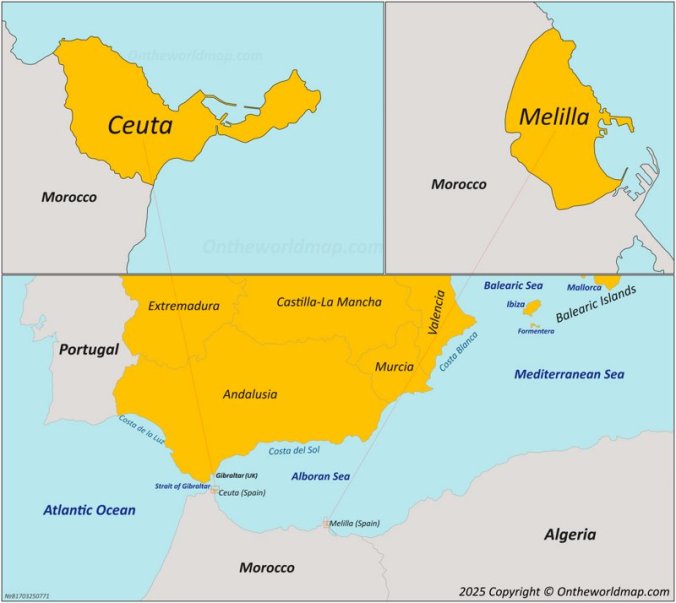
In this week’s episode of 80 Days, we are talking about Brunei a tiny independent state of just 2,200 square miles, located on the north coast of the island of Borneo in Southeast Asia. Borneo is a tropical, equatorial island, one of the largest in the world, divided between Indonesia, Malaysia and Brunei. Brunei borders exclusively on the Malaysian section of Borneo. Its small section of coastline is inhabited by just over 400,000 people, and is among the richest nations in the world in terms of natural resources. Traditionally ruled by a Sultan, it became a British protectorate in 1888 and gained independence from the United Kingdom on January 1st 1984. Modern Brunei is ruled by a ‘Malay Islamic Monarchy’, where a Sultan acts as Supreme Head of State, ruling effectively as prime minister, finance minister, and commander of the armed forces. Brunei is the first and only country in East Asia to be ruled by Sharia law, introduced by the current Sultan in 2013. Your hosts are Luke Kelly @thelukejkelly, Mark Boyle @markboyle86 and Joe Byrne @anbeirneach, in Hong Kong, the UK and Ireland, respectively. (Theme music by Thomas O’Boyle)


There are some things we talked about you might want to know more about:

  • It is difficult to say much for certain about the important Chinese diplomat, trader or prince Ong Sum Ping (the local Hokkien pronunciation of 黃森屏, Huang Senping in Mandarin), but he was clearly an important figure in Brunei’s earliest history, arriving in the area around 1375, marrying into the family of 1st Sultan Muhammad Shah, and subsequently helping to repel an invasion from the Sulu islands. His exact role is often occluded in modern history perhaps because he was either not Muslim or not Malay. Some of the conflicting information and opinions can be found on Wikipedia, the Brunei Times, from blogs I’m Just Saying, and Nomadic Republic, and from Malaysian politician Lim Kit Siang
  • In 1521, Brunei was visited by the first voyage to circumnavigate the globe, the Magellan-Elcano Expedition and an account was kept by Antonio Pigafetta (an Italian and the historian on the ship) of their meeting with the Sultan: “The king to whom we presented ourselves is a Moor, and is named Raja Siripada: he is about forty years of age, and is rather corpulent. No one serves him except ladies who are the daughters of the chiefs. No one speaks to him except by means of the blow-pipe
  • The Castillian War between the Spanish in Manilla and Brunei was a defining moment in 1578 when conflict over trade, religion and land led to military enagement between the Europeans and the Sultanate. In the end, disease played a large role in weakening the Spanish forces, hastening the Bruneian victory. Read about it on Brunei Resources (more from the same author in the Brunei Times), including the following quote:

Why did the Spaniards leave? According to Brunei legends, the Spaniards kept facing attacks organised by Pengiran Bendahara Sakam. The latter is seen as one of Brunei’s past folk heroes. He attacked the Spaniards with 1,000 men and defeated them. However, Western historians do not accept this version and deny that Bendahara Sakam even existed, preferring the version that the Spaniards left because of dysentery. According to the Spanish records, only 17 died of dysentery in Brunei and another six on the return to Manila, although a number of Filipinos also died. – Brunei Resources

Brunei1962IWM.jpeg