Bougainville (S5.06)

Audio: Bougainville

In this episode of 80 Days: An Exploration Podcast, we’ll be talking about Bougainville, the main island of the Autonomous Region of Bougainville, which is part of Papua New Guinea. Located 1,000 kilometers east of the mainland national capital of Port Moresby, Bougainville is the most remote of Papua New Guinea’s 19 provinces. Bougainville is the largest island in the Solomon Islands archipelago, lying around 1500km or 1000 miles off the northeast coast of Australia, in the Solomon Sea. Most of the islands in this archipelago (which are primarily concentrated in the southern and eastern portions of it) are part of the politically independent Solomon Islands. At around 3,500 square miles or just under 9,000 square km, Bougainville is comparable in size to Hawaii’s largest island, Puerto Rico or Cyprus. Residents speak Tok Pisim, a pidgin language spoken widely in this region, in addition to 20 different indigenous languages, depending on where they are from, and the region currently has a population of around 250,000.  Inhabited by humans for at least 29,000 years, Bougainville was first discovered by Europeans in 1616, and was named for the French explorer Louis Antoine de Bougainville, one of the first people to circumnavigate the globe. The German Empire annexed present-day Bougainville in 1886, before the islands were occupied in 1914 by Australia during World War 1. Taken by Japan in 1942, the islands were fought over by both sides during the latter years of World War 2, and have retained a secessionist streak since the mid 1960s. However, tensions between different factors remain unresolved to this day, and while officially the island is today an autonomous region of Papua New Guinea, many still push for independence, particularly following a bloody 10-year civil war which concluded in 1997. A referendum in 2019 voted overwhelmingly in favour of independence, but the exact implementation of that still remains to be seen.
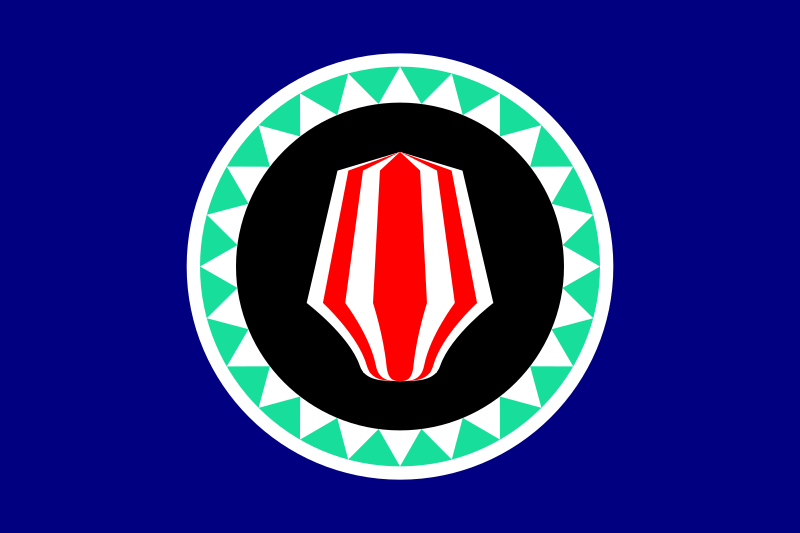

Flag_of_Bougainville  Bougainville in Papua New Guinea (special marker).svg

Flag of the Autonomous Region of Bougainville, and map of location within Papua New Guinea

Your hosts, as always, are Luke Kelly @thelukejkelly in Dublin, Ireland, Mark Boyle @markboyle86 in the UK, and Joe Byrne @anbeirneach in Galway, Ireland. Our theme music and other stings come from Thomas O’Boyle @thatthomasfella. 

We’ve also just launched a merch store in associated with TeePublic. You can find our store by clicking here, with exclusive discounts at the time of publishing. 


Further information and some of the sources we consulted can be found below:

Some music from Bougainville can be found at the following links, including some excellent examples of ‘bamboo bands’:

Thanks to all our patrons who support the show. We really appreciate your continued backing of us. If you want to join them, more information is available at www.patreon.com/80dayspodcast

This episode, we’d particularly like to thank new patrons, Dana Fox, AC C, Daniella Sponsler, Stepehen M, and some long-standing supporters: Emily Cranfill, Collin Macharyas, Simon Greene, Nathan Hixson, Darren Clarke, Erin Barclay and Mark Wood.

Singapore (S2.01)

S02E01 Singapore audio

Welcome to Season 2 of 80 Days: an exploration podcast. Today we will be exploring the fascinating history and culture of Singapore , the lion city. This tiny island city-state is home to 5.5 million people and is located just off the southern tip of the Malay peninsula, one degree north of the equator. It’s a country without seasons, remaining hot and humid year-round, and gained full independence just 51 years ago, although it wasn’t a cause for celebration at the time, as we’ll see. Since then, Singapore has developed rapidly as an Asian Tiger economy, despite its lack of any natural resources and today is one of the most well-developed and successful cities in the world.  

Your hosts are Luke Kelly @thelukejkelly in Hong Kong, Mark Boyle @markboyle86 in the UK, and Joe Byrne@anbeirneach in Switzerland. (Theme music byThomas O’Boyle)

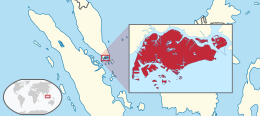
Flag of SingaporeLocation of  Singapore  (red)

Table of Contents:
[05:02] Early History and founding of the “Lion City”
[14:05] Dutch and British East India Companies in the area
[17:41] Sir Thomas Stamford Raffles founds a British colony
[26:20] Singapore growing, with little government

[31:00] Music break (traditional)
[31:25] World War 1 aftermath and fortification of Singapore
[35:38] World War 2, Battle of Malaya
[44:43] Japanese Occupation
[48:35] Post-war unrest, self-determination, the rise of Lee Kuan Yew
[52:00] A Malaysia including Singapore
[56:15] Involuntary Independence
[58:22] Music Break (modern patriotic song)

[59:00] Modern Singapore
[1:05:55] Economy
[1:09:15] Population planning
[1:13:49] Crime and punishment
[1:19:32] Languages: melting pot of speech
[1:24:54] Military song in Singlish

Generally if you want to keep learning about Singapore in more depth, the following would be useful:

  • History of Singpore” documentary on the Discovery Channel directed by Tim Lambert (Lion Television) 2005
  • The Hisory of Singapore podcast by PJ Thum (who teaches Southeast Asian history at Universoty of Oxford) – this gives very in-depth history of the city state. It is quite political and at times critical of the mainstream opinion of Singaporean history
  • Talk the Talk episode on Singlish, the unique ‘colloquial English’ dialect common in Singapore and its relationship to the many other languages spoken in this melting-pot country

Some things you might like to know more about:

  • Singapore’s early history showed the island appearing on the radar of the Greek geographer Ptolemy (as “Sabana”, c. 100 AD), in Chinese imperial records (as “Pú Luó Zhong/ “, a transliteration of Malay name for “Island at the end”), and in Old Javanese epics (as “Temasek“, perhaps meaning “sea town”, a literal name for the fishing port that pre-existed the city inhabited by Orung Laut/”sea gypsies”). It is also widely described in the Malay Annals.
  • In the 14th century, legend tells of the Kingdom of Singapura being founded by Sang Nila Ultama , Srivijaya Prince from Palembang
    • He is the legendary source of the name “Singapore”, literally “Lion City” (in Sanskrit). It is told that upon landing on the island, he went hunting and saw a lion, which was considered an auspicious symbol. There is no historical evidence lions ever lived on the island. Accounts of the legend can be found on Remembering Singapore, from this school resource,  or in the cartoon The Story of SingaporeRemembering Singapore is a very useful resource with lots of photographs of the island and further information.
    • Excavations at Fort Canning Hill support presence of a political centre at this time
  • Five generations later, Parameswara (alias Iskandar Shah) was an important figure, who lost Singapore to a Majapahit invasion, fled to Malacca and founded the sultanate there which became the core of the Malay world for centuries to come. The historical evidence of most details of his life are hazy, as is summarised here.
  • We mentioned the legend of Badang the strongman who placed the “Singapore Stone” in the harbour. There is an account of his tale in The Gentleman’s Magazine (1822).
  • In the early 19th Century, Sir Thomas Stamford Raffles played a key role in founding modern Singapore as a stronghold of the British East India Company. Many of his contributions to the country are listed in this article.
  • He was succeeded by William Farquhuar, who had a different vision for the settlement than Raffles and the two came into conflict over issues such as slavery and gambling, which Farquhar allowed, arguing that they were essential to the survival of the place.
  • The laissez-faire governmental style, as the settlement had a large influx of Chinese laborours meant that various secret societies or gangs became very powerful in Singapore as the place for the Chinese population to look for protection and support (see “The Social Life of Chinese Labor” by Adam McKeown)
    • The Government knows little or nothing of the Chinese, who are industrial backbone of these [Straits] Settlements; and the immense majority of them know nothing of the Government. We know that a certain number of Chinese arrive each year, and that a certain number go away; but how long they stay, how many come back a second time, what they think about and desire – as to all this we know nothing… We believe that the case majority of the Chinamen who come to work in these Settlements return to their country not knowing clearly whether there is a Government in them or not

  • World War 2 effected Singapore greatly, with an elongated Japanese occupation, and racially- and politically-motivated massacres, like “Sook Ching” (“Purge”), particularly against the ethnic Chinese, who were suspected of anti-Japanese sentiment. Click the links to read further. Also watch film of the fall of Singapore here, and the documentary “Surviving Hell, stories from the fall of Singapore“. The settlement was name “Syonan-to/昭南島” during this period, meaning “Light of the South”
  • “But they also showed a meanness and viciousness towards their enemies equal to the Huns’. Genghis Khan and his hordes could not have been more merciless. I have no doubts about whether the two atom bombs dropped on Hiroshima and Nagasaki were necessary. Without them, hundreds of thousands of civilians in Malaya and Singapore, and millions in Japan itself, would have perished” — Lee Kuan Yew’s memoirs

  • The quote from Lee Kuan Yew at [45:11] comes from No Prisoners – The Fall of Singapore (2002, 4 Corners)
  • Post-war Singapore saw great changes, including social agitation and race riots as the British began to disengage from direct rule.
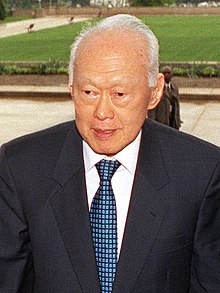
  • The most significant figure in the second half of the 20th CentuLee Kuan Yew.jpgry was long-serving prime minister Lee Kuan Yew .  Leader of the People’s Action Party, he became the unquestioned leader of the independent Singapore for 30 years, shaping the new country to his own vision through strict but largely fair rule.
  • In 1963, Lee fulfilled his ambition of seeing Singapore join into a political union with British Malaya, Borneo and Sarawak; the modern state of Malaysia – this project, however was doomed to failure because of racial and religious tensions between largely ethnic Malay/Muslim Malaya and the significant ethnic Chinese component of Singapore’s population.
  • Prime Minister Lee was very emotional when he announced to his people that Singapore was leaving the union and embarking on an unwished-for independence

A few songs may interest you, also, some of which you will have heard:

  • Dayung Sampan”  – to quote it’s description on YouTube: “This video “Dayung Sampan” features Noraniza Idris, and He Yun (from China Hebei) playing the Erhu, a Chinese traditional instrument. “Dayung Sampan” is the Malay version of the famous Chinese tune “Tian Mi Mi” (甜蜜蜜). This is a fresh collaboration between the Malay and Chinese culture”
  • Ironic song by Dick Lee, making linguistic jokes and satirising modern politics
  • Shine for Singapore” was commission for the 2008 National Day Parade and “One Singapore” was another later commission. Both are examples of patriotic pop songs.

Finally, make sure to check out our sponsor Hairy Baby on www.hairybaby.com! You can get 10% off any purchase using the promo code “80days” and pick up an official 80 Days t-shirt at this link.

Special thanks, also, this week to Paula Cantwell and Rowland Seymour for their backing of the show this season – very much appreciated!