Belize (S6.07)

Audio: Belize

In this episode of 80 Days: An Exploration Podcast we’ll be talking about the Central American country Belize, formerly known as British Honduras.  This small country on the Yucatan Peninsula. It is bordered by Mexico to the north, the Caribbean Sea to the east, and Guatemala to the west and south. This region was a stronghold of the Maya Heartland from around 1500BC up to the arrival of Europeans, namely the Spanish, in the 1600s. A tussle between Spain and Britain developed in subsequent decades, and Belize became a British colony in 1840, and a Crown colony in 1862, before achieving full independence in 1981. The country has an area of 22,970 square kilometres (8,867 sq mi) and a population of just over 410,000, making it similar in size to Wales, Djibouti or the US state of New Jersey, but the least densely populated nation in Central America. This is a very diverse place, ecologically, culturally and linguistically. The official language is English, but there are many other communities such as Maya, Garifuna, Creoles and even Mennonites, who speak a variety of tongues. Belize has over 400 islands or Cays off its coastline, as well as one of the world’s largest marine sinkholes, the Blue Hole, which is 318 m (1,043 ft) across and extends to a depth of 124 m (407 ft). The country also boasts the second largest barrier reef in the world after the one everyone’s heard of in Australia.

Your hosts, as always, are Luke Kelly @thelukejkelly in Wexford, Ireland, Mark Boyle @markboyle86 in Toronto, Canada, and Joe Byrne @anbeirneach in Dublin, Ireland. Our theme music and other stings come from Thomas O’Boyle @thatthomasfella.

Some further reading material is provided below:

Music relevant to Belize includes:


Thanks to all our patrons who support the show. We really appreciate your continued backing of us. If you want to join them, more information is available at www.patreon.com/80dayspodcast

Wellington, New Zealand (S6.06)

Audio: Wellington

LISTENER SURVEY

In this episode of 80 Days: An Exploration Podcast we’ll be talking about Wellington, New Zealand. Located at the south end of the country’s North Island, Wellington is the third largest city, and capital of New Zealand. Māori oral tradition tells that Kupe discovered and explored the region in about the 10th century, before Maori people settled the country from around 1280, making New Zealand the world’s last major landmass to be occupied by humans. Maori named the natural harbour that forms here named the harbour Te Whanganui-a-Tara. As they tend to do, Europeans eventually showed up and began to colonise, in this case in the 1830s, inevitably coming into conflict with the Maori, and eventually renaming the settlement for Sir Arthur Wellesley, hero of Waterloo. Wellington was declared a city in 1840, and was chosen to be the capital city of New Zealand in 1865, making it the world’s southernmost capital of a sovereign state. Today, Wellington is home to around 420,000 people, giving it a similar population to Oakland, California or Manchester, England. It is well-known for its coffee culture, its natural beauty, its booming film industry and its extreme winds. Wellington is the world’s windiest city, with an average wind speed of 27 km/h (17 mph)

Your hosts, as always, are Luke Kelly @thelukejkelly in Dublin, Ireland, Mark Boyle @markboyle86 in Toronto, Canada, and Joe Byrne @anbeirneach in Dublin, Ireland. Our theme music and other stings come from Thomas O’Boyle @thatthomasfella.

We also had a huge amount of help from Thomas Rillstone for this episode. He’s the legend behind the History of Aotearoa New Zealand Podcast. You should check out his show for far more info on New Zealand than we could ever hope to know, and for much more accurate pronunciations than we could ever manage.

Some further reading material is provided below:

  • We referred a number of times in this episode to the official government site on Wellington’s history, which you can find here.
  • Another great source is the Wellington Museum. Did we mention there’s a lot written down in this one? The episode was well over three hours before it was edited!
  • There’s also an episode of Absolute History all about the history of the city, which touches on some of the points we made and also gives a good tour around the city. Featuring Peter Jackson!
  • We also recieved an absolute treasure trove of info from the good people of r/Wellington.
  • More info on Te Rauparaha and the Ngāti Toa can be found here.
  • The Radio New Zealand Black Sheep Podcast was a fantastic overview of the dastardley Wakefield clan and their misdeeds — check it out.
  • Want more on the Treaty of Waitangi? See here.
  • The Wakefield Memorial we discussed has its own Wikipedia page. It doesn’t improve the memorial much.
  • For more on the Musket Wars, check out Kiwi Codger on YouTube
  • Thomas Le Bas’ The Lost History of the Flag of Wellington is available on Medium.
  • More info on the Wahine Disaster is available on the official government site, and you can find news coverage from the period on YouTube.
  • For anyoen who hasn’t seen the All-Blacks perform the Haka before — check this out.
  • The Flat White? Wellington all the way.

Music includes:


Thanks to all our patrons who support the show. We really appreciate your continued backing of us. If you want to join them, more information is available at www.patreon.com/80dayspodcast

Burkina Faso (S6.03)

Audio: Burkina Faso

In this episode of 80 Days: An Exploration Podcast, we’ll be talking about Burkina Faso (formerly the French Upper Volta), a landlocked country in West Africa bordered by Mali to the northwest, Niger to the northeast, Benin to the southeast, Togo and Ghana to the south, and Côte d’Ivoire to the southwest. As of 2021, the country had an estimated population of just over 20,000,000. Total land area is around  274,000 km² (or roughly 106,000 sq mi), making it slightly smaller than Italy, slightly larger than New Zealand or the US state of Colorado. Burkina Faso has a primarily tropical climate with two very distinct seasons, wet and dry. Its northern regions are in the Sahel, making them very dry and arid, while the more southern regions are cooler and more tropical. 

The Mossi people, which still dominates the country today, moved into the region around 1100, and still makes up around 50% of the ethnic population. These were a tribal, agrarian society with a love of horses. Other important ethnic groups include include Fulani 8.4%, Gurma 7%, Bobo 4.9%, Gurunsi 4.6% Senufo 4.5%, Bissa 3.7%, Lobi 2.4%, Dagara 2.4%,  Tuareg/Ikelan 1.9%, Dioula 0.8% (percentages of modern population). In 1896, it was colonized by the French as part of French West Africa; in 1958, a new nation named Upper Volta became a self-governing colony within the French Community. In 1960, it gained full independence with Maurice Yaméogo as president. However, since then the country has struggled to maintain political stability, with political coups or uprisings taking place in 1966, 1980, 1982, 1983, 1987, and twice in 2022.

The nation is quite poor, and is one of the world’s least-economically developed, with around 75% of people to this day living off subsistence agriculture. Burkinabe farmers are well-known for working to music, usually drums. Burkina Faso is also one of the youngest countries in the world, thanks to very high fertility (Women have on average 5 children each) and a low average life expectancy, which currently stands at just under 60, among the lowest in the world. The median age is only around 17, and this has caused a massive spike in population over the past half-century, as yearly population growth rate is more than double the world average.

Your hosts, as always, are Luke Kelly @thelukejkelly in Dublin, Ireland, Mark Boyle @markboyle86 in Toronto, Canada, and Joe Byrne @anbeirneach in Dublin, Ireland. Our theme music and other stings come from Thomas O’Boyle @thatthomasfella.

Some further reading material is provided below:

Music includes:

Boukary Koutou, also known as Wobgho, the Mossi King of Ouagadougou with his personal escort of Mossi cavalry, Burkina Faso. From “Du Niger au Golfe de Guinée par le pays de Kong et le Mossi” by Binger, Louis Gustave, 1892, page 35, illustrated by Édouard Riou.
The Grand Mosque of Bobo-Dioulasso, Burkina Faso by JamesA (Wikimedia Commons)


Thanks to all our patrons who support the show. We really appreciate your continued backing of us. If you want to join them, more information is available at www.patreon.com/80dayspodcast

Kuril Islands (S3.06)

S03E06 Kuril Islands Audio

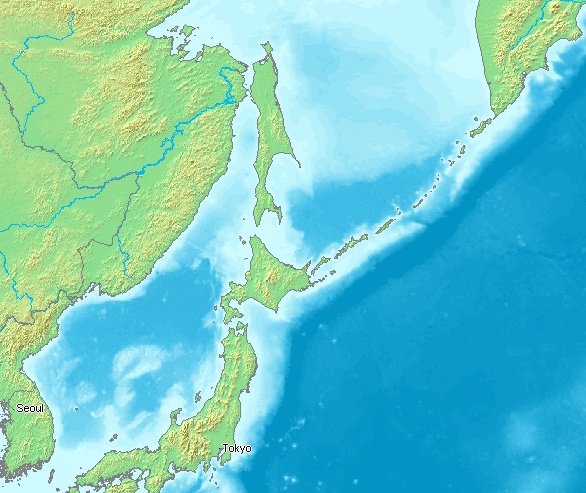
In this episode we’ll be talking about the Kuril Islands. This island chain is located in the Northern Pacific, and stretches between northern Japan and Kamchatka, Russia. The 56 islands extend for more than 750 miles across the ocean, and they total 10,500 square kilometers (4,000 square miles) of territory altogether, making their entire landmass roughly the same size as Lebanon or the island of Puerto Rico. The islands today have a population of roughly 20,000, and are controlled by Russia. However, the islands were previously administered by Japan  from the 18th century up until WWII, and have been subject to a land dispute ever since. Japan claims the southernmost islands as their ‘Northern Territories,’ and the conflict over them has led Moscow and Tokyo to avoid signing the peace treaty that would have formally ended the Second World War.

Your hosts, as always, are Luke Kelly @thelukejkelly in Hong Kong, Mark Boyle @markboyle86 in the UK, and Joe Byrne @anbeirneach in Switzerland . (Theme music by Thomas O’Boyle @thatthomasfella)

Flag of the Sakhalin Oblast, where the Kuril Islands are officially administered by Russia  Map showing Kuril Island chain between Hokkaido in Japan and Kamchatka in Russia. The sea of Okhotsk and the island of Sakhalin to the west and the Pacific Ocean to the east

Here are a few things you may want to read/watch more about:

Joe was recently in Honshu and Hokkaido and took some photos, including from a Jomon-era archaeological site, and the the Museum of Northern Peoples in Hakodate, which listeners might find interesting. Well worth a visit if you’re ever in the neighbourhood

This slideshow requires JavaScript.

Music from these islands and the neighbouring territories, some of which you heard, can be found at the following sources:

A massive thanks to all of our patrons on Patreon who are supporting season 3. If you’d like to join them and see what rewards are available for supporters, and get a peek behind the curtain check out www.patreon.com/80dayspodcast. We really appreciate the support and input!

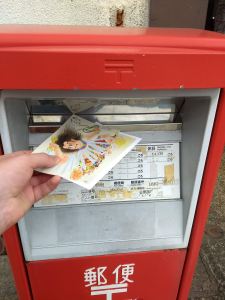
Finally, here is a picture of some of the postcards sent from Hokkaido to our Neil Armstrong-tier patrons on Patreon – they truly are out of this world!

Lapland or “Sápmi” (Christmas Special)

Christmas Special: Lapland audio

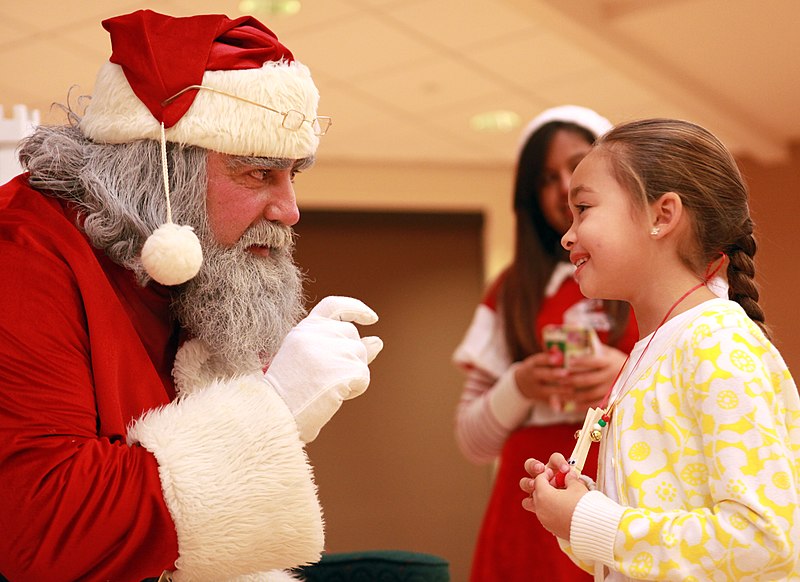
For the festive season, 80 Days brings you a Christmas special on the most appropriate place we could think of, complete with reindeer and Santa Claus: Lapland, or – as the native Sami people prefer to call it – Sápmi. This is a large region of Fennoscandanavia, north of the Arctic Circle, with its territory spanning parts of Finland, Norway, Sweden and Russia (see map). This episode will touch on all areas of Lapland, but will focus primarily on the Finnish and Norwegian sides. The area is named for the indigenous people (and their specific language grouping), who have sparsely inhabited the region for several thousand years. 

In Lapland, winter lasts from early October to early May, with temperatures well below freezing throughout the region and up to 60 cm or 23 inches of snow during midwinter. However, in summer the sun does not set on the region for several weeks at a time.  Population has declined quite significantly since 1990, and the region is now home to approximately 180,000 people. Residents are spread across a total area of just over 100,000 square kilometers, or 38,000 square miles, and there are as many reindeer here as there are people. Your hosts are Luke Kelly @thelukejkelly, Mark Boyle @markboyle86 and Joe Byrne @anbeirneach, in Hong Kong, the UK and Switzerland, respectively. (Theme music by Thomas O’Boyle)

File:Corrected Sapmi in Europe.PNGFile:Sami flag.svg

Some things you might like to know more about:

Toppkandidater Vesthavet valgkrets.jpg

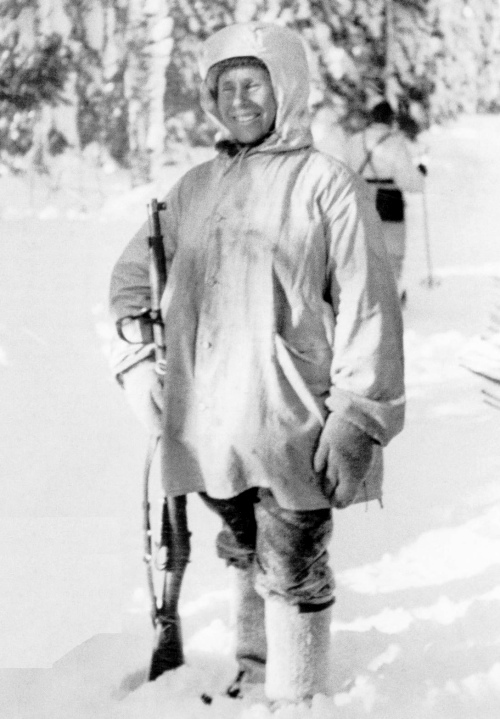
File:Hram Sv Simeona Mirotočivog (Novi Beograd) 040.jpgFile:USMC-101208-M-8527P-077.jpg

  • A lot has been written about Lapland’s most famous resident and how he came to be here. Most of it is mysterious and people make some wild guesses (often not true), but here, in no particular order, are a few resources that might be useful about Santa Claus and his village near Rovaniemi, Finnish Lapland. Who is St. Nicholas (about his early years in Myra); Andrea McDonald’s account of visitingHistory of Santa Claus (on the-north-pole.com), Santa Claus and His Works (New York Times piece describing the contributions of artist Thomas Nast to the image of Santa’s snowy abode); Head to Finnish Lapland… (a 2009 article in the Independent, including descriptions of Santa’s village); Checking Out Santa’s Workshop in Lapland (a 1988 article in the LA Times describing visiting Santa in Rovaniemi). For the more cynical, a stuffy article on postmodernism and Finnish tourism policy can be found here (for all the Scrooges out there!).
  • You can often watch people visiting Santa live (or look back at earlier recordings) at this website, which is wonderfully magic

We hope you have a happy Christmas and a wonderful new year and that you are looking forward to joining us for Season 2 in the coming months. As always, please get in touch if you are enjoying what you are hearing or have anything to share with us!


Find out about our Christmas Kickstarter campaign by clicking here. With your help we can make Season 2 even better than Season 1!
(https://www.kickstarter.com/projects/80dayspodcast/80-days-podcast-season-2)