Shetland (S6.09)

Audio: Shetland

In this episode of 80 Days: An Exploration Podcast we’ll be talking about Shetland, a group of about 100 islands, fewer than 20 of them inhabited, in Scotland, 210 km (130 miles) north of the Scottish mainland, at the northern extremity of the United Kingdom, around 340km or 210 miles from Norway. The islands total around 1,500 km2 (or 560 sq mi), making them similar in size to the nearby Faroe Islands [recommend listening to this past episode], American Samoa or Gran Canaria. 

Among the settlements on Mainland, the largest island, is Scalloway, a fishing port. Lerwick, also on Mainland, is the islands’ largest town and commercial and administrative centre. The early history of the islands is dominated by the influence of the Vikings, who settled here in the 9th Century. From the 14th century, it was incorporated into the Kingdom of Scotland, and later into the United Kingdom. The climate is generally windy, cloudy and often wet, with rain falling on more than 250 days a year, and average low temperatures a little above 1 °C (34 °F) in winter and around 14 °C (57 °F) in summer.

Shetland is as far north as St Petersburg, Russia, or Anchorage, Alaska, which makes the islands an ideal place to watch the northern lights, or as they’re known locally the ‘mirrie dancers’ while in summer there is almost perpetual daylight, a state of affairs known locally as the “simmer dim”.

We had a guest on the podcast this episode, local writer, tour-guide and podcasters Laurie Goodlad, who can be found on shetlandwithlaurie.com. Thanks to Laurie for her great contributions to helping us understand Shetland, only a fraction of which is included in the episode – if you’ve fallen in love with Shetland, much more can be found in her blog and podcast episodes.

Your hosts, as always, are Luke Kelly @thelukejkelly in Wexford, Ireland, Mark Boyle @markboyle86 in Toronto, Canada, and Joe Byrne @anbeirneach in Dublin, Ireland. Our theme music and other stings come from Thomas O’Boyle @thatthomasfella.

Map of Shetland Islands in Scotland by Finlay McWalter on Wikimedia Commons
A Shetland pony photographed by Ronnie Robertson (CC-BY)
The Prince of Wales set off a trend of Fair Isle jumpers, part of a general inter-war Northern Isles boost in knitting and garment industry

Some further reading material is provided below:

Music relevant to Shetland includes:


Thanks to all our patrons who support the show. We really appreciate your continued backing of us. If you want to join them, more information is available at www.patreon.com/80dayspodcast

Belize (S6.07)

Audio: Belize

In this episode of 80 Days: An Exploration Podcast we’ll be talking about the Central American country Belize, formerly known as British Honduras.  This small country on the Yucatan Peninsula. It is bordered by Mexico to the north, the Caribbean Sea to the east, and Guatemala to the west and south. This region was a stronghold of the Maya Heartland from around 1500BC up to the arrival of Europeans, namely the Spanish, in the 1600s. A tussle between Spain and Britain developed in subsequent decades, and Belize became a British colony in 1840, and a Crown colony in 1862, before achieving full independence in 1981. The country has an area of 22,970 square kilometres (8,867 sq mi) and a population of just over 410,000, making it similar in size to Wales, Djibouti or the US state of New Jersey, but the least densely populated nation in Central America. This is a very diverse place, ecologically, culturally and linguistically. The official language is English, but there are many other communities such as Maya, Garifuna, Creoles and even Mennonites, who speak a variety of tongues. Belize has over 400 islands or Cays off its coastline, as well as one of the world’s largest marine sinkholes, the Blue Hole, which is 318 m (1,043 ft) across and extends to a depth of 124 m (407 ft). The country also boasts the second largest barrier reef in the world after the one everyone’s heard of in Australia.

Your hosts, as always, are Luke Kelly @thelukejkelly in Wexford, Ireland, Mark Boyle @markboyle86 in Toronto, Canada, and Joe Byrne @anbeirneach in Dublin, Ireland. Our theme music and other stings come from Thomas O’Boyle @thatthomasfella.

Some further reading material is provided below:

Music relevant to Belize includes:


Thanks to all our patrons who support the show. We really appreciate your continued backing of us. If you want to join them, more information is available at www.patreon.com/80dayspodcast

Wellington, New Zealand (S6.06)

Audio: Wellington

LISTENER SURVEY

In this episode of 80 Days: An Exploration Podcast we’ll be talking about Wellington, New Zealand. Located at the south end of the country’s North Island, Wellington is the third largest city, and capital of New Zealand. Māori oral tradition tells that Kupe discovered and explored the region in about the 10th century, before Maori people settled the country from around 1280, making New Zealand the world’s last major landmass to be occupied by humans. Maori named the natural harbour that forms here named the harbour Te Whanganui-a-Tara. As they tend to do, Europeans eventually showed up and began to colonise, in this case in the 1830s, inevitably coming into conflict with the Maori, and eventually renaming the settlement for Sir Arthur Wellesley, hero of Waterloo. Wellington was declared a city in 1840, and was chosen to be the capital city of New Zealand in 1865, making it the world’s southernmost capital of a sovereign state. Today, Wellington is home to around 420,000 people, giving it a similar population to Oakland, California or Manchester, England. It is well-known for its coffee culture, its natural beauty, its booming film industry and its extreme winds. Wellington is the world’s windiest city, with an average wind speed of 27 km/h (17 mph)

Your hosts, as always, are Luke Kelly @thelukejkelly in Dublin, Ireland, Mark Boyle @markboyle86 in Toronto, Canada, and Joe Byrne @anbeirneach in Dublin, Ireland. Our theme music and other stings come from Thomas O’Boyle @thatthomasfella.

We also had a huge amount of help from Thomas Rillstone for this episode. He’s the legend behind the History of Aotearoa New Zealand Podcast. You should check out his show for far more info on New Zealand than we could ever hope to know, and for much more accurate pronunciations than we could ever manage.

Some further reading material is provided below:

  • We referred a number of times in this episode to the official government site on Wellington’s history, which you can find here.
  • Another great source is the Wellington Museum. Did we mention there’s a lot written down in this one? The episode was well over three hours before it was edited!
  • There’s also an episode of Absolute History all about the history of the city, which touches on some of the points we made and also gives a good tour around the city. Featuring Peter Jackson!
  • We also recieved an absolute treasure trove of info from the good people of r/Wellington.
  • More info on Te Rauparaha and the Ngāti Toa can be found here.
  • The Radio New Zealand Black Sheep Podcast was a fantastic overview of the dastardley Wakefield clan and their misdeeds — check it out.
  • Want more on the Treaty of Waitangi? See here.
  • The Wakefield Memorial we discussed has its own Wikipedia page. It doesn’t improve the memorial much.
  • For more on the Musket Wars, check out Kiwi Codger on YouTube
  • Thomas Le Bas’ The Lost History of the Flag of Wellington is available on Medium.
  • More info on the Wahine Disaster is available on the official government site, and you can find news coverage from the period on YouTube.
  • For anyoen who hasn’t seen the All-Blacks perform the Haka before — check this out.
  • The Flat White? Wellington all the way.

Music includes:


Thanks to all our patrons who support the show. We really appreciate your continued backing of us. If you want to join them, more information is available at www.patreon.com/80dayspodcast

Salem (S6.01)

Audio: Salem

In this episode of 80 Days: An Exploration Podcast, we’ll be talking about Salem, Massachusetts, which has a strong historical connection to the famous witch trials that took place there in the 1690s. Salem lies on Massachusetts Bay between Salem Harbor and Beverly Harbor, lying alongside the Danvers River, which feeds into the harbour. It’s around 20 miles or 35 kilometres north of Boston. The witch trials took place in a small settlement just outside Salem proper then known as Salem Village, but later renamed Danvers, and we’ll likely touch on both throughout. Salem today has a population of around 44,000, while Danvers is home to around 28,000. The area had long been occupied by the indigenous Native American tribe the Massachusett before the arrival of Puritan settlers from England in the 1630s. For obvious reasons, Salem today is one of the most popular destinations in the US to celebrate Halloween, attracting over half a million visitors each year.  

This Hallowe’en episode is the debut episode of Season 6. After a longer-than-planned hiatus we are back producing a new season. You’ll notice a few changes in location of your co-hosts during this season.

Your hosts, as always, are Luke Kelly @thelukejkelly in Dublin, Ireland, Mark Boyle @markboyle86 in the UK, and Joe Byrne @anbeirneach in Galway, Ireland. Our theme music and other stings come from Thomas O’Boyle @thatthomasfella. With additional music from Ivan Duch, and Boston.

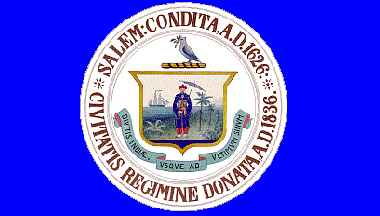
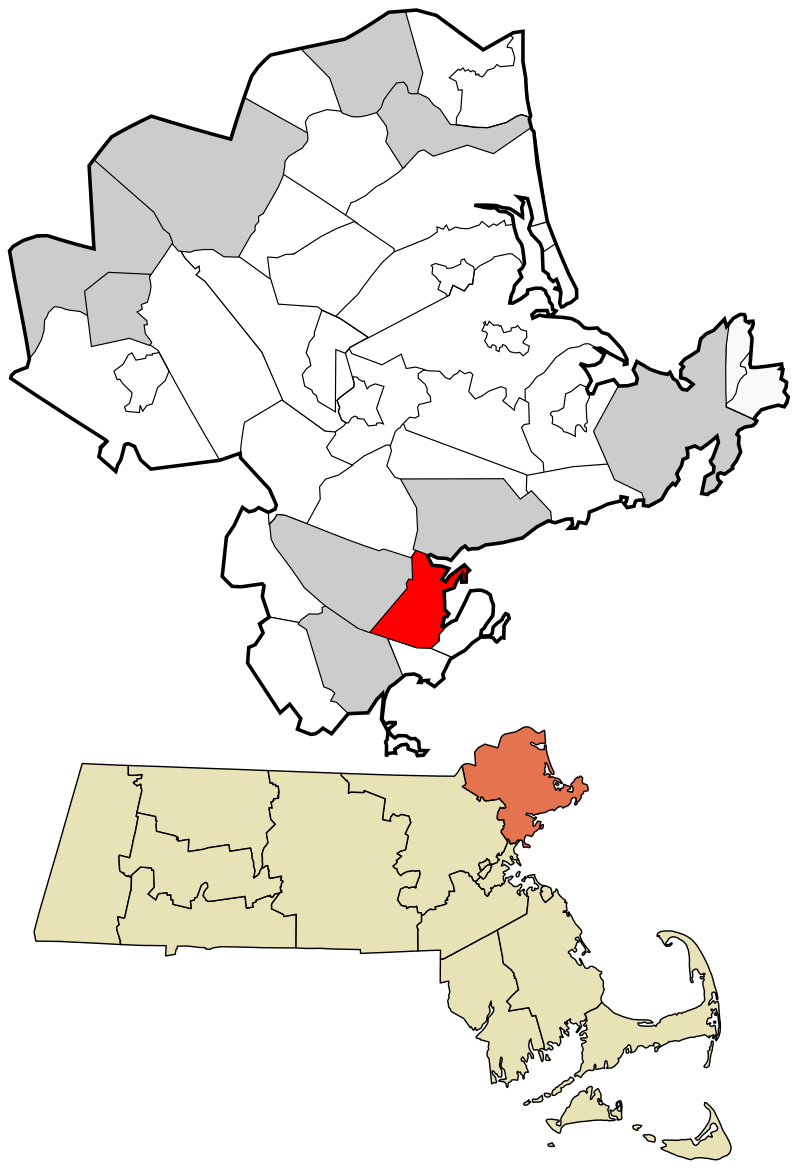
Flag of Salem   Location in Essex County, Massachusetts

Some further reading material is provided below:

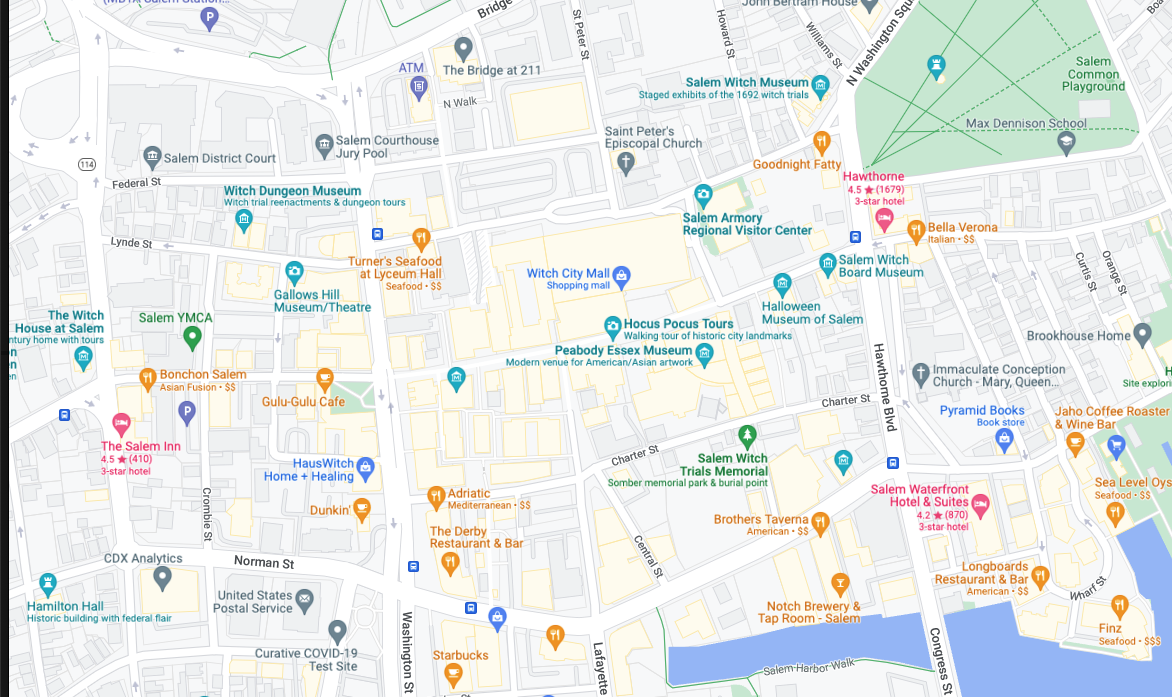
Map of Salem with an over-representation of spookily named businesses


Thanks to all our patrons who support the show. We really appreciate your continued backing of us. If you want to join them, more information is available at www.patreon.com/80dayspodcast

Quebec City (S5.07)

Audio: Quebec City

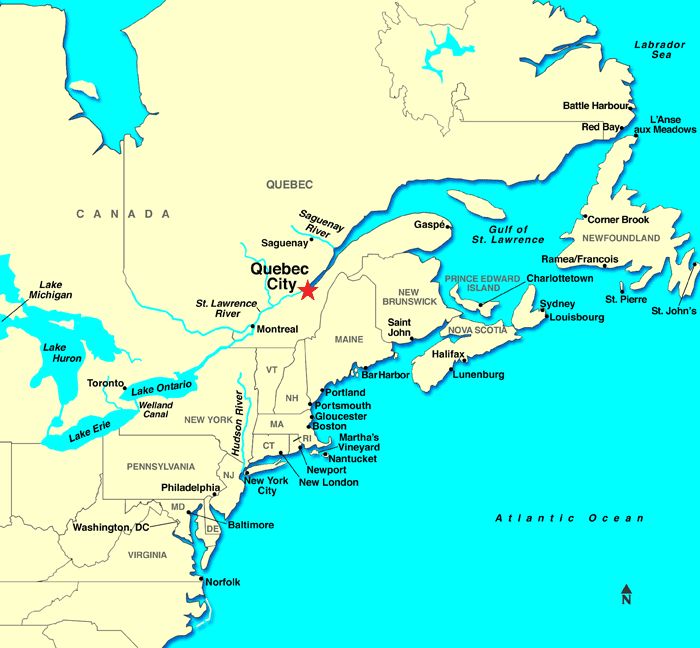
In this episode of 80 Days: An Exploration Podcastwe’ll be talking about the only walled city north of Mexico on the American Continent – Quebec City. The capital city of Canada’s Quebec province, the city is located on the St Lawrence River, around 500 kilometres from the Eastern coast of Canada, and around 700km northeast of New York City. Founded in July 1608 by Samuel de Champlain, a French explorer, Quebec City originated as Stadacona, a Iroqious Native American settlement, before the arrival of Europeans. A base for the French exploration and colonisation of what would become New France, Quebec remains a hub of French-Canadian culture and history, with French serving as the primary language, as throughout the wider province of Quebec. In 1775, American troops led by Benedict Arnold attempted to invade and take over Quebec City in the Battle of Quebec to “liberate” the region from the British. The siege was unsuccessful, however, and Quebec did not become the 14th colony; instead, it remained under British rule until Canada became its own country in 1867. Today, the city is home to just over half a million residents, making it the eleventh-largest city in Canada, similar in urban population to Albuquerque, New Mexico or Dublin, Ireland. The city’s curious name was taken from the native term for “where the river narrows” after its location on the banks of the St Lawrence River. 

QCMap

QCFlagQPFlag

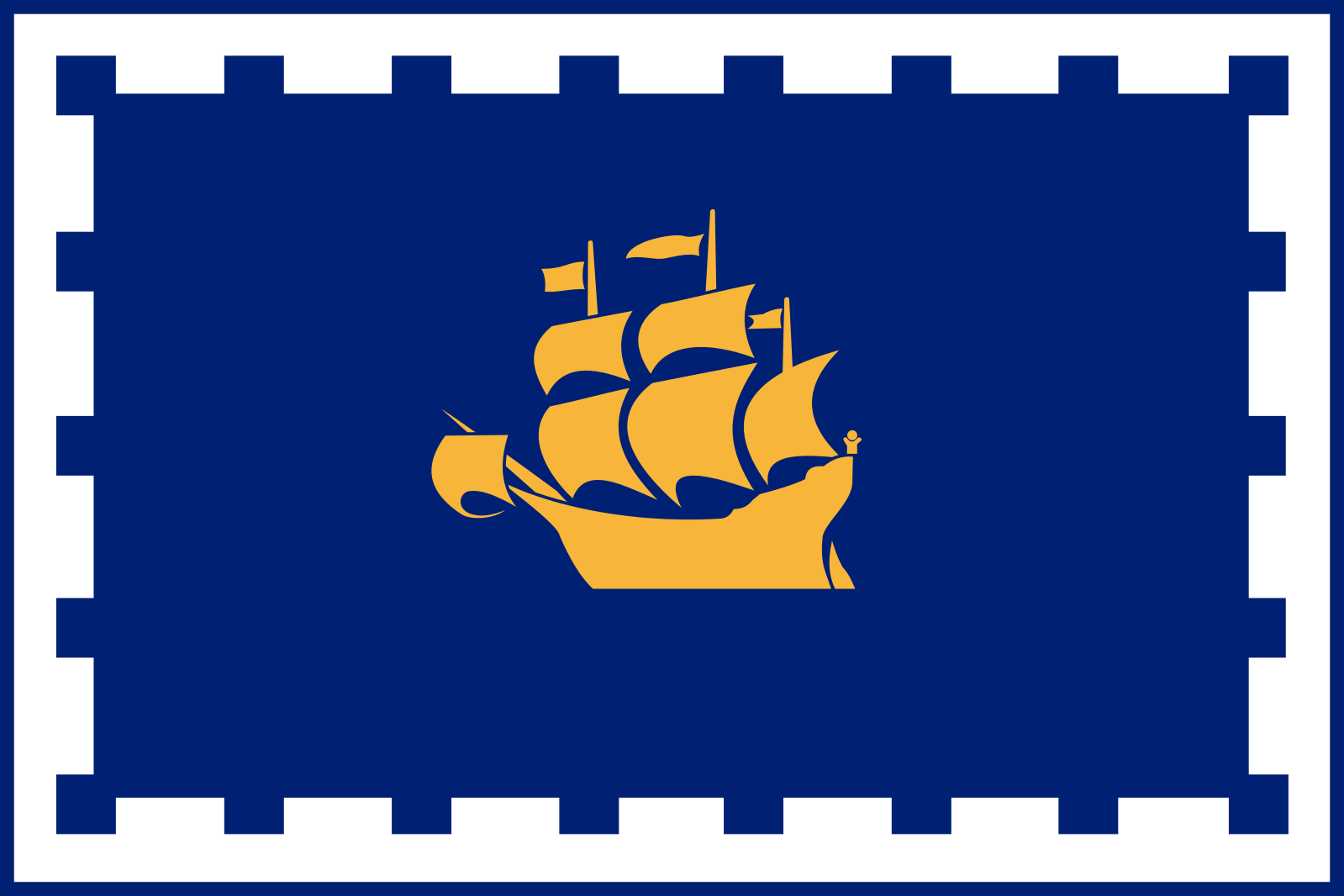
Flag of the City of Quebec (left), and the province of Quebec (right)

Your hosts, as always, are Luke Kelly @thelukejkelly in Dublin, Ireland, Mark Boyle @markboyle86 in the UK, and Joe Byrne @anbeirneach in Galway, Ireland. Our theme music and other stings come from Thomas O’Boyle @thatthomasfella. 

We’ve also just launched a merch store in associated with TeePublic. You can find our store by clicking here, with exclusive discounts at the time of publishing. 

Further information and some of the sources we consulted can be found below:

  • You can find A Short History of Quebec By John Alexander Dickinson, Brian J. Young on Google Books here.
  • Another source for this episode was History of Quebec For Dummies By Éric Bédard, found here.
  • We’d also recommend A People’s History of Quebec by Jacques Lacoursière, ‎Robin Philpot · 2009.
  • There’s a great PDF on the geology of this region available from ParksCanadaHistory.com
  • ResearchGate provided a copy of Iroquoians in the St. Lawrence River Valley before European Contact by Christian Gates St-Pierre from the University of Montréal.
  • ArcheoQuebec also shed a lot of light on the early history of the region.
  • Adam Woog’s Great Explorers: Jaques Cartier is also recommended reading for more about the influential early explorer of this region.
  • CBC have an article on the settler women from whom a huge proportion of French Canadians are descended here.
  • More on the Quebec Rockslide of 1889 can be found here.
  • For general reading on the city, The Canadian Encyclopedia is well worth checking out.
  • Further reading on the modern history of Quebec can also be found at Ville De Quebec.
  • Langfocus on YouTube has a breakdown of Quebec French vs Metropolitan French.
  • The final song of the episode is “La Ziguezon” and can be found here.
  • We also featured a clip of some Wendat music, which can be found here.

Thanks to all our patrons who support the show. We really appreciate your continued backing of us. If you want to join them, more information is available at www.patreon.com/80dayspodcast

As we mentioned, Patreon proceeds from this episode will go to the Red Cross to help refugees fleeing the war in Ukraine.

Trinidad and Tobago (S4.05)

S04E04 Trinidad and Tobago Audio

In this episode of 80 Days: An Exploration Podcast, we’ll be talking about Trinidad & Tobago, a twin island nation, located just off the northern coast of the South American mainland, around 11 kilometres or 7 miles from Venezuela. It is the southernmost of the West Indies island group, and today is home to around 1.3 million people.

trinidad

Trinidad, the southernmost and larger of the two islands, has a landmass of around 4,760 km2 (1,840 sq miles), comprising 93% of the country’s territory. Tobago, around 40km or 25 miles to the northeast, is around 300 km2 (120 sq mi) in total. The islands enjoy a warm, tropical climate, and only have two seasons – a dry season for the first five months of the year, and a wet season for the remaining seven. Occupied by Amerindian tribes up to 1498, the islands were then discovered by Christopher Columbus and later became a Spanish colony. Sovereignty over the islands was disputed throughout the 19th century, before the two were unified as one British colony in 1888. Independent since 1962, the country has benefited greatly from the discovery of oil in 1857, and is today one of the richest and most ethnically diverse countries in the region. Trinidad and Tobago is also famous for its extravagant carnival celebrations, and is known as the birthplace of limbo dancing.

This episode, just like all of our recent ones, is supported by our Patreon backers. If you want to help out the show, you can help out by joining us over on www.patreon.com/80dayspodcast to give us whatever you can in terms of financial support and avail of all the lovely awards and extras that entitles you to. If you’re unable to support us financially, you can always leave us a review on Apple Podcasts or wherever you get your podcasts from.
Port_of_Spain_Trinidad

This slideshow requires JavaScript.


Your hosts, as always, are Luke Kelly @thelukejkelly in Hong Kong, Mark Boyle @markboyle86 in the UK, and Joe Byrne @anbeirneach in Ireland . (Theme music by Thomas O’Boyle @thatthomasfella)


Some further reading:

Music that might interest listeners:


Lesotho (S3.08)

S03E08 Lesotho Audio

In this episode of 80 Days: An Exploration Podcast, we’ll be talking about the Kingdom of Lesotho, previously the British Crown Colony of Basutoland. This small African country is entirely surrounded by South Africa, making it one of only three nations to be contained entirely within another country’s borders. Lesotho is also one of the highest countries in the world, standing an average of 1500 metres above sea level, making it the fifth highest nation in the world by average elevation. Lesotho has a population of around 2 million, and its capital and largest city is Maseru.


At around 30,000 square kilometres, the country is roughly the size of Belgium or the US state of Hawaii. Its combination of high altitude and a relatively cool climate results in it being free of tropical diseases. Rainfall is highly variable, farming is difficult and the country has few natural resources. Sesotho is the national language, but English is the language of business, government and education. 

Your hosts, as always, are Luke Kelly @thelukejkelly in Hong Kong, Mark Boyle @markboyle86 in the UK, and Joe Byrne @anbeirneach in Switzerland . (Theme music by Thomas O’Boyle @thatthomasfella)

LocationLesotho.svg

Above is the location of Lesotho, contained entirely within South Africa.

Here are a few things you may want to read/watch more about:

King_Moshoeshoe_of_the_Basotho_with_his_ministers

Some nice  music (and characteristic dancing, in some cases) we found:

Thanks to Seán Lyons for his interview about his time working in Lesotho with Irish NGO Action Lesotho. A massive thanks too to all of our patrons on Patreon who are supporting season 3. If you’d like to join them and see what rewards are available for supporters, and get a peek behind the curtain check out www.patreon.com/80dayspodcast. We really appreciate the support and input!

Suriname (S3.07)

S03E07 Suriname Audio

In this episode of season 3 of 80 Days: an exploration podcast, we’ll be talking about the Republic of Suriname, previously known as Dutch Guiana. Located on the northern coast of South America, this roughly square shaped nation borders French Guiana to the east, Guyana to the West and Brazil to the South. Modern Suriname is both one of the smallest and most ethnically diverse countries in South America, with up to 9 recognised languages and many different ethnic groups.

At just under 165,000 square kilometers (or 64,000 square miles), Suriname is roughly the size of the US state of Washington, or Tunisia. The country’s population is around 560,000, most of whom live in the capital city of Paramaribo, near the mouth of the river Suriname. The climate here is hot and humid year-round, as the country lies just a few degrees north of the equator. As a result, its southern portion is dominated by lush, dense rainforest.   

Originally established as a British colony, Suriname was eventually traded to the Dutch in 1667 for a little island in on the east coast of North America, then known as New Amsterdam. Since gaining its independence in 1975, Suriname has maintained close ties to The Netherlands, and is today the only sovereign nation outside Europe where Dutch is spoken by a majority of the population.

Your hosts, as always, are Luke Kelly @thelukejkelly in Hong Kong, Mark Boyle @markboyle86 in the UK, and Joe Byrne @anbeirneach in Switzerland . (Theme music by Thomas O’Boyle @thatthomasfella)


Above is the current flag, the location of Suriname in South America, and the terrible old flag with five stars on a white background. Ethnic/linguistic diversity also needs to be mentioned up top. In Suriname, there are no fewer than twenty languages spoken. Most Surinamese are multilingual. In terms of numbers of speakers are the main languages in Suriname, successively the Dutch language, Sranan Tongo (Surinamese Creole), Sarnami (Surinamese Hindi), Javanese, and different Maroon languages (especially Saramaccan and Ndyuka) and Carriban languages. In recent years, English is being spoken more and more by the majority of the younger populace. 

Here are a few things you may want to read/watch more about:

Some nice Surinamese music we found:

A massive thanks to all of our patrons on Patreon who are supporting season 3. If you’d like to join them and see what rewards are available for supporters, and get a peek behind the curtain check out www.patreon.com/80dayspodcast. We really appreciate the support and input!

Saint Helena (S3.04)

S03E04 Saint Helena Audio

In this episode of season 3 of 80 Days: an exploration podcast, we’ll be talking about Saint Helena, a volcanic tropical island in the South Atlantic Ocean, and one of the most isolated points of land in the world. Saint Helena is more than 2,000 kilometres (1,200 mi) from its nearest mainland neighbour. The nearest port is Namibe in Angola. It was uninhabited up until its discovery by the Portuguese in 1502, and was later taken over by the British. Used for much of its life as an island of exile, its most famous inhabitant was Napoleon Bonaparte, who was exiled there after his defeat at Waterloo. The island today has a population of just over 4500, and is roughly the size of Staten Island in New York or San Marino, at just 121 square kilometeres, or 47 square miles, and its climate is generally mild.

The island is situated in the Western Hemisphere and despite having the same longitude as Cornwall in the United Kingdom, it is classified as being in West Africa by the United Nations.

Its inhabitants, known locally as “Saints”, are the descendants of sailors, settlers and slaves, and are said to be fiercely loyal to the British monarchy. The island’s economy is dependent on British grants and remittances, and up until recently its only link to the outside world was by a Royal Mail Ship, the St Helena, which made a five-day journey from Cape Town in South Africa, every three weeks.

Your hosts, as always, are Luke Kelly @thelukejkelly in Hong Kong, Mark Boyle @markboyle86 in the UK, and Joe Byrne @anbeirneach in Switzerland . (Theme music by Thomas O’Boyle @thatthomasfella)

Flag of Saint Helena  Global position of Saint Helena, with respect to the UK

Here are a few things you may want to read/watch more about:

Music you heard was from the following sources:

Thanks to Fran Hobbs for his insightful interview about life on the island. A massive thanks to all of our patrons on Patreon who are supporting season 3. If you’d like to join them and see what rewards are available for supporters, and get a peek behind the curtain check out www.patreon.com/80dayspodcast. We really appreciate the support and input!

Tasmania (S3.01)

S03E01 Tasmania Audio

In the first episode of season 3 of 80 Days: an exploration podcast, we’ll be talking about Tasmania, the island state of Australia, known to early European explorers as Van Dieman’s Land. This verdant island is roughly the size of Ireland but with only 8% of the population. Tasmania or ‘Tassie’ lies 240 km or 150 miles south of the Australian mainland, and the state encompasses the main island of Tasmania, the 26th-largest island in the world, and the surrounding 334 islands. Just over half a million people live in Tasmania, 40% of whom reside in the island largest city, Hobart, which is lies on the banks of the Derwent River on the south side of the island.
Up until the early 1800s, the island was inhabited exclusively by Aboriginal Tasmanians, but was soon after claimed by the British and converted into a penal colony. For the next 50 years, around 75,000 convicts were sent to the island, which was viewed as a kind of ‘prison without walls.’ In 1854 its name was changed to Tasmania, and in 1901 it became a state in the newly-created federation of Australia.

Your hosts, as always, are Luke Kelly @thelukejkelly in Hong Kong, Mark Boyle @markboyle86 in the UK, and Joe Byrne @anbeirneach in Switzerland . (Theme music by Thomas O’Boyle @thatthomasfella)

Flag of Tasmania - State badge of a red lion passant on white disk, on a defaced British Blue Ensign

Position of Tasmania, in the southeast corner of the map of Tasmania, 260 km south of the Australian mainland

Here are a few things you may want to read/watch more about:

Music you heard was from the following sources:

A massive thanks to all of our patrons on Patreon who are supporting season 3. If you’d like to join them and see what rewards are available for supporters, and get a peek behind the curtain check out www.patreon.com/80dayspodcast. We really appreciate every penny!