Cuba: Part 1 (S2.06A)

S02E06a: Cuba (part 1) Audio

In this episode of 80 Days: an exploration podcast we’ll be talking about Cuba, an island in the Caribbean Ocean, just 90 miles south of the US state of Florida. Cuba is home to over 11 million inhabitants, and is the second-largest island in the Caribbean after Hispanola. The country has been subject to numerous territorial disputes and conflicts throughout its long and complex history, but finally emerged into independence in 1902. Following a turbulent revolution which spanned almost the entire 1950s, the Communist Party of Cuba, under the leadership of Fidel Castro, took control of the country in 1965. Although poverty is widespread, modern Cuba has an outstanding health care and education system and relations with the US are currently beginning to thaw after a protracted embargo that has been in place since the 1960s. Since Cuba has an awful lot of history, particularly in the 20th Century, we decided to split this episode into two parts: this is the first part.

Your hosts are Luke Kelly @thelukejkelly in Hong Kong, Mark Boyle @markboyle86 in the UK, Joe Byrne @anbeirneach in Switzerland and – as a new voice for regular listeners – we’re joined in this episode by  Erin Barclay in the USA. (Theme music by Thomas O’Boyle).
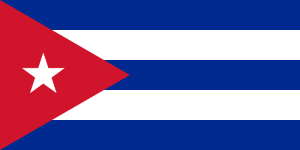
Table of Contents:

[03:28]  Early History – Taíno and others
[05:50]  In 1492, Columbus sailed the ocean blue… and stuff happened
[09:25] Spanish Colony, ‘serfdom’ and Hatuey’s Uprising
[12:25] Slavery, Slave Rebellions and Pirates
[13:55] Trade monopolies and disputes
[19:00] Sugar boom and population imbalance, and Haitian influx
[20:39] Break
[21:10] “What could go wrong?” – just six revolutions
[27:52] Leopoldo O’Donnell and ‘The Year of the Lash’
[29:00 ] The Cuban Wars of Independence
[34:33] Sinking of the USS Maine and US entry into the war
[35:57] Break
[36:22] The Spanish-American War (and Teddy Roosevelt’s ‘Rough Riders’)
[39:49] An independent Cuba, the Banana Wars and US Interventions
[43:45] World War 1 and, inter-war years and President Muchado
[46:42] Batista leads the Uprising of the Sergeants
[47:25] World War 2 ,Ernest Hemingway’s  ‘Crook Factory’, and the ‘St Louis Affair’
[50:58] America’s Playground and a handful of boring presidents
[53:52] Return of Batista: who needs democracy?

Here are a few things you may want to read/watch more about:

Thanks to our sponsor Hairy Baby, who in addition to making the funniest Irish-themed t-shirts, have also produced the official 80 Days shirt for our supporters. Find it by clicking here. You can get 10% off anything on www.hairybaby.com by using our promo code “80DAYS”.

Uruguay (S2.05)

S02E05: Uruguay Audio

In this episode of 80 Days: an exploration podcast, we’ll be talking about Uruguay, a small but prosperous country sandwiched between two massive South American powerhouses, Brazil and Argentina. Widely considered one of the most politically stable and progressive countries in Latin America, Uruguay is home to just over 3.5 Million people and almost ten times as many sheep.

By land mass, it is the second-smallest nation in the region. After a four-way struggle between Spain, Portugal, Argentina and Brazil, Uruguay declared its independence in 1825. The country then stabilised until the 1950s, when political turmoil ensued.
In more recent years, Uruguay escaped the recession that spread throughout South America in the early 2000s, and has since emerged as a bastion of democracy, progressive policies and free speech.  

Your hosts are Luke Kelly @thelukejkelly in Hong Kong, Mark Boyle @markboyle86 in the UK, and Joe Byrne @anbeirneach in Switzerland. (Theme music by Thomas O’Boyle).

Table of Contents:

[02:12] Intro – Homer Simpson and trampy birds
[08:30] Horny dirty Europeans and laissez faire gauchoing
[15:00] The inevitable British interest
[18:08] Artigas uncontemplative – not a calm guy
[27:23] If you liked Artigas you’ll love many endless wars forever
[33:46] Colorados vs Blancos – mob on mob violence
[40:39] Flores – Warlords don’t like peace, shoot your gauchos
[49:30] Jose Batlle – Mr 20th Century Uruguay
[57:54] WW2 – neutral, until it’s over and then they’re totally against Hitler
[1:06:08] Old timey radio show on Uruguay… is a bit dismissive of poor women
[1:14:46] Pacheqism – NOT to be confused with pacifism, too much torture for that
[1:16:30] Alive – plane crash and things only get worse from there
[1:23:28] South America in the 80s, how do you think it’s gonna go – “Politics is finished, I’m the leader.”
[1:30:38] Modern day – cannabis, football, music and good times

Here are a few things you may want to read/watch more about:

Some of the music we used in this episode, and other music we recommend:

Thanks this week to Nick Ison and Eoin Byrne, who backed our Kickstarter campaign. Your t-shirts should be on their way to you already. Thanks to our sponsor Hairy Baby, who in addition to making the funniest Irish-themed t-shirts, have also produced the official 80 Days shirt for our supporters. Find it by clicking here. You can get 10% off anything on www.hairybaby.com by using our promo code “80DAYS”.

Newfoundland (S2.04)

S02E04: Newfoundland Audio

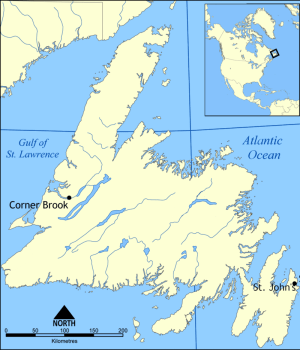
In this episode of 80 Days: an exploration podcast, we return to the north of North America and explore  Newfoundland, a Canadian island in the North Atlantic.  At over 100,000 square kilometres (40,000 sq mi), Newfoundland is the world’s 16th-largest island, and Cape Spear, just south of the capital, St John’s, is the easternmost point of North America, excluding Greenland. Newfoundland has long been a sparsely populated and harsh land, with residents traditionally relying heavily on fishing to survive. The area has a significant Gaelic heritage, with strong connections to Ireland and Britain. Modern-day Newfoundland has a population of just under half a million, and is the most populous part of the Canadian province of Newfoundland and Labrador.

Your hosts are Luke Kelly @thelukejkelly in Hong Kong, Mark Boyle @markboyle86 in the UK, and Joe Byrne @anbeirneach in Switzerland. (Theme music by Thomas O’Boyle). Our guest contributor this week is Dr Philip Hiscock (Department of Folklore, Memorial University, Newfoundland)

Table of Contents:
[01:16] Intro
[01:57] Early history – indigenous peoples and pushy Catholics
[09:00] Eric the Red – bad egg/ass
[13:00] Soil update – no codding you
[20:10] As usual the British turn up
[25:40] 80 Days Guest Dr Philip Hiscock – with some local knowledge
[30:00] The French arrive and shrug disinterestedly
[41:54] Beothuk people try to avoid conflict… uh oh
[47:40] Census, politics and telegraphy
[54:11] World wars, & reluctant Canadification
[1:09:06] I’m here from the government and I’m here to help (resettlement, cod & seals)
[1:20:24] 9/11 “We’re diverting you to Newfoundland. All of you.”

Here are a few things you may want to read/watch more about:

There is a lot of music (particularly Irish-inspired folk), some examples of which we would recommend if you enjoyed what you heard in the episode:

Thanks this week to Dr Jenn Jones and Jeffrey Doker, who backed our Kickstarter campaign. Your t-shirts should be on their way to you already. Thanks to our sponsor Hairy Baby, who in addition to making the funniest Irish-themed t-shirts, have also produced the official 80 Days shirt for our supporters. Find it by clicking here. You can get 10% off anything on http://www.hairybaby.com by using our promo code – just listen in to the episode for exact details.

Seychelles (S2.03)

S02E03: Seychelles Audio

Welcome to our third episode in season 2 of 80 Days: an exploration podcast. Today we will be looking at the little island paradise of the Seychelles, a country made up of an archipelago of 115 islands in the Indian Ocean. This former British colony has a population of just over 90,000, the smallest of any independent African state, and lies 1,500 kilometres (or 932 miles) off East Africa.

Your hosts are Luke Kelly @thelukejkelly in Hong Kong, Mark Boyle @markboyle86 in the UK, and Joe Byrne@anbeirneach in Switzerland. (Theme music by Thomas O’Boyle)

Like neighbouring Madagascar, the islands are best known for their unique geology and diverse wildlife populations. White sand beaches and clear blue oceans abound here, in what was once a haven for pirates marauding throughout the Indian Ocean. A tropical rainforest climate ensures that the islands are hot and humid year-round. Victoria, the capital city of Seychelles, is the smallest capital in the entire world, with a population of around 27,000 and the country today is one of the most prosperous in all of Africa.

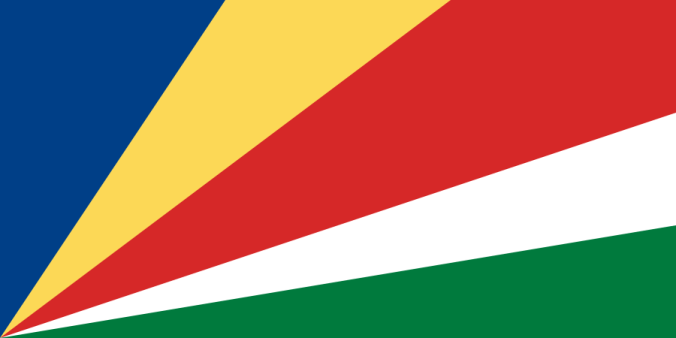
900px-Flag_of_Seychelles.svgLocation_Seychelles_AU_Africa.svg

Table of Contents:
[01:10] Intro – sounds pretty nice tbh
[02:07] Early history – coco de mer the rudest fruit
[06:28] Discovery – Seychelles can’t get no respect
[14:00] Pierre Poivre & other French colonial hijinks

[19:54] As usual the British turn up and Seychelles surrenders many times
[26:13] Welcome to the Empire Seychelles
[29:24] Seychelles – exotic prison colony with balls, baths and Birch
[36:30] Smut(s) and WW2’s loyal aliens
[40:30] Independence – Brits start to feel bad
[45:44] Commie Coup
[53:20] Mad Mike Hoare and his bad couping
[1:00:37] Democracy, climate change and geology

[1:04:22] Food – sharks and tiny persons
[1:07:13] Economy – tourism & N. Korean… friendship
[1:37:07] Modern day

10154173_10153680752689998_8797470439179894698_n

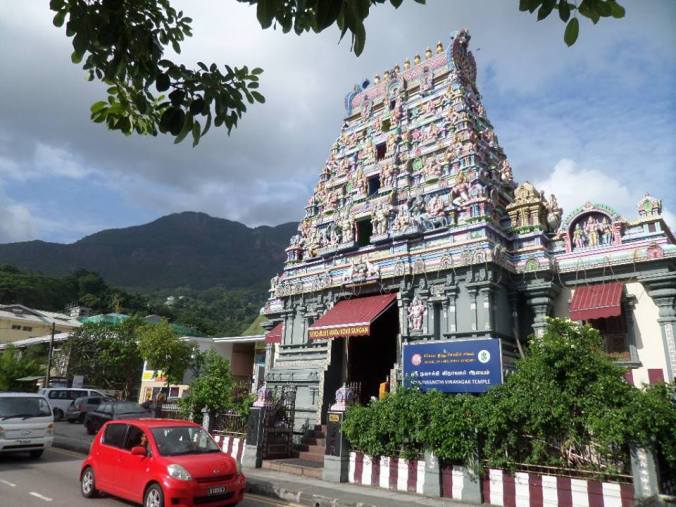
Hindu temple (credit: Murat Dagdeler)Key Facts

  • Smallest population of any independent African state (92k) mostly on Mahé
  • 1500 km east of African mainland
  • 115 islands in archipelago spread over 1m sq km
  • Unique Geology
  • Interesting flag, looks like a combination of Hungary and Romania (/r/vexillology) – third flag since independence, adopted after end of single-party state
  • Low temp of 24 degrees, highs in the 30s…
  • Mix of granite islands (only examples and oldest islands in the World) and coral islands (very new)
12573078_10153631674449998_4829648487286793548_n

Local fishmarket (credit: Murat Dagdeler)

Music:

And now you can check out some of the main reference links for the podcast. It’s a red letter day for you and no mistake.

And here’s the coco de mer that got us all so… excited. Think you can see why.

Thanks to Rob Curran & Krista Phillips for their generous Kickstarter support. You guys are heroes.

And a massive thank you, as always to our sponsor Hairy Baby, makers of the funniest Irish-themed clothing. Remember to get a 10% discount off anything you buy on their website (www.hairybaby.com) by using our special promo code, read out during the episode. We recommend the 80 Days official tee.

Easter Island or “Rapa Nui” (S2.02)

S02E02 Easter Island Audio

Welcome to our second episode in season 2 of 80 Days: an exploration podcast. Today we will be exploring the fascinating history and culture of Easter Island.

Named by Dutch explorer Jacob Roggeveen, on Easter Sunday in 1722, the island is best known for the 887 extant monumental statues, called moai, which were built by the early Rapa Nui people. The island is one of the most isolated in the world, lying more than 1,289 miles from its nearest inhabited neighbour, and almost 2,200 miles from the closest continental point, in Chile. The tiny volcanic island consists of just 163.6 km2 or 63.2 sq mi, making it roughly twice the size of Manhattan. The native population, the Rapa Nui, have endured famines, disease, population collapse, civil war, slave raids and colonial power struggles, and the island was most recently annexed by Chile in 1888. Today, Easter Island is home to around 6,000 people, the majority of whom are descended from the original Rapa Nui settlers.

Flag_of_Rapa_Nui,_Chile.svg

The flag of Rapa Nui (aka Easter Island)

Your hosts are Luke Kelly @thelukejkelly in Hong Kong, Mark Boyle @markboyle86 in the UK, and Joe Byrne@anbeirneach in Switzerland. (Theme music byThomas O’Boyle) Our guest contributor this week is Dr Mara Mulrooney (Bishop Museum, Honolulu).

Table of Contents:
[01:20] Intro – a seriously isolated island
[05:17] Dr Mara Mulrooney – on polynesian explorers
[14:42] The mystery – where did all the people go?
[18:08] Moai – giant stone heads

[27:50] The other explanations for the mystery
[36:53] “Discovery” – Roggeveen, Dutch idiot
[42:32] Was there a Civil War…?
[46:30] Birdman Cult
[53:38] Catholics, slavery, smallpox and Joseph Byrne
[1:07:44] Dutrou Bornier – A bad man
[1:13:55] Salmond and his sheep and Chile takes over
[1:21:11] Mana and the Routledge archaeological expedition

[1:29:23] Thor Heyerdahl expedition
[1:32:15] Pinochet’s law is like Pinochet’s love
[1:37:07] Modern day


If an almost 2 hour podcast doesn’t sufficiently wet your knowledge whistle as it were, feel free to get into some of the bits and pieces from around the internet that we used for background research.

But before that please feast your eyes on the ill-advised result of Mark’s Moai instagram photoshoot.

17966024_10155362852776554_867293507_n

And now you can check out some of the main reference links for the podcast!

Thanks this week to backers Nick Ison and Alec Richman. And a massive thank you, as always to our sponsor Hairy Baby, makers of the funniest Irish-themed clothing. Remember to get a 10% discount off anything you buy on their website (www.hairybaby.com) by using our special promo code, read out during the episode. We recommend the 80 Days official tee.


Singapore (S2.01)

S02E01 Singapore audio

Welcome to Season 2 of 80 Days: an exploration podcast. Today we will be exploring the fascinating history and culture of Singapore , the lion city. This tiny island city-state is home to 5.5 million people and is located just off the southern tip of the Malay peninsula, one degree north of the equator. It’s a country without seasons, remaining hot and humid year-round, and gained full independence just 51 years ago, although it wasn’t a cause for celebration at the time, as we’ll see. Since then, Singapore has developed rapidly as an Asian Tiger economy, despite its lack of any natural resources and today is one of the most well-developed and successful cities in the world.  

Your hosts are Luke Kelly @thelukejkelly in Hong Kong, Mark Boyle @markboyle86 in the UK, and Joe Byrne@anbeirneach in Switzerland. (Theme music byThomas O’Boyle)

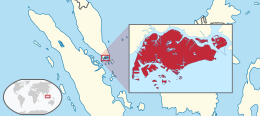
Flag of SingaporeLocation of  Singapore  (red)

Table of Contents:
[05:02] Early History and founding of the “Lion City”
[14:05] Dutch and British East India Companies in the area
[17:41] Sir Thomas Stamford Raffles founds a British colony
[26:20] Singapore growing, with little government

[31:00] Music break (traditional)
[31:25] World War 1 aftermath and fortification of Singapore
[35:38] World War 2, Battle of Malaya
[44:43] Japanese Occupation
[48:35] Post-war unrest, self-determination, the rise of Lee Kuan Yew
[52:00] A Malaysia including Singapore
[56:15] Involuntary Independence
[58:22] Music Break (modern patriotic song)

[59:00] Modern Singapore
[1:05:55] Economy
[1:09:15] Population planning
[1:13:49] Crime and punishment
[1:19:32] Languages: melting pot of speech
[1:24:54] Military song in Singlish

Generally if you want to keep learning about Singapore in more depth, the following would be useful:

  • History of Singpore” documentary on the Discovery Channel directed by Tim Lambert (Lion Television) 2005
  • The Hisory of Singapore podcast by PJ Thum (who teaches Southeast Asian history at Universoty of Oxford) – this gives very in-depth history of the city state. It is quite political and at times critical of the mainstream opinion of Singaporean history
  • Talk the Talk episode on Singlish, the unique ‘colloquial English’ dialect common in Singapore and its relationship to the many other languages spoken in this melting-pot country

Some things you might like to know more about:

  • Singapore’s early history showed the island appearing on the radar of the Greek geographer Ptolemy (as “Sabana”, c. 100 AD), in Chinese imperial records (as “Pú Luó Zhong/ “, a transliteration of Malay name for “Island at the end”), and in Old Javanese epics (as “Temasek“, perhaps meaning “sea town”, a literal name for the fishing port that pre-existed the city inhabited by Orung Laut/”sea gypsies”). It is also widely described in the Malay Annals.
  • In the 14th century, legend tells of the Kingdom of Singapura being founded by Sang Nila Ultama , Srivijaya Prince from Palembang
    • He is the legendary source of the name “Singapore”, literally “Lion City” (in Sanskrit). It is told that upon landing on the island, he went hunting and saw a lion, which was considered an auspicious symbol. There is no historical evidence lions ever lived on the island. Accounts of the legend can be found on Remembering Singapore, from this school resource,  or in the cartoon The Story of SingaporeRemembering Singapore is a very useful resource with lots of photographs of the island and further information.
    • Excavations at Fort Canning Hill support presence of a political centre at this time
  • Five generations later, Parameswara (alias Iskandar Shah) was an important figure, who lost Singapore to a Majapahit invasion, fled to Malacca and founded the sultanate there which became the core of the Malay world for centuries to come. The historical evidence of most details of his life are hazy, as is summarised here.
  • We mentioned the legend of Badang the strongman who placed the “Singapore Stone” in the harbour. There is an account of his tale in The Gentleman’s Magazine (1822).
  • In the early 19th Century, Sir Thomas Stamford Raffles played a key role in founding modern Singapore as a stronghold of the British East India Company. Many of his contributions to the country are listed in this article.
  • He was succeeded by William Farquhuar, who had a different vision for the settlement than Raffles and the two came into conflict over issues such as slavery and gambling, which Farquhar allowed, arguing that they were essential to the survival of the place.
  • The laissez-faire governmental style, as the settlement had a large influx of Chinese laborours meant that various secret societies or gangs became very powerful in Singapore as the place for the Chinese population to look for protection and support (see “The Social Life of Chinese Labor” by Adam McKeown)
    • The Government knows little or nothing of the Chinese, who are industrial backbone of these [Straits] Settlements; and the immense majority of them know nothing of the Government. We know that a certain number of Chinese arrive each year, and that a certain number go away; but how long they stay, how many come back a second time, what they think about and desire – as to all this we know nothing… We believe that the case majority of the Chinamen who come to work in these Settlements return to their country not knowing clearly whether there is a Government in them or not

  • World War 2 effected Singapore greatly, with an elongated Japanese occupation, and racially- and politically-motivated massacres, like “Sook Ching” (“Purge”), particularly against the ethnic Chinese, who were suspected of anti-Japanese sentiment. Click the links to read further. Also watch film of the fall of Singapore here, and the documentary “Surviving Hell, stories from the fall of Singapore“. The settlement was name “Syonan-to/昭南島” during this period, meaning “Light of the South”
  • “But they also showed a meanness and viciousness towards their enemies equal to the Huns’. Genghis Khan and his hordes could not have been more merciless. I have no doubts about whether the two atom bombs dropped on Hiroshima and Nagasaki were necessary. Without them, hundreds of thousands of civilians in Malaya and Singapore, and millions in Japan itself, would have perished” — Lee Kuan Yew’s memoirs

  • The quote from Lee Kuan Yew at [45:11] comes from No Prisoners – The Fall of Singapore (2002, 4 Corners)
  • Post-war Singapore saw great changes, including social agitation and race riots as the British began to disengage from direct rule.
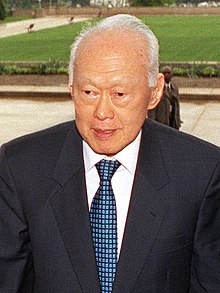
  • The most significant figure in the second half of the 20th CentuLee Kuan Yew.jpgry was long-serving prime minister Lee Kuan Yew .  Leader of the People’s Action Party, he became the unquestioned leader of the independent Singapore for 30 years, shaping the new country to his own vision through strict but largely fair rule.
  • In 1963, Lee fulfilled his ambition of seeing Singapore join into a political union with British Malaya, Borneo and Sarawak; the modern state of Malaysia – this project, however was doomed to failure because of racial and religious tensions between largely ethnic Malay/Muslim Malaya and the significant ethnic Chinese component of Singapore’s population.
  • Prime Minister Lee was very emotional when he announced to his people that Singapore was leaving the union and embarking on an unwished-for independence

A few songs may interest you, also, some of which you will have heard:

  • Dayung Sampan”  – to quote it’s description on YouTube: “This video “Dayung Sampan” features Noraniza Idris, and He Yun (from China Hebei) playing the Erhu, a Chinese traditional instrument. “Dayung Sampan” is the Malay version of the famous Chinese tune “Tian Mi Mi” (甜蜜蜜). This is a fresh collaboration between the Malay and Chinese culture”
  • Ironic song by Dick Lee, making linguistic jokes and satirising modern politics
  • Shine for Singapore” was commission for the 2008 National Day Parade and “One Singapore” was another later commission. Both are examples of patriotic pop songs.

Finally, make sure to check out our sponsor Hairy Baby on www.hairybaby.com! You can get 10% off any purchase using the promo code “80days” and pick up an official 80 Days t-shirt at this link.

Special thanks, also, this week to Paula Cantwell and Rowland Seymour for their backing of the show this season – very much appreciated!

Welcome to Hairy Baby: our Season 2 Sponsor

Hairy Baby Clothing CompanyWe are delighted to announce that Season 2 of 80 Days: an exploration podcast is being sponsored by Hairy Baby, the home of the funniest and most uniquely Irish t-shirts. The three of us enjoy their sense of humour, from Irish takes on iconic historical and pop-culture images to unique phrases from our childhood, so we’re very happy that they are supporting us. While Hairy Baby sell t-shirts (and mugs, among other things) and we produce a history podcast of small and often overlooked countries around the world, our missions are related – we both want to give creativity with an Irish accent a global reach. As 80 Days strives to tell the story of the whole world, one place at a time, Hairy Baby are launching a campaign to sell a t-shirt to every country in the world before St Patrick’s Day 2018 to celebrate their 10th birthday (The Round the World Challenge). We hope our loyal listeners, as far-flung as Brunei, Alaska, Panama and the Isle of Man, who have tuned in so far, can help them out as a thank-you for their assistance in making Season 2 possible.

Daragh Murphy, founder of Hairy Baby said;

“In the last three years alone we have exported our Irish humour Tees ‘n’ Things to over 70 countries, which is a reflection of how far and wide the Irish Diaspora has travelled. We believe the Irish have landed up everywhere so we thought it would be cool to highlight that fact by challenging ourselves to ship to every country in the world by Paddy’s Day 2018. When we were researching the challenge, we came across 80 Days and thought it was the perfect fit to compliment our own goal. Joe, Luke and Mark are typical of their generation and have a quality product in the 80 Days podcasts. We want to ship to every country in the world and the lads want to tell everyone about those them, especially the more unusual places.”

Hairy Baby will print the official 80 Days t-shirts for those who backed our recent Kickstarter campaign. You can also purchase our exclusive 80 Days t-shirt here throughout Season 2 and part of the proceeds will contribute to our costs this year. We have also secured a special 10% OFF coupon code on Hairy Baby for our listeners throughout Season 2. Use the Coupon Code “80days” on hairybaby.com and get 10% off anything your purchase.

Season 2 is going to be more detailed and better than what’s gone before thanks to the incredible support we’ve gotten through our Christmas Kickstarter Campaign. This has made it realistic to upgrade equipment, carry out some interviews with experts from a number of countries and even do some on-site recording for a few of the episodes. This wouldn’t have been possible without Hairy Baby and the dozens of listeners who chipped in. And you can still make a contribution if you purchase our exclusive 80 Days t-shirt during Season 2.

Season 2 is nearing the end of production and will be released before Easter 2017.

Listeners can look forward to stories from a wide range of places, including areas with heavy Irish links, like Newfoundland, to less familiar countries including the Gambia and Uruguay. We’re very excited.

General information: 80 Days: an exploration podcast is dedicated to exploring the history, geography and culture of little known countries, territories and cities from around the world. It is brought to you by three self-proclaimed history and geography nerds, Luke, Joe and Mark, broadcasting from Hong Kong, Switzerland and the UK, respectively. The podcast, details of how to subscribe and much more information about the places already explored in Season 1 can be found on www.80dayspodcast.com. Feedback, suggestions and comments are always welcome, no matter where in the world you come from.

Kickstarter Campaign fully funded… and then some!

We are delighted with the response we got to our Christmas Kickstarter Campaign! The drive closed today, and we raised 300% of our target, ending with over €1000 in support to help us make Season 2 of the podcast in the coming months. Thank you to all of our dedicated backers; a list of their names will appear on the site soon, and you will hear many of them thanked by name on-air in Season 2.

Kickstarter funding graph

We’re also very excited to announce that we will be welcome a season-long sponsor aboard for the next batch of ten countries – more details on that soon.

We want our listeners to be involved in making a great show, and were so happy to have so many people step up to make that happen. You can always get involved too, by letting us know what you think of the show, recommending locations, sending us unique trivia, leaving us a review on iTunes (or wherever you get your podcasts), sending us sounds from interesting places around the world, or even just telling a friend about the podcast.

Once more, thank you toall of our backers – you are making Season 2 possible.

Lapland or “Sápmi” (Christmas Special)

Christmas Special: Lapland audio

For the festive season, 80 Days brings you a Christmas special on the most appropriate place we could think of, complete with reindeer and Santa Claus: Lapland, or – as the native Sami people prefer to call it – Sápmi. This is a large region of Fennoscandanavia, north of the Arctic Circle, with its territory spanning parts of Finland, Norway, Sweden and Russia (see map). This episode will touch on all areas of Lapland, but will focus primarily on the Finnish and Norwegian sides. The area is named for the indigenous people (and their specific language grouping), who have sparsely inhabited the region for several thousand years. 

In Lapland, winter lasts from early October to early May, with temperatures well below freezing throughout the region and up to 60 cm or 23 inches of snow during midwinter. However, in summer the sun does not set on the region for several weeks at a time.  Population has declined quite significantly since 1990, and the region is now home to approximately 180,000 people. Residents are spread across a total area of just over 100,000 square kilometers, or 38,000 square miles, and there are as many reindeer here as there are people. Your hosts are Luke Kelly @thelukejkelly, Mark Boyle @markboyle86 and Joe Byrne @anbeirneach, in Hong Kong, the UK and Switzerland, respectively. (Theme music by Thomas O’Boyle)

File:Corrected Sapmi in Europe.PNGFile:Sami flag.svg

Some things you might like to know more about:

Toppkandidater Vesthavet valgkrets.jpg

File:Hram Sv Simeona Mirotočivog (Novi Beograd) 040.jpgFile:USMC-101208-M-8527P-077.jpg

  • A lot has been written about Lapland’s most famous resident and how he came to be here. Most of it is mysterious and people make some wild guesses (often not true), but here, in no particular order, are a few resources that might be useful about Santa Claus and his village near Rovaniemi, Finnish Lapland. Who is St. Nicholas (about his early years in Myra); Andrea McDonald’s account of visitingHistory of Santa Claus (on the-north-pole.com), Santa Claus and His Works (New York Times piece describing the contributions of artist Thomas Nast to the image of Santa’s snowy abode); Head to Finnish Lapland… (a 2009 article in the Independent, including descriptions of Santa’s village); Checking Out Santa’s Workshop in Lapland (a 1988 article in the LA Times describing visiting Santa in Rovaniemi). For the more cynical, a stuffy article on postmodernism and Finnish tourism policy can be found here (for all the Scrooges out there!).
  • You can often watch people visiting Santa live (or look back at earlier recordings) at this website, which is wonderfully magic

We hope you have a happy Christmas and a wonderful new year and that you are looking forward to joining us for Season 2 in the coming months. As always, please get in touch if you are enjoying what you are hearing or have anything to share with us!


Find out about our Christmas Kickstarter campaign by clicking here. With your help we can make Season 2 even better than Season 1!
(https://www.kickstarter.com/projects/80dayspodcast/80-days-podcast-season-2)